Turkmen rugs: Turkmen gül rows on deep red ground
Turkmen rugs come from the Central Asian steppes and are world-famous for their characteristic gül medallions in deep red.
- Region
- Afghanistan
- Category
- Nomad rugs
- Manufacturing
- Hand-knotted
- Knot density
- 100,000 – 250,000 knots/m²
Profile
- Manufacturing
- Hand-knotted
- Origin
- Turkmenistan / Afghanistan / northern Iran
- Pile material
- Wool on wool
- Knot density
- 100,000 – 250,000 knots/m²
- Features
- Gül medallions, deep red ground, very dense weave
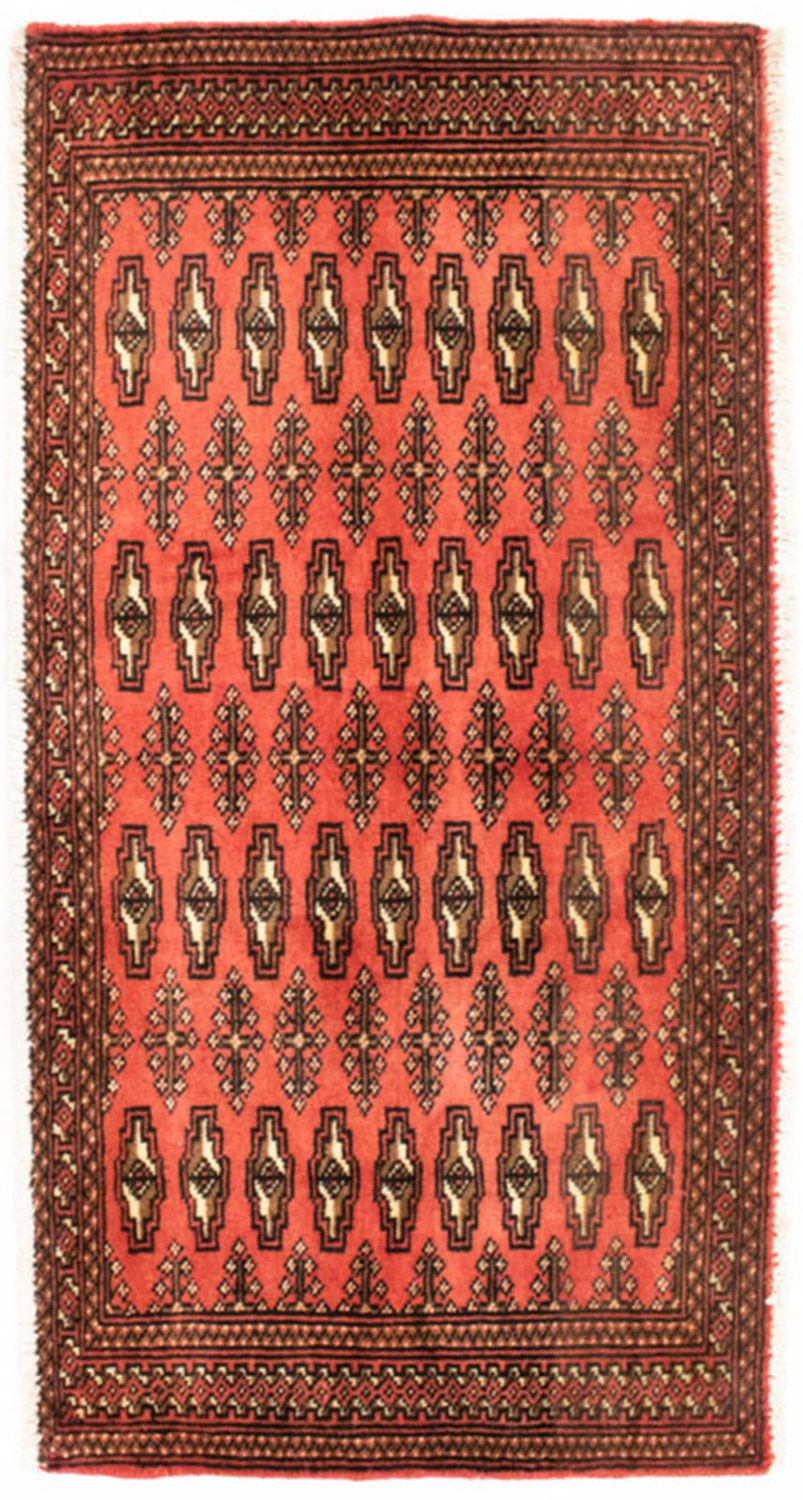
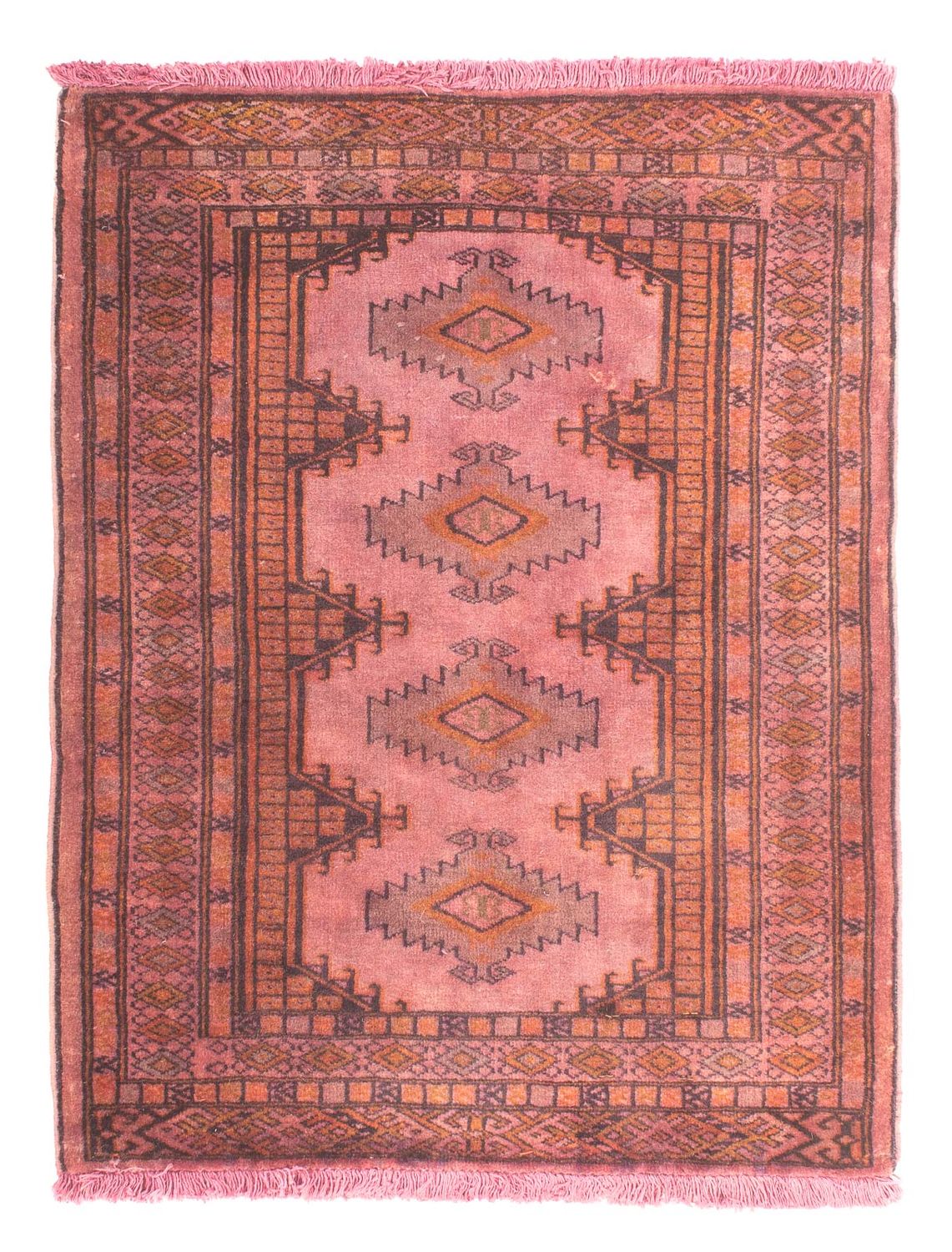
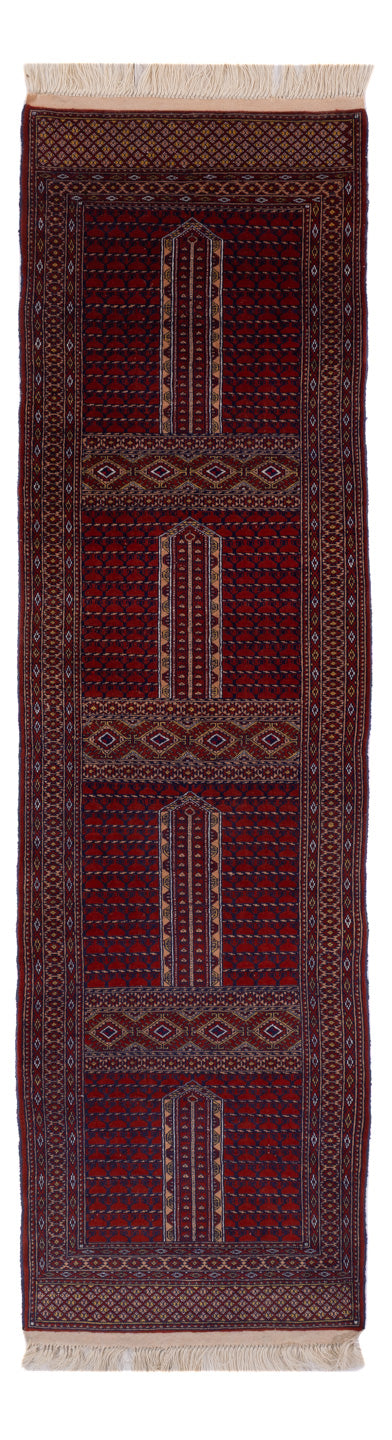
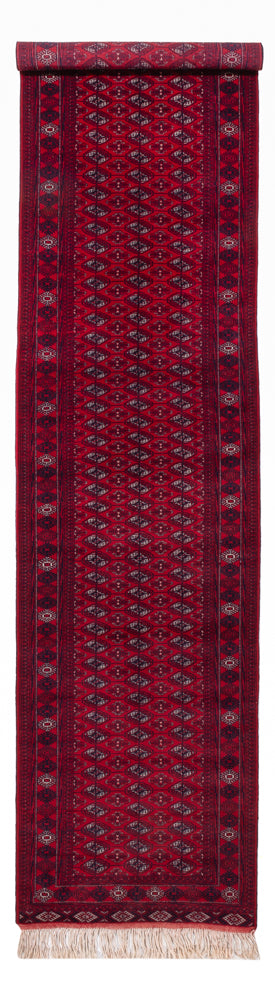
Photo: Morgenland Rugs
Turkmen rugs are the collective label for the knotted work of the Turkmen tribes, whose hallmark are the rows of gul medallions on a deep-red ground. The name derives from the Turkmen people, who lived for centuries as herders in the steppes and desert margins of Central Asia. Today the bulk of Turkmen rugs traded comes from northern Afghanistan, where Turkmen tribes such as the Ersari carry on their old pattern language. Within the nomad rugs, they form a coherent, strictly geometric family.
What is a Turkmen rug?
A Turkmen is a hand-knotted tribal rug whose field is articulated by even rows of octagonal or stepped gul medallions. Turkmen is therefore not a single style but a parent term for the work of several Turkmen tribes, including Tekke, Salor, Ersari, and Yomut. Characteristic are the deep red to red-brown ground, the strict repeat order, and a short-sheared wool pile. Closely related are the Bukhara, named after its trading place, and the Turkmen door hanging Hatschlu.
More closely seen, this is a group of related knotted works that differ above all in the form of the gul. Each tribe uses its own variant, which is why connoisseurs can read the origin from the medallion. The finest historical pieces come from the Tekke and the today rare Salor, while the more robust large formats on the market come predominantly from the Ersari.
Origin
The homeland of the Turkmen lies in Turkmenistan and the adjoining steppes of Central Asia, above all around the Karakum desert and along the Amu Darya. Here arose over centuries the classical tribal rugs, bags, and tent bands that were at once working goods, dowry, and sign of tribal belonging. The strict, repeating visual language of the gul is among the oldest continuous picture traditions of the oriental rug.
After the Russian conquest of Central Asia in the 19th century and the later Sovietisation, settlement and production shifted strongly. Many Turkmen families, especially Ersari, settled south of the Amu Darya in northern Afghanistan. From this shift it follows that today's trade under the name Turkmen mainly handles Afghan knotted work from the northern provinces, for example from the region around Akhche and Mazar-i-Sharif. Related provenances such as the deep-red Khal Mohammadi and the washed Ariana come from the same area. The Persian-influenced tribal rugs of the border region are treated separately as Baluch.
Patterns and colours
The defining element of the Turkmen is the gul, a mostly octagonal or stepped medallion distributed in regular rows across the entire field. The guls are connected by a fine line grid and supplemented by smaller secondary motifs, so-called minor guls. This strict repeat order gives the Turkmen its calm, almost meditative character. The term gul is often interpreted as rose, but functions above all as a tribal emblem: each group has its own form. The Tekke gul is round and compact, the Salor gul more angular and detailed, the Ersari gul larger and less strictly rowed.
The palette is dominated by a deep red to red-brown, which gives the Turkmen its warm overall feel. To this come dark blue, black, ivory, and sparing accents in white and yellow that draw guls and line grids clearly. Alongside stars and diamonds, stylised animal and plant motifs appear. The border consists of several narrow bands with geometric motifs. More on the meaning of the motifs is in the symbol overview; background on the dyes is in rug colours.
Material and knotting technique
Traditional Turkmen rugs consist entirely of sheep's wool, both in the pile and in the warp and weft. The wool comes from the tribes' own flocks and is robust, lanolin-rich, and lustrous. Historically dyeing was done with natural dyes, above all madder for the characteristic reds and indigo for the dark accents. More on the fibres is in materials and sheep's wool.
The Turkmen is knotted predominantly with the asymmetric knot, also called the Persian or open knot. This fine knot type allows the high density and precision the small-scale gul rows require, and matches the construction of the classical Turkmen pieces. How the knot types differ is explained in the article on knot types; the full sequence from spinning to shearing is in production. The pile is sheared short, which emphasises the sharpness of the geometry. The selvedges are wrapped with coloured wool; at the ends the rug often closes with a narrow kilim strip and knotted fringes from the warp.
Knot density and quality
Turkmen rugs belong to the more finely knotted nomad rugs. Knot density typically ranges from about 100,000 to 250,000 knots per square metre, on particularly fine historical Tekke and Salor pieces also higher. The high density is the precondition for the precise drawing of the small gul rows and sets fine pieces apart from coarser trade qualities. How knot density affects quality and price is covered in its own guide.
A good piece is recognisable by even, sharply drawn guls, a saturated rather than garish red, and a dense, short-sheared wool with silken sheen. The following overview places the most important tribal types.
| Type | Tribe / region | Typical features |
|---|---|---|
| Tekke Turkmen | Tekke, historically Turkmenistan | round, compact gul, very fine, classical benchmark |
| Salor Turkmen | Salor, historical | more angular, detailed gul, very rare and valuable |
| Ersari Turkmen | Ersari, northern Afghanistan | larger gul, bold colours, large formats |
| Yomut Turkmen | Yomut, Caspian area | stepped gul, often diamond arrangement |
| Hatschlu | Turkmen | door hanging with cross division instead of gul rows |
| Khal Mohammadi | northern Afghanistan | dense gul rows, particularly deep red-brown |
What is a Turkmen rug worth?
The value of a Turkmen depends on age, tribe, condition, size, knot density, and dye. Antique Turkmen pieces, especially finely knotted Tekke and rare Salor rugs with natural dyeing, count as sought-after collector pieces and fetch the highest prices. Modern Afghan Turkmen rugs of the Ersari tradition are more affordable, robust, and suited to daily use, but mostly do not reach the fineness and material quality of the historical originals. Why genuine knotted work has its price is explained in the article why genuine rugs are expensive.
Since the Turkmen is a sought-after and often re-knotted type, a close check is worth the effort. For the placement, identifying valuable Persian rugs serves as methodical orientation, alongside the value overview and the buying guide.
How can you tell a genuine Turkmen rug?
Typical signs of a genuine Turkmen rug include:
- Wool on wool: warp, weft, and pile consist of sheep's wool; fine pieces show a silken sheen.
- Rows of octagonal guls: evenly arranged medallions on a deep-red ground, connected by a fine line grid.
- Asymmetric knot: the Turkmen rug uses predominantly the Persian, open knot, readable on the dense, sharply drawn back.
- Short pile and sharp drawing: the short-sheared wool lets the geometric guls stand out precisely.
- Saturated madder red without garish tones as the dominant base colour.
- Reinforced selvedges and kilim closure at the ends; fringes from the warp.
Since classical Turkmen patterns are often re-knotted, gul form, material, back, and dye should be judged together. A step-by-step guide is in Is my rug genuine?; for the regional attribution, identifying provenance helps.
Care
Thanks to the dense, short-sheared wool, Turkmen rugs are robust and easy to care for. Regular vacuuming in the direction of the pile and occasional professional cleaning preserve colour and sheen. Spills should be blotted at once with clear water, without rubbing, since the natural dyes can otherwise bleed. Long, direct sunlight will fade the characteristic red and is to be avoided. Detailed guidance is in the care overview and under cleaning a wool rug.
Frequently asked questions
Where does a Turkmen rug come from?
The homeland of the Turkmen lies in Turkmenistan and the adjoining steppes of Central Asia. After the upheavals of the 19th and 20th centuries, many tribes, above all the Ersari, resettled in northern Afghanistan. Today's trade under the name Turkmen therefore mainly handles Afghan knotted work in the Turkmen tradition.
What do the gul patterns on a Turkmen mean?
The gul is a mostly octagonal medallion distributed in rows across the field. Each Turkmen tribe uses its own gul form, so that the medallion serves as a tribal emblem. The Tekke gul is round and compact, the Salor gul more angular and detailed, the Ersari gul larger and bolder. Further symbolism is explained in the symbol overview.
Which knot does a Turkmen rug use?
The Turkmen rug is predominantly knotted with the asymmetric knot, also called the Persian or open knot. This fine knot type makes possible the high density that the small-scale gul rows require. More on this in knot types.
What distinguishes a Turkmen from a Bukhara?
Both belong to the Turkmen family and share the gul rows. Turkmen is the ethnic parent term for the knotted work of Turkmen tribes, while Bukhara is a trade name that goes back to the market city in present-day Uzbekistan. In practice the terms overlap strongly; the attribution is made over the gul form of the respective tribe.
Are modern Afghan Turkmens equivalent to antique pieces?
Modern Afghan Turkmens of the Ersari tradition take over the classical gul patterns, are robust, and suited to daily use. In material quality and fineness, however, they rarely reach the antique Tekke and Salor knotted work with natural dyeing that counts as collector pieces.
Are Turkmen rugs suitable for heavily used rooms?
Yes. The dense knotting, the robust wool, and the short pile make Turkmen rugs very hard-wearing. They suit living and dining rooms with high use well and, thanks to the dark colours, are not very sensitive to dirt.
How do I care for a Turkmen rug correctly?
Regular vacuuming in the direction of the pile and professional cleaning every few years are enough. Blot spills at once with clear water, do not rub. Since the deep red reacts sensitively to UV light, long, direct sunlight should be avoided.
Related styles
Khal Mohammadi
Khal Mohammadi rugs are produced in northern Afghanistan and stand out with their deep red tones and characteristic gül medallions.
Bukhara
Bukhara rugs are world-famous for their typical octagonal gül medallions on a deep red ground.
Akcha
Akcha rugs are produced in northern Afghanistan and show typical Turkmen gül medallions on a deep red ground.


