Afghan silk rugs: silk pile from Herat and Mazar-e-Sharif
Afghan silk rugs are produced in western Afghanistan and combine traditional Persian designs with luminous silk fibers.
- Region
- Afghanistan
- Category
- Silk rugs
- Manufacturing
- Hand-knotted
- Knot density
- 200,000 – 500,000 knots/m²
Profile
- Manufacturing
- Hand-knotted
- Origin
- Afghanistan — Herat region
- Pile material
- Silk on silk or cotton
- Knot density
- 200,000 – 500,000 knots/m²
- Features
- Persian-inspired designs, silk pile, accessible price
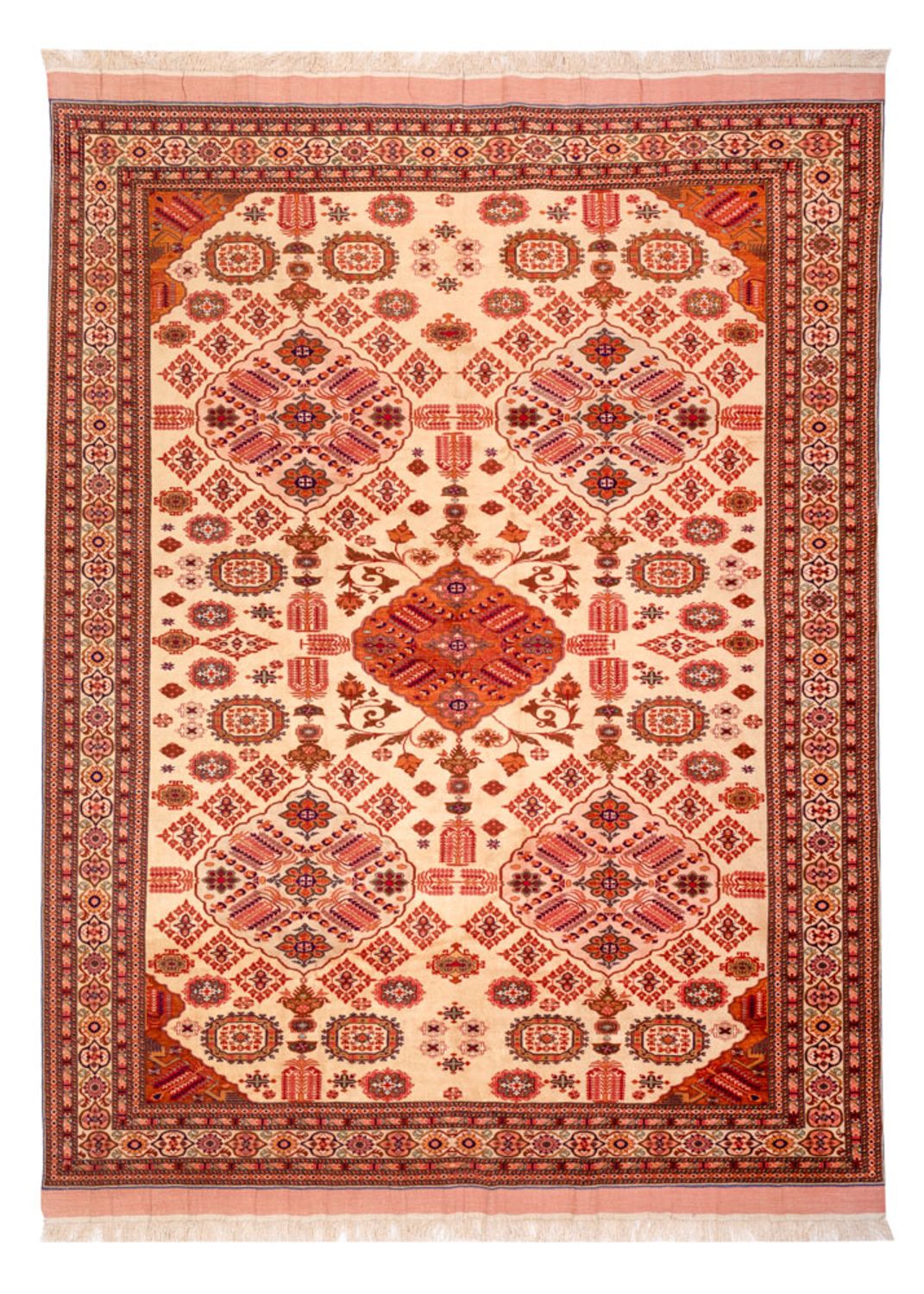
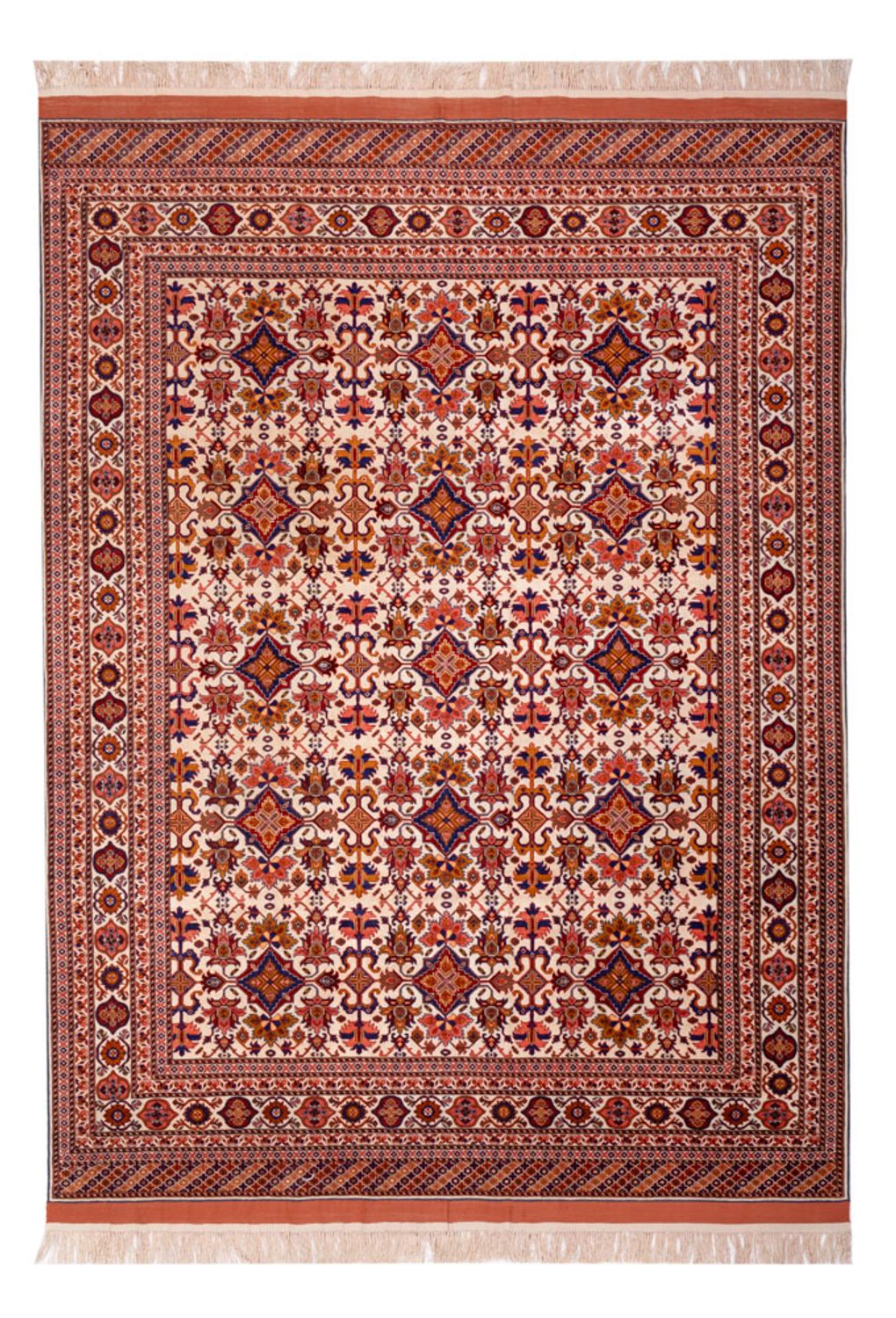
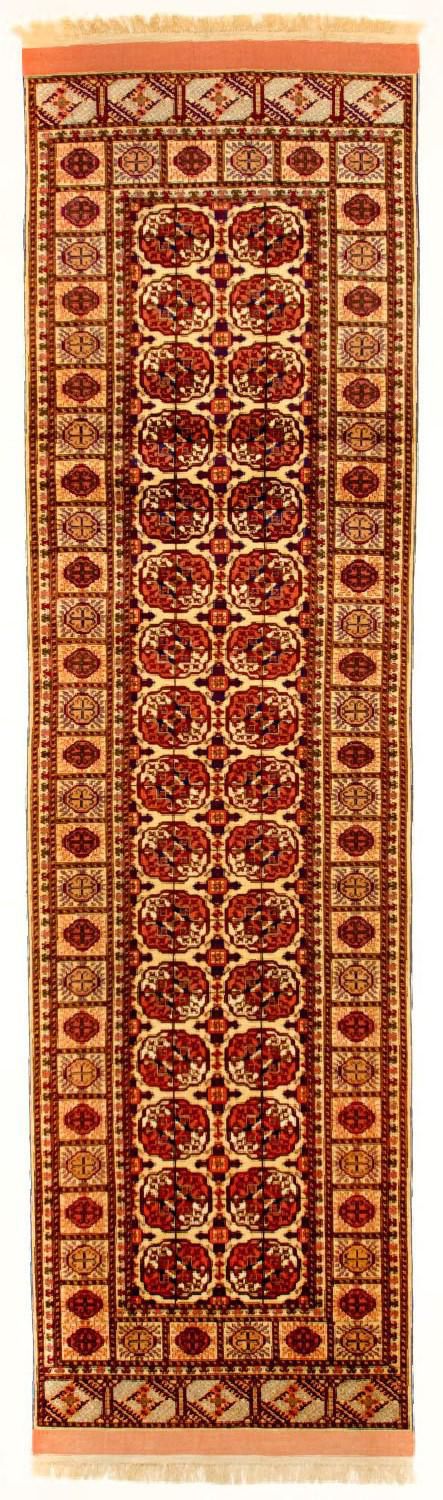
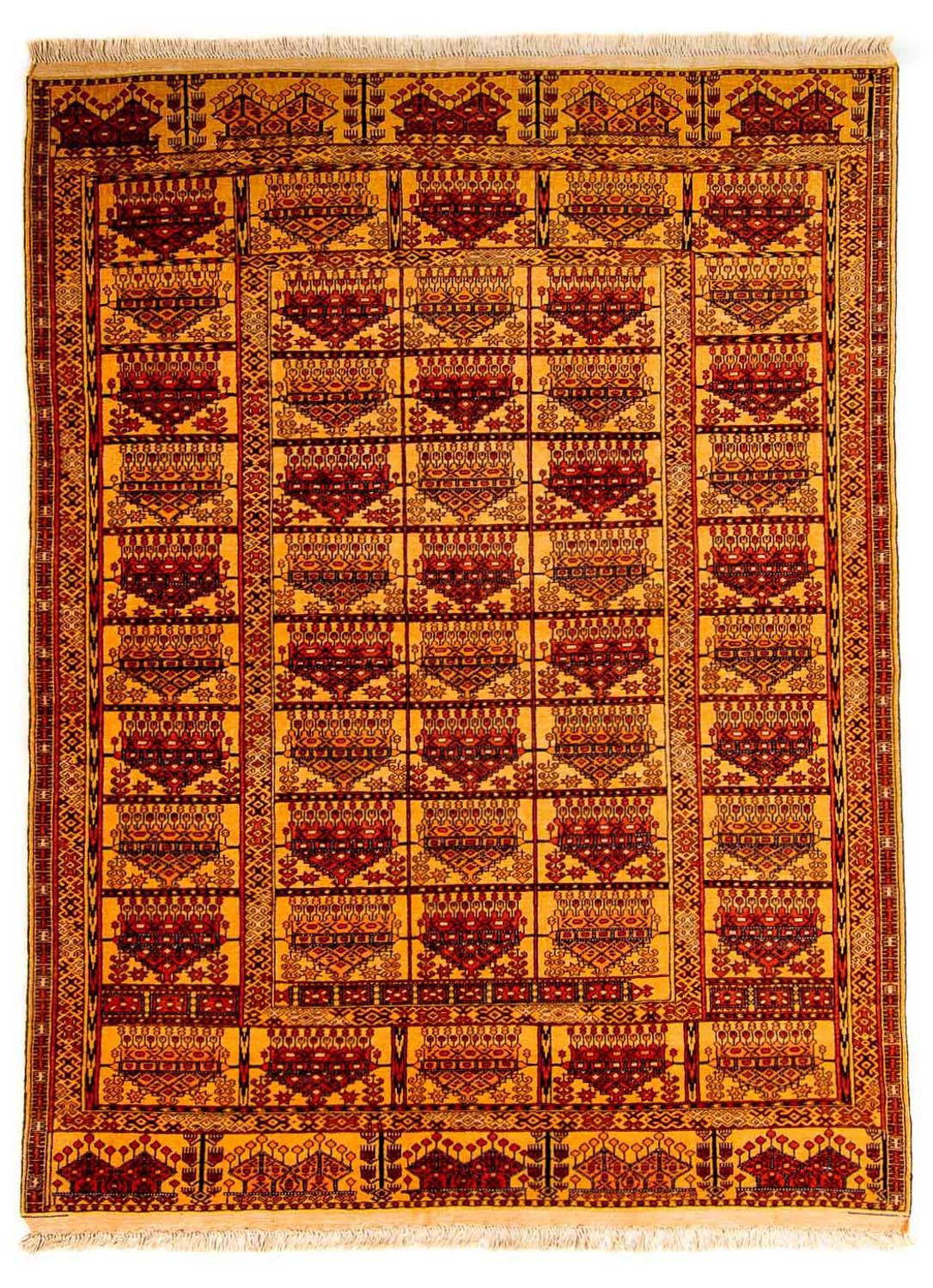
Photo: Morgenland Rugs
Afghan silk denotes hand-knotted silk rugs from Afghan workshops, mainly in Herat and Mazar-i-Sharif. They take over Persian and Turkmen templates and translate them into the noble material of silk. Compared with classical Qom silk or Hereke silk pieces they are considerably cheaper and widespread in the mass market. Buyers should look closely, however: the Afghan-silk market is marked by sharp differences in quality, and a substantial share of the goods on offer consist wholly or partly of viscose, that is to say art silk. Anyone who wants to recognise a real Afghan silk needs clear criteria for inspection.
What is an Afghan silk rug?
An Afghan silk is a hand-knotted rug with a silk pile, made in Afghan workshops. The weavers adopt the pattern vocabulary of classical Persian models, above all medallion designs from Qom, Isfahan and Tabriz, as well as Turkmen gul rows from the tradition of Bukhara. Depending on the workshop the warp is cotton or silk, the weft usually cotton, and the pile silk. More on the fibre is set out in the material article on silk.
The pieces are deliberately marketed as an affordable alternative to the Persian and Turkish top-tier silks. They cover a market segment in which buyers want the prestige of a silk rug without paying the price of a Qom silk or a Hereke. This position makes the provenance attractive, but it also calls for careful material testing, since the same segment also includes pieces of viscose and mercerised cotton sold as silk.
Origin: Herat, Mazar-i-Sharif and the Afghan Silk Road
Silk-rug knotting is not an old tradition in Afghanistan. It developed only in the second half of the 20th century and gained pace especially from the 1990s and 2000s, when Afghan workshops targeted the export market for affordable silk goods. The historical references go deep nevertheless: Afghanistan lay for centuries on the main axes of the Silk Road, Herat was an important station, and Mazar-i-Sharif a central trading hub for wool, silk and caravan goods. More on the country and its knotting tradition is given under Afghanistan.
Today production is concentrated in workshops in Herat in the west and Mazar-i-Sharif in the north. Both cities combine access to experienced weavers with connections to international export routes. The silk rarely comes from Afghanistan itself; it is usually imported from China or India. This dependence on material is one of the reasons for the variable quality: who buys which silk decisively shapes how high-grade the finished piece turns out.
Typical features
Afghan silk rugs carry classical Persian and Turkmen patterns. Common are central medallion designs with floral corner spandrels in the manner of Qom and Isfahan, all-over patterns with intertwined vines, and gul rows in the Turkmen tradition. The borders consist of two to four bands, often with a continuous palmette-vine work or with reciprocal boteh rows.
The colour palette exploits the high brilliance of silk: deep wine-red, indigo blue, emerald green, ivory, gold and bronze. Characteristic is the shifting sheen when the pile is viewed from different angles. From one direction the surface looks velvety and dark, from the other it glows. This effect is especially pronounced in genuine mulberry silk and is an important sign of authenticity.
Patterns and colours
Most Afghan silk pieces adopt designs developed in Persian manufactories. The central medallion with floral corner spandrels is the most frequent variant, often inspired by Qom templates. Alongside them stand classical hunting rugs, tree-of-life motifs and boteh all-overs. Anyone who wants to look up the individual symbols will find an overview in symbols, with the boteh motif treated separately in boteh, the medallion in medallion and the tree of life in tree of life.
The colour palette is often more vivid than in the Persian models. While Qom silk likes to work with delicate pastel tones, intense reds, blues and golds dominate in Afghan silk. The dyes are generally synthetic, which is less of a problem with silk than with wool because the fibre takes the dye very evenly. Even so, the depth of colour differs markedly between simple and high-quality pieces. For orientation on dye qualities see natural versus chemical dyes.
Material and knotting technique
The most important material is the silk itself. Real silk is mulberry silk from the cocoon of the Bombyx mori caterpillar, and carries an unmistakable sheen, a cool handle and high tensile strength. More on the fibre, its production and properties is given in silk. The warp of an Afghan silk consists, depending on the workshop, of cotton, mercerised cotton or silk; the weft is usually cotton; and the pile is entirely silk.
In most Afghan workshops, knotting is done with the asymmetric Persian knot, which is better suited to fine pattern detail than the symmetric knot. A survey of the bindings is given in knot types, the knotting process itself in knotting and the whole process in production. The construction is usually double-wefted, with two weft threads between the rows of knots, which stabilises the fine silk.
An important note concerns the word silk in the trade. In the Afghan-silk market, viscose, in the trade also sold as art silk, bamboo silk or simply bamboo, is widespread. Visually viscose has a sheen similar to silk, but it is a cellulose-based chemical fibre, considerably less tear-resistant and with very different care behaviour. The distinction is a matter of material testing, not visual impression. Anyone buying should clarify the fibre explicitly and, in case of doubt, request a burn test. The methods are described in detail in identifying silk.
Knot density and quality
Afghan silk rugs typically lie between 200,000 and 500,000 knots per square metre. That puts them below the Persian top-tier pieces from Qom or Isfahan, which regularly exceed 800,000 knots, but well above classical wool rugs. How density and material quality affect value is treated in knot density explained.
Quality is decided at three points: at the silk itself, at the cleanness of the knotting, and at the finishing of the edges and fringes. High-quality pieces show fine silk with an even sheen, precise contours and intact selvedges. The comparison table places Afghan silk within the silk-rug segment.
| Provenance | Relation to Afghan silk | Knot density | Typical features |
|---|---|---|---|
| Afghan silk | affordable silk rug from Afghanistan | 200,000 – 500,000 / m² | Persian and Turkmen patterns, viscose risk, Herat and Mazar-i-Sharif |
| Qom silk | Persian reference for fine silk | 600,000 – 1,000,000 / m² | finest medallions, brilliant sheen, high prices |
| Hereke silk | Turkish top manufactory | 800,000 – 1,500,000 / m² | densest knotting, court-rug tradition, very high-priced |
| China silk | Chinese silk rug | 300,000 – 700,000 / m² | Chinese pattern vocabulary, often more pastel |
| Indo Qom | Indian adaptation of Qom patterns | 200,000 – 500,000 / m² | Persian templates from Indian production |
| Bukhara | Turkmen wool counterpart | 100,000 – 250,000 / m² | symmetrical gul rows in wool, no silk pile |
What is an Afghan silk rug worth?
The value depends above all on the fibre quality. Pieces of genuine mulberry silk with fine knotting reach mid four-figure prices, in larger formats considerably more. Comparable original Qom or Hereke pieces lie many times higher. Pieces of viscose, even if they look similar, are worth only a fraction: they have neither the tensile strength nor the value retention of real silk.
Anyone wanting to estimate the value should first clarify the material and only then talk about knot density and pattern. Helpful here are the articles recognising valuable Persian rugs, the value overview and why real rugs are expensive. Before buying, the buying guide offers concrete decision aids.
How do you recognise a genuine Afghan silk rug?
Reliable indicators of a genuine silk pile and a hand-knotted Afghan-silk provenance:
- Burn test on a fringe or pile hair: real silk smells of burnt hair or horn and leaves a small, brittle ash ball. Viscose smells of burnt paper and leaves grey, flyaway dust. The method is described step by step in identifying silk.
- Handle and temperature: real silk feels cool at first and warms slowly; viscose picks up skin warmth more quickly and feels smoother.
- Shift in sheen: a real silk pile shifts visibly between velvety darkness and brilliant glow, depending on the angle of view. With viscose the effect is weaker and more uniform.
- Tensile strength of the fringes: a single silk fibre withstands considerable pull. Viscose tears more easily when dry and is almost always weak when wet.
- Hand-knotted back: the pattern is clearly mirrored on the reverse, and individual knots show as fine points.
- Fringes as part of the warp: the fringes are the extended warp threads, not sewn on afterwards.
- Asymmetric Persian knot: the knot face is slightly offset, typical of Afghan workshops in the Persian tradition.
A step-by-step guide to general authentication is given in Is my rug genuine?. Provenance can be further narrowed down using identifying origin. Further notes are gathered in the recognising overview.
Care
Silk rugs are more delicate than wool rugs. Afghan silk pieces belong in representative areas with little wear, that is, living and bedrooms with low foot traffic, not the entrance hall or the dining nook. Vacuum in the pile direction with a soft nozzle, without a rotating brush, so as not to damage the fine fibre. With stains, react at once and gently: a light cloth, clear water, dab from the outside inwards, never rub. A professional wash should only be carried out by cleaners with experience in silk rugs, because the silk reacts sensitively to alkaline solutions and mechanical friction. More background is given in the care overview. General notes on rug cleaning are set out in cleaning a rug.
Frequently asked questions
Are all Afghan silk rugs made of real silk?
No. Viscose, that is to say art silk, is widespread in the Afghan-silk market and is partly sold under terms such as bamboo silk or art silk. Anyone who wants a genuine silk rug must clarify the fibre explicitly. The methods for material testing are described in identifying silk.
How does Afghan silk differ from Qom or Hereke silk?
Qom silk and Hereke silk come from Persian and Turkish top manufactories with markedly higher knot density and a centuries-old tradition. Afghan silk is younger, more coarsely knotted, cheaper and arose mainly for the export market. Both top-tier provenances reach price classes that Afghan silk does not cover.
What does an Afghan silk rug cost?
Genuine mulberry-silk pieces in medium formats lie in the mid four-figure range; large or particularly finely knotted pieces lie significantly higher. Viscose pieces that look similar cost only a fraction and are comparable neither in material nor in value.
Is Afghan silk suitable for living rooms with children and pets?
Which sizes are common for Afghan silk rugs?
Common are smaller representative formats between 60 × 90 cm and 200 × 300 cm. Larger sizes occur but are more expensive, because the material is costly and the knotting time correspondingly long.
How do you spot viscose rugs sold as Afghan silk?
Burn test, handle and sheen behaviour are the most reliable checks. Real silk smells of hair or horn when burnt, viscose of paper. Real silk feels cool in the hand and warms slowly; viscose picks up skin warmth more quickly. A detailed guide is given in identifying silk.
How do I care for an Afghan silk rug properly?
Vacuum in the pile direction with a soft nozzle and no rotating brush. Dab stains immediately with clear water from the outside inwards, never rub. Professional washing only by a cleaner specialised in silk rugs. More in the care overview.
Impressions of the origin
Places, landscapes and landmarks around the home of Afghan Silk rugs. Click any image for a larger view.
Related styles
Khal Mohammadi
Khal Mohammadi rugs are produced in northern Afghanistan and stand out with their deep red tones and characteristic gül medallions.
Qom Silk
Qom silk rugs are knotted from pure silk in the holy city of Qom and rank among the world’s finest hand-knotted carpets.
Hereke Silk
Hereke silk rugs come from the Ottoman court manufactory and are among the world’s most prized silk carpets.


