//
Hand-knotted rugs from Anatolia, home of the symmetric Turkish knot. From the large-format Usak medallions to the fine workshop weaves of Kayseri.
Photo: Morgenland Rugs
Turkish rugs are hand-knotted rugs from Anatolia, the Asia Minor heartland of present-day Turkey. They are the home of the symmetric Turkish knot, also called the Ghiordes knot, which gives the entire Anatolian, Caucasian and Turkmen knotting tradition its character. The spectrum reaches from the large-format medallion rug of Usak through the fine workshop pieces of Kayseri to the classic prayer rugs of the villages. This overview places the most important knotting centres in context and explains how to recognise a genuine Turkish rug.
Oriental rug is the umbrella term for all hand-knotted rugs from the Near East and Central Asia. The Turkish rug is one of its great families, on equal footing with the Persian rug from Iran. Both share the same craft foundation, but they differ in the knot: the Persian sphere mostly ties the asymmetric Senneh knot, Anatolia the symmetric Ghiordes knot. The fundamental difference is covered in the comparison Persian rug or oriental rug.
Anatolian knotting is among the oldest in the world. Rugs from Konya survive from the time of the Anatolian Seljuks in the 13th century. The craft reached its first peak between the 15th and 17th centuries, when large-format star and medallion rugs were made in Usak and reached Europe through Venetian and Dutch merchants. They appear so frequently in Renaissance paintings that whole pattern groups are now named after the painters Holbein and Lotto.
Alongside courtly and urban workshop production, there was always the village and nomadic knotting of the Yörük. Within the Ottoman Empire, regional schools developed their own design language, which survives to this day. The founding of the imperial manufactory in Hereke in the 19th century finally produced the finest silk rugs in Turkey.
Anatolia is divided into several knotting centres of unmistakable character:
| Centre | Region | Typical features |
|---|---|---|
| Usak | Western Anatolia | large medallions and star designs, muted terracotta and sage tones |
| Kayseri | Central Anatolia | fine workshop pieces, often prayer niches, wool and art silk |
| Hereke | Marmara region | finest silk and wool rugs from the imperial tradition |
| Ladik | Central Anatolia | classic prayer rugs with a tulip border |
| Gördes | Western Anatolia | namesake of the Ghiordes knot, classic prayer patterns |
| Milas and Bergama | Aegean coast | warm reds, geometric tribal patterns |
The fine silk rugs of Hereke and the silk pieces of Kayseri are listed under silk rugs on account of their material. All Anatolian provenances are also gathered on the origin page Turkey.
Turkish rugs are traditionally made of virgin wool on a warp of wool or cotton. The Anatolian highland wool is strong, lustrous and takes natural dyes well. For top qualities, above all from Hereke, silk is also used.
They are knotted with the symmetric Turkish knot, which anchors the pile especially firmly and allows clean, straight contours. This predestines it for the geometric patterns and strict medallion forms typical of Anatolia. How the knot types differ is shown in the overview knot types.
The knot density ranges from about 60,000 knots per square metre in robust village rugs to several million in the finest Hereke silk rugs. A higher density allows finer drawing, but it does not determine quality alone: wool quality, natural dyes and the cleanness of the knotting count just as much. How knot density influences quality and price is explained in a dedicated guide.
These features help with classification:
A systematic guide is offered by the recognition overview, and the authenticity check by the article Is my rug genuine?.
The value of a Turkish rug depends on age, condition, size, material, knot density and the clarity of the drawing. Antique Usak rugs of the 17th to 19th centuries and signed Hereke silk rugs achieve collector prices, while newer village and workshop pieces are decorative everyday rugs with good value for money. Orientation is provided by the value overview and the buying advice.
The strong Anatolian wool and the firm knotting make Turkish rugs robust and suited to everyday use. The large Usak medallions work well in living and dining rooms, smaller prayer formats set accents in the hall and entryway. Silk pieces from Hereke belong, as showpieces, rather on the wall or in quiet areas.
Turkish wool rugs are easy to care for. Regular vacuuming in the direction of the pile is enough day to day, stains are dabbed off at once with clear water, not rubbed. A professional cleaning every few years preserves lustre and colours. Silk rugs from Hereke demand particular caution and belong in expert hands. More on this in the care overview.
A genuine Turkish rug is hand-knotted, the pattern appears mirror-reversed on the back, and the fringes are extended warp threads. Characteristic are the symmetric Turkish knot as well as geometric medallion or prayer patterns in muted natural tones.
The most important difference lies in the knot: Anatolia ties the symmetric Ghiordes knot, the Persian sphere mostly the asymmetric Senneh knot. Turkish rugs therefore often look more geometric and stricter, Persian city rugs more flowing and floral.
The best known are the large-format Usak medallion rugs, the fine workshop pieces of Kayseri and the imperial silk rugs of Hereke. Added to these are the classic prayer rugs from Ladik and Gördes.
Yes. Hereke lies in the Marmara region and belongs to the Turkish knotting tradition. Because of their material, the silk Hereke rugs are listed in the Rug Wiki under silk rugs, but their origin is Anatolian.
The range is wide. Newer wool rugs from Usak or Kayseri are affordable, antique pieces and signed Hereke silk rugs reach collector prices. Size, knot density, material and condition determine the price.
Vacuum regularly in the direction of the pile, dab off stains at once with clear water and do not rub, and have it professionally cleaned every few years. Direct sun over a long time fades the colours. Silk rugs belong exclusively in professional cleaning.
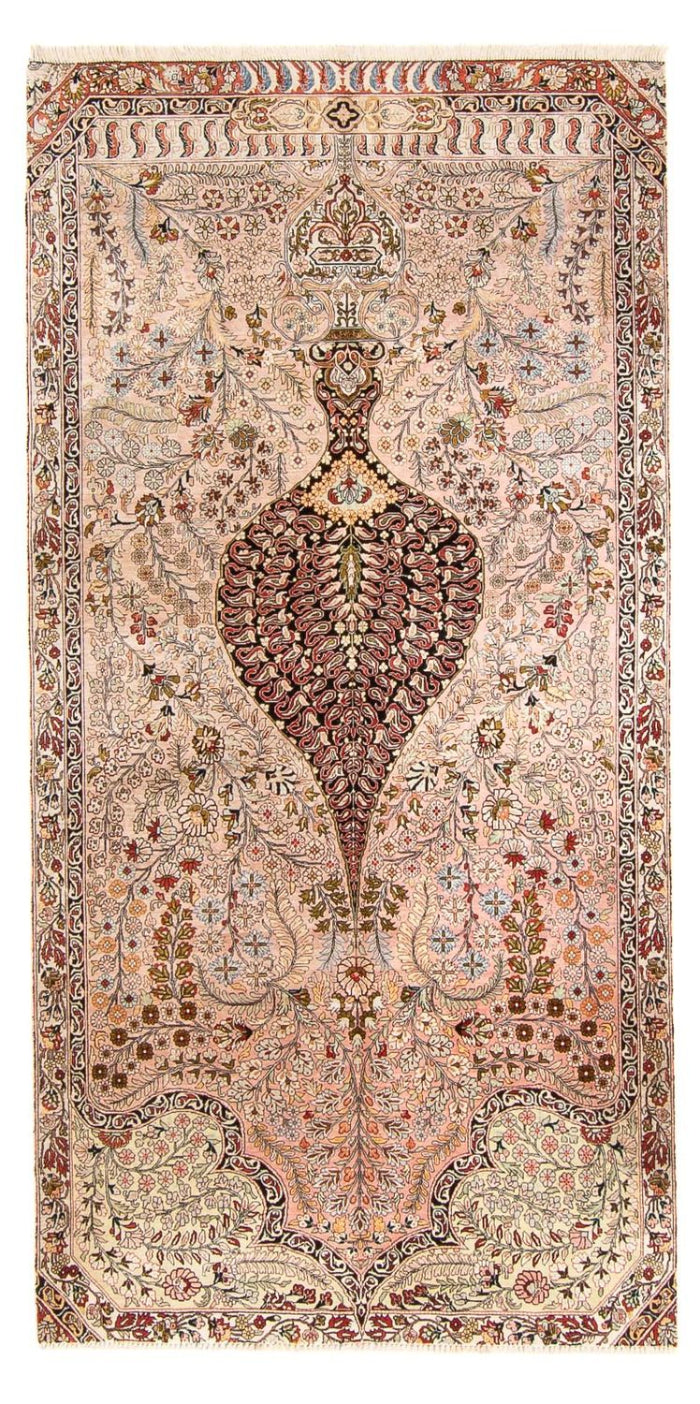
Kayseri rugs come from Cappadocia and offer classical Anatolian patterns in a wide range of qualities and sizes.
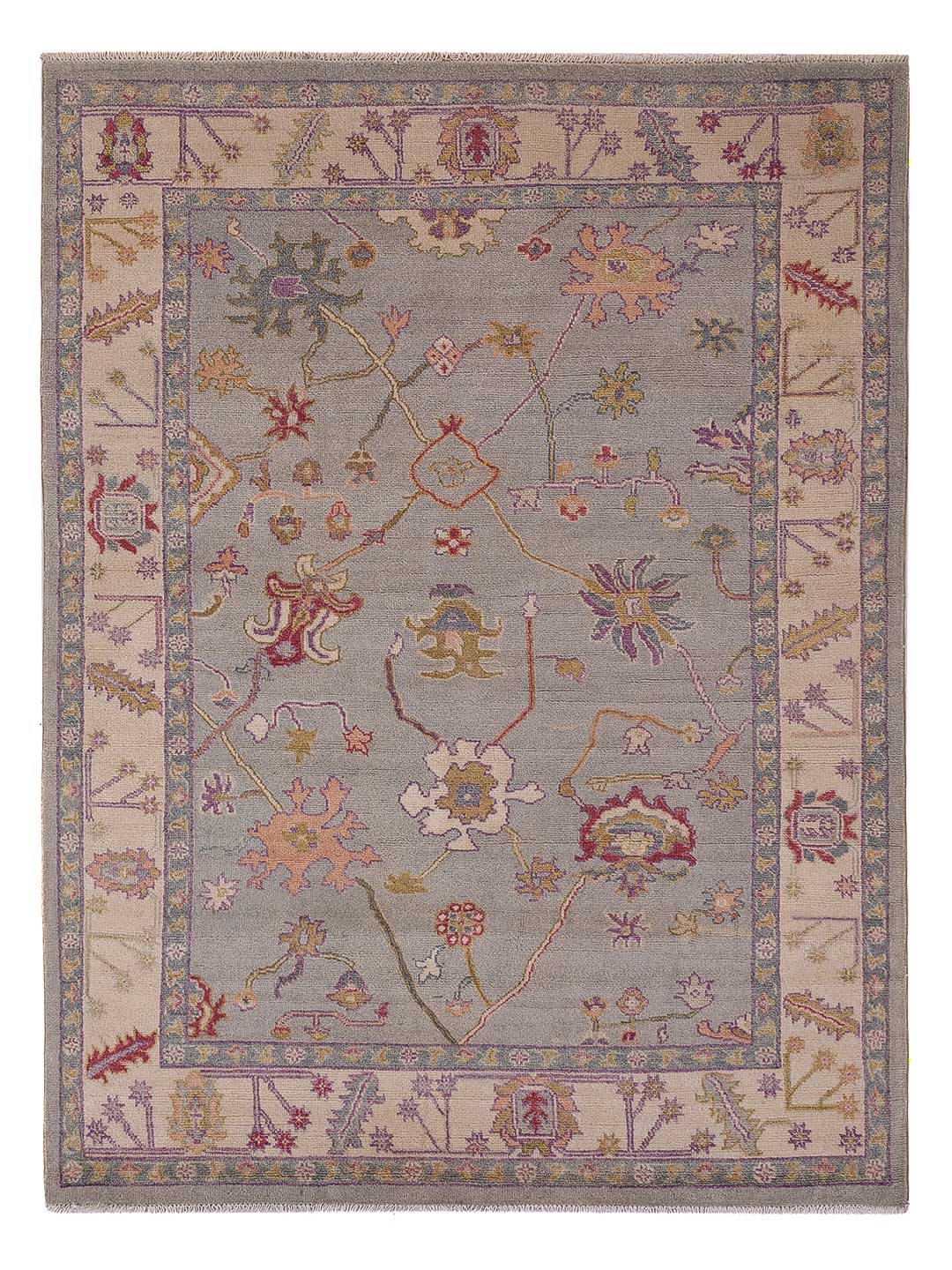
Ushak rugs from western Anatolia are classic Ottoman carpets known for large medallion compositions in soft tones.