Nepal rugs: Tibetan knot from the Kathmandu Valley
Nepal rugs are produced in Kathmandu in the Tibetan tradition, coarsely knotted, soft, and often with modern designs.
- Region
- Nepal
- Category
- Designer
- Manufacturing
- Hand-knotted (Tibetan knot)
- Knot density
- 60,000 – 180,000 knots/m²
Profile
- Manufacturing
- Hand-knotted (Tibetan knot)
- Origin
- Nepal — Kathmandu
- Pile material
- Highland wool, sometimes with silk or bamboo
- Knot density
- 60,000 – 180,000 knots/m²
- Features
- Tibetan knot, highland wool, often modern abstract designs
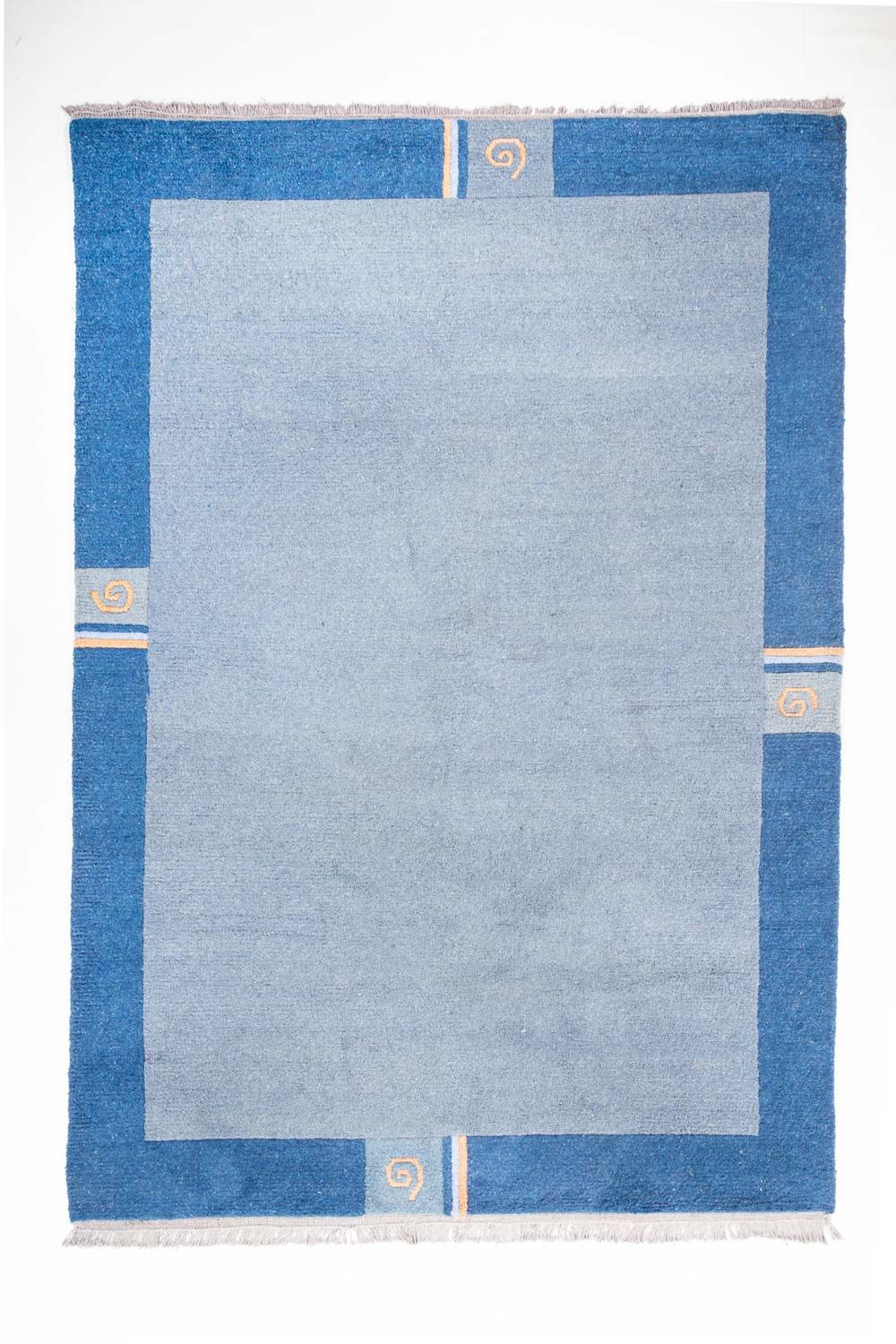
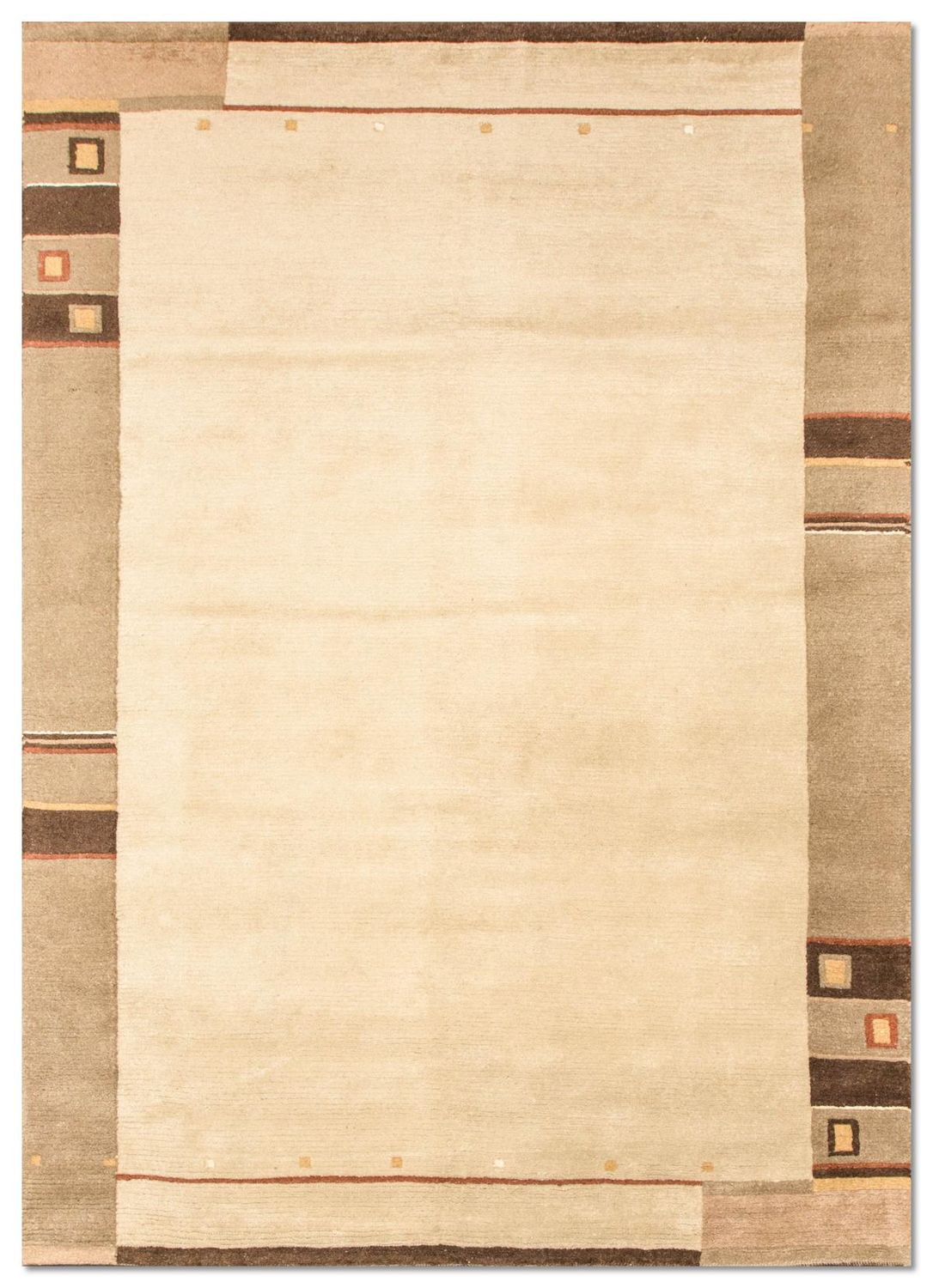
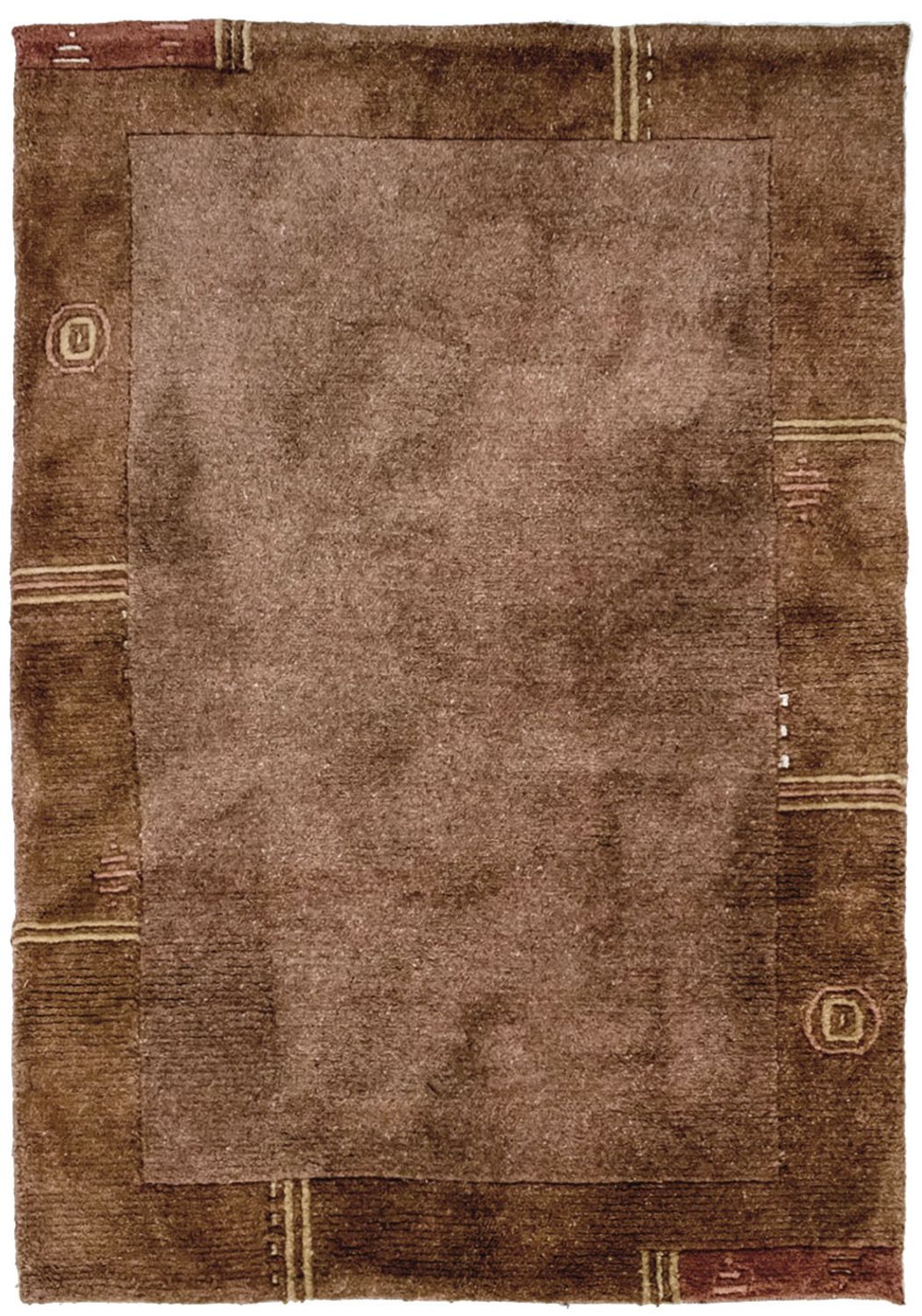
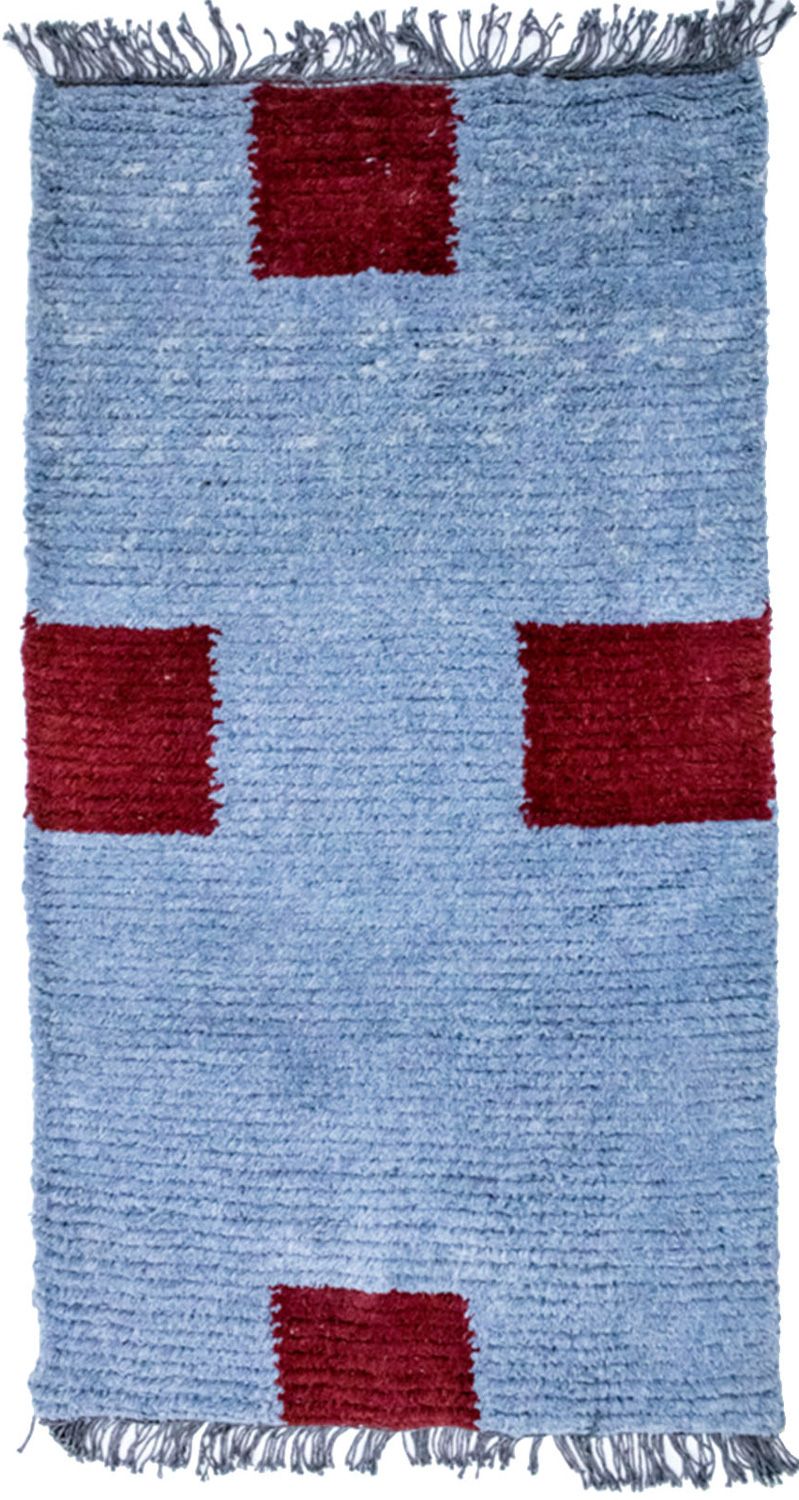
Photo: Morgenland Rugs
Nepal rugs are hand-knotted rugs from the Kathmandu valley, worked with the Tibetan knot and characterised by thick highland wool and often modern, restrained patterns. Unlike most Persian rugs, they use neither the Senneh nor the Ghiordes knot but a loop technique worked over an auxiliary rod that gives this rug type its particular, somewhat looser and softer character. Today Nepal rugs are among the most sought-after designer rugs. This article explains the origin, patterns, material, the Tibetan knot, value, and marks of authenticity.
What is a Nepal rug?
A Nepal rug is a hand-knotted rug from Nepal, predominantly from the Kathmandu area, with a pile of highland wool. Characteristic is the knotting with the Tibetan knot, a loop technique fundamentally different from the Persian and Turkish knots. Warp and weft are usually cotton, the pile wool, sometimes with portions of silk or bamboo for silken sheen accents.
The term stands for a whole, comparatively young knotting tradition, not for a single pattern. It joins Tibetan craft with contemporary design and ranges from plain single-colour fields and gentle gradients to clear graphic patterns. The Nepal rug therefore differs clearly from the dense floral drawing of classical Persian rugs and stands stylistically closer to modern interior schemes.
Origin
Rug knotting in Nepal is young. It only arose in the second half of the 20th century, carried by Tibetan refugees who came to the Himalayan region after 1959 and brought their craft with them. With support from aid organisations they built up a rug production in the Kathmandu valley that quickly became one of Nepal's most important economic sectors and export goods.
In the 1980s and 1990s the industry experienced a boom, driven above all by demand from Europe and North America. From this phase also comes the close link between Nepal rugs and contemporary design: Western designers developed patterns that were put into hand-knotted form in Nepal. In the following years fair working conditions and the ban on child labour came to the foreground, visible for instance in seals such as GoodWeave (formerly Rugmark). The tradition is clearly to be distinguished from the classical knotting countries of Persia and Turkey and forms its own young school of hand-knotting.
Patterns and colours
Nepal rugs show a broad spectrum that ranges from Tibetan tradition to clearly modern design:
- Plain single-colour fields and gentle gradients that let the wool and knot structure work.
- Graphic, restrained patterns with clear geometric forms.
- Traditional Tibetan motifs such as dragons, lotus, mandalas, and Buddhist symbols.
- Large-area, calm compositions with few but expressive elements.
The palette often moves in restrained, earthy tones such as beige, sand, grey, brown, and rust, complemented by muted accents in blue, green, or gold. This calm colour world and the restrained division of surfaces are the reason why Nepal rugs sit well with modern interiors. Portions of silk or bamboo set targeted highlights and lift individual parts of the pattern.
Material and knotting technique
The pile is traditionally made of highland wool, often from Tibetan or highland sheep. This wool has a high share of natural lanolin and is therefore tough, dirt-repellent, and pleasantly lustrous. Properties and processing of the fibre are described in the article on sheep's wool; the comparison with silk and other fibres is in the materials overview. For sheen accents, portions of silk or bamboo viscose are sometimes added. Warp and weft are usually cotton.
Decisive is the Tibetan knot, a loop technique that differs clearly from the Persian and Turkish knots: the knotter runs a continuous wool thread in front of a horizontal metal rod across an entire row of knots and loops it around two warp threads at a time. Only when the row is finished does he cut the loops along the rod, so that the whole row of knots and the pile height arise in a single working step. The pile height is therefore set by the diameter of the rod.
This technique separates the Nepal rug fundamentally from the Persian Senneh knot and the Turkish Ghiordes knot, in which each knot is set individually around the warp threads. The Tibetan knot is faster to work and produces a somewhat looser, very soft pile with a lively surface. The knot types and their differences are explained in their own overview; the full sequence from warping the loom to shearing is described in the article on rug production.
Knot density and quality
The knot density of Nepal rugs usually lies between roughly 60,000 and 180,000 knots per square metre. In trade, fineness is often given in knots per inch (kpi), such as 60, 80, or 100 kpi. Higher values mean a finer drawing, but because of the thicker yarn and the loop technique, the extreme densities of Persian silk rugs are neither usual nor the goal for Nepal rugs. What knot density really means and why it is not a sole guarantee of quality is explained in its own article.
More important than the plain knot count for this rug type are the quality of the wool, the cleanliness of the knotting, the evenness of pile and colour gradient, and the finishing of the edges. Good highland wool with a high lanolin content makes the difference between a decorative and a durably hard-wearing piece.
| Feature | Nepal rug | Classical Persian rug |
|---|---|---|
| Knot | Tibetan knot (loop technique) | Senneh or Ghiordes knot (individual knots) |
| Pile height | medium to high, soft | mostly short, firm |
| Pile material | highland wool, sometimes silk or bamboo | wool or silk |
| Knot density | approx. 60,000 to 180,000 / m² | approx. 120,000 to over 1,000,000 / m² |
| Pattern | often modern, restrained, graphic | mostly floral or geometric, traditional |
| Character | soft, contemporary | classical, densely drawn |
What is a Nepal rug worth?
The value of a Nepal rug depends on size, wool quality, knot density, material mix (pure wool or wool with silk), design, and finishing. As this is a young tradition, what matters is less the collector interest than the craft and design quality. High-quality pieces of good highland wool with fine knotting and elaborate design sit clearly above plain trade ware, but on average do not reach the highest prices of the finest silk rugs.
For a grounded assessment, see the overview What is my rug worth? and the article Why genuine rugs are expensive. Practical guidance on selection, for instance on material, design, and seals, is in the buying guide.
How can you tell a genuine Nepal rug?
For Nepal rugs, what counts is above all to distinguish a hand-knotted piece from a machine imitation and to recognise the Tibetan knot. Typical signs of a genuine, hand-knotted piece include:
- Hand-knotted back: the pattern is mirrored visibly; the knots form an even but slightly lively grid.
- Traces of the Tibetan knot: the row structure typical of the loop technique can be read on the back.
- Real fringes: the fringes are the extended warp threads, not sewn or glued on.
- Natural wool: highland wool smells faintly of lanolin and feels warm and slightly oily.
- Lively colours: hand-dyed wool shows fine colour variations (abrash), while machine ware often looks entirely uniform.
- GoodWeave seal: a sign of verified fair production without child labour; not a proof of authenticity, but a quality signal.
A general step-by-step check of hand-knotted rugs is set out in Is my rug genuine?; the marks of authenticity are summarised in identifying hand-knotted rugs.
Care
Thanks to the robust highland wool, Nepal rugs are easy to care for and well suited to daily use. Regular vacuuming in the direction of the pile keeps the pile clean; the natural lanolin acts as a dirt repellent. For high piles, a nozzle without an aggressive rotary brush is recommended to spare the loop structure. Long, direct sunlight will fade wool colours too.
Spills should be blotted at once with clear water and not rubbed. More serious soiling belongs in a professional cleaning, especially for pieces with a silk or bamboo content that react more sensitively. Detailed guidance is in the care overview.
Frequently asked questions
What is the Tibetan knot?
The Tibetan knot is a loop technique. The knotter lays a continuous thread in front of a metal rod and loops it around two warp threads at a time across a whole row, then cuts the loops along the rod. Pile height and knot row arise in a single working step. This technique sets the Nepal rug apart from the Persian Senneh and the Turkish Ghiordes knot.
How do Nepal rugs differ from Tibetan rugs?
Nepal rugs use the same Tibetan knotting technique but are younger, often made in larger formats and with more modern, export-developed designs. Classical Tibetan rugs are usually smaller and more strongly oriented to traditional motifs.
Are Nepal rugs suitable for heavily used rooms?
Yes. The hard-wearing highland wool with its high lanolin content is dirt-repellent and robust, so Nepal rugs are well suited to living rooms, hallways, and other heavily used spaces.
Why do Nepal rugs sit so well with modern interiors?
Because many designs are restrained and graphic, with calm, earthy colours and generous fields. This restrained design fits well into contemporary interior schemes, unlike the dense floral drawing of classical Persian rugs.
How do I recognise a hand-knotted Nepal rug?
By the hand-knotted back, on which the pattern is mirrored and the typical row structure of the Tibetan knot can be read; by real fringes from the warp threads; and by the natural wool with its faint lanolin smell and fine colour variations. A guide is in Is my rug genuine?.
Do Nepal rugs contain silk?
Some do. High-quality pieces add portions of silk or bamboo viscose to the highland wool to lift individual pattern parts with sheen. Pure wool rugs are more robust; pieces with a silk content feel more refined but need a little more care.
How do I care for a Nepal rug correctly?
Vacuum regularly in the direction of the pile, with a high pile without an aggressive rotary brush, and avoid prolonged sunlight. Blot spills at once with clear water, do not rub. Pure wool rugs tolerate cautious damp cleaning; pieces with a silk content belong in expert hands when soiling is heavier.
Impressions of the origin
Places, landscapes and landmarks around the home of Nepal rugs. Click any image for a larger view.