//
Knotted on portable looms out in the wilderness, nomadic rugs tell stories of life on the move and the natural world.
Photo: Morgenland Rugs
Nomadic rugs are hand-knotted rugs made by migratory and semi-settled tribes of the Orient, not in urban workshops. They are produced by the Qashqai and Khamseh in southern Persian Fars, by the Baluch in the Iran-Afghanistan border region, by the Turkmens of Central Asia and by the Berbers of the Atlas. Characteristic are bold geometric patterns, earthy natural colors and a deliberately unpolished knotting that mirrors the life of the tribes.
A nomadic rug is therefore not a single style but a body of work defined by its social origin. It is knotted on light, transportable horizontal looms, with wool from the tribe's own flocks, without a cartoon and often from memory. This page explains what sets a nomadic rug apart from urban and village goods, which tribes shape the most important types, how to recognize authentic tribal work and what to look for when buying.
The most common mix-up is between nomadic and village rugs, since both are coarse, geometric and held in natural colors. The difference lies in the way they are produced. A nomadic rug is made on a mobile horizontal loom that is taken down each time the tribe moves on. From that follow slightly varying widths, irregular edges and a frequent natural color shift, the Abrash. A village rug, by contrast, is made on a fixed loom inside a house, is more even and often follows a regional standard pattern.
Both belong to the larger family of oriental rugs and together set themselves apart from the fine city rugs such as Isfahan or Nain. In the trade, the term nomadic rug refers to a rug from tribal production, regardless of whether the tribe still migrates today or has settled. The basic difference between hand and machine goods is covered in the comparison hand-knotted vs. machine-made.
Yes. Nomadic rugs belong to the most original forms of oriental rug knotting altogether. The oldest knotted rugs in the world, among them the Pazyryk rug from the fifth century BC, trace back to a horse-riding nomadic culture. Tribal rugs are therefore not a simple variant of the oriental rug but its root. The urban workshops developed their fine floral patterns only centuries later.
The name of a nomadic rug almost always points to the knotting tribe or its trading market. Each group cultivates its own repertoire of patterns, colors and knotting techniques. The overview below places the best-known tribes.
| Tribe / style | Known for | Typical features |
|---|---|---|
| Qashqai | colorful tribal art | diamond medallions, stylized animals, strong red and blue |
| Baluch | dark prayer rugs | deep brown and red, camel hair, fine wool |
| Afshar | geometric medallions | diamond lattices, clear color fields, robust wool |
| Shiraz | Qashqai trading market | lively fields, chicken and animal motifs |
| Yalameh | Khamseh confederation | diamond chains, glowing natural colors |
| Kashkuli | finer Qashqai work | denser knotting, clear borders |
| Khal Mohammadi | Turkmen gül patterns | deep red ground, octagonal güls |
The southern Persian tribes around Shiraz deliver the most colorful pieces, the Baluch the darkest and most meditative. Turkmen groups such as those behind the Khal Mohammadi stand for the strict gül grid on a red ground. All recorded styles can be found in the styles overview.
The knotting craft of the tribes is older than any city workshop. Mounted nomads of Central and Western Asia made rugs as portable furnishings: as sleeping mat, tent hanging, saddle blanket and storage bag. The Pazyryk rug, preserved in the Siberian Altai ice, documents this tradition as early as the fifth century BC.
The tribal federations known today took shape over the past centuries. The Qashqai in southern Persian Fars are a Turkic-speaking confederation whose summer and winter migrations between highland and coastal plain reached into the 20th century. The Baluch live in the tri-border area of Iran, Afghanistan and Pakistan. Turkmen groups shaped the knotting art from Turkmenistan to Afghanistan with the gül motif. In North Africa, the Berber tribes of the Atlas developed their own high-pile tradition. More on the development is in Origin of the knotting art.
Nomadic rugs are made almost entirely from the raw materials of the tribe's own flocks. The pile is knotted from handspun virgin wool, often supplemented by glossy goat hair and strong camel hair for particular texture effects. Warp and weft, too, are often wool, whereas city rugs there usually use cotton. Dyeing is traditionally done with plants and minerals: madder for red, indigo for blue, weld and pomegranate skins for yellow. This practice is covered in the article Recognize natural dyes.
In knotting, the symmetric Turkish knot (Ghiordes) dominates in many tribal regions, since it sits firmer and is more wear-resistant. The Qashqai, on the other hand, work with the asymmetric Persian knot. The knot density, at around 40,000 to 150,000 knots per square meter, sits below that of city rugs, reflecting the freer, faster way of working. The full process is in the Production area, the techniques on the page Knotting and the overview Knot types.
Authentic tribal work shows a number of well-checkable features that together give a reliable picture:
The complete guide is in Recognize an oriental rug, the authenticity check in Is my rug authentic?. The age of a piece can be narrowed down with the page How old is my rug?.
The value of a nomadic rug is determined less by sheer knot density than by age, tribal origin, purity of the natural dyes and graphic power. Old Qashqai and Baluch pieces from the era before aniline dyes are sought after because their colors have developed a warm patina over decades. Why handwork has its price is explained in Why authentic rugs are expensive, the appeal of old work in Old rugs gain in value.
Before buying, the buying guide and the comparison Vintage vs. new are helpful. Anyone torn between several tribal types uses the style comparison. Look out for natural colors instead of garish chemical ones, the difference is explained in Natural dyes vs. chemical dyes.
Nomadic rugs are made for hard wear and are correspondingly robust. Regular vacuuming in the pile direction with the brush roll switched off is enough for everyday use. Stains are dabbed at once with clean water, never rubbed. A professional cleaning every three to five years preserves color and substance, harsh chemistry attacks the natural dyes. The complete routines are in the care overview.
Yes. Nomadic rugs are among the oldest and most original forms of oriental rug knotting. The over 2400-year-old Pazyryk rug documents that the craft comes from a nomadic culture and that the city workshops emerged only later.
Nomadic rugs are made on transportable horizontal looms and therefore show varying widths, irregular edges and frequent Abrash. Village rugs are made on fixed looms, are more even and often follow a regional standard pattern. Both set themselves apart from the fine city rugs.
The most important nomadic rugs come from southern Persian Fars (Qashqai, Khamseh), the Iran-Afghanistan border region (Baluch), Central Asia and Afghanistan (Turkmens) and the Moroccan Atlas (Berbers). The rug name usually points to the tribe or its trading market.
Look for a slightly varying shape, irregular edges, frequent Abrash, an often woolen warp and free patterns placed from memory. Handspun wool feels coarser than machine wool, and the pattern appears as a mirror image on the reverse.
In many tribal regions the symmetric Turkish knot (Ghiordes) dominates, because it sits firmer and is more wear-resistant. The southern Persian Qashqai, on the other hand, knot with the asymmetric Persian knot. Knot density mostly lies between 40,000 and 150,000 knots per square meter.
Yes. Nomadic rugs were made for daily, intensive use in tribal families and are very robust. The strong wool and the dense structure tolerate heavy load, the usually medium pile height makes cleaning easier.
Regular vacuuming in the pile direction with the brush roll switched off is enough in everyday use. Dab stains at once with clean water, never rub. A professional cleaning every three to five years preserves the substance, harsh cleaning agents should be avoided because they attack the natural dyes.
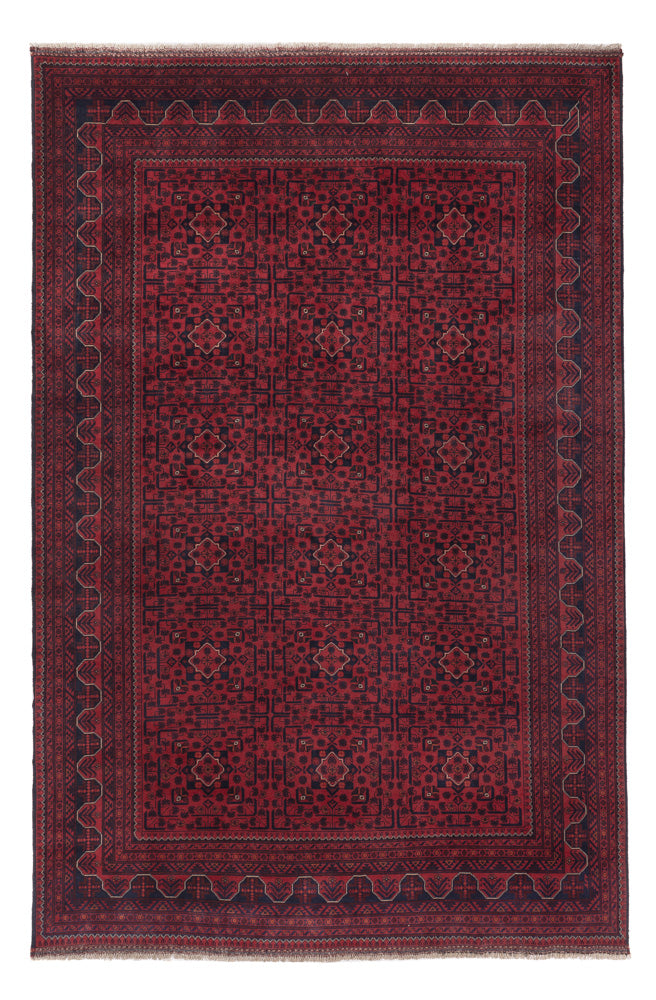
Khal Mohammadi rugs are produced in northern Afghanistan and stand out with their deep red tones and characteristic gül medallions.
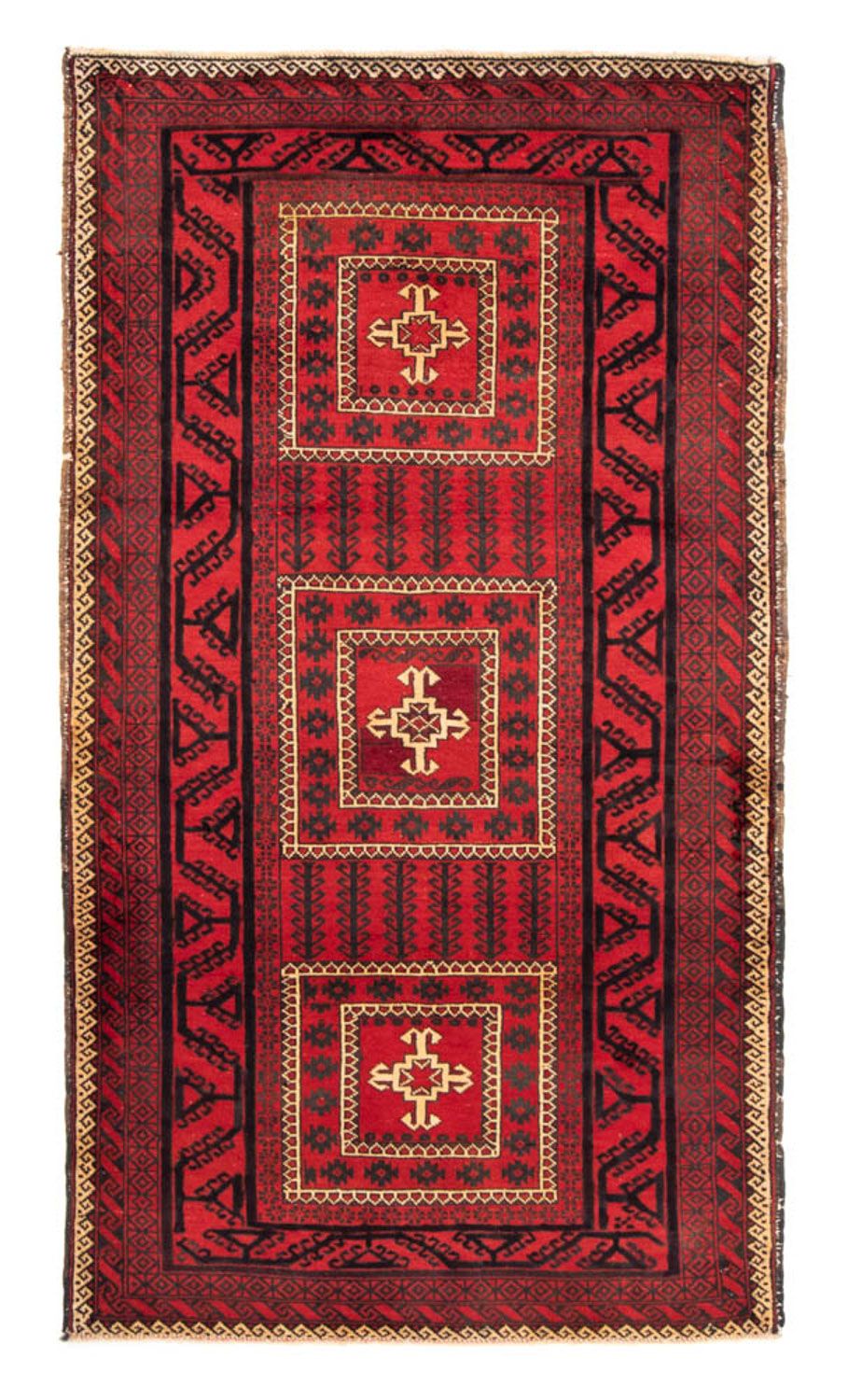
Baluchi rugs come from the borderlands of Iran, Afghanistan, and Pakistan, dark earth tones and prayer-rug formats define their nomadic style.
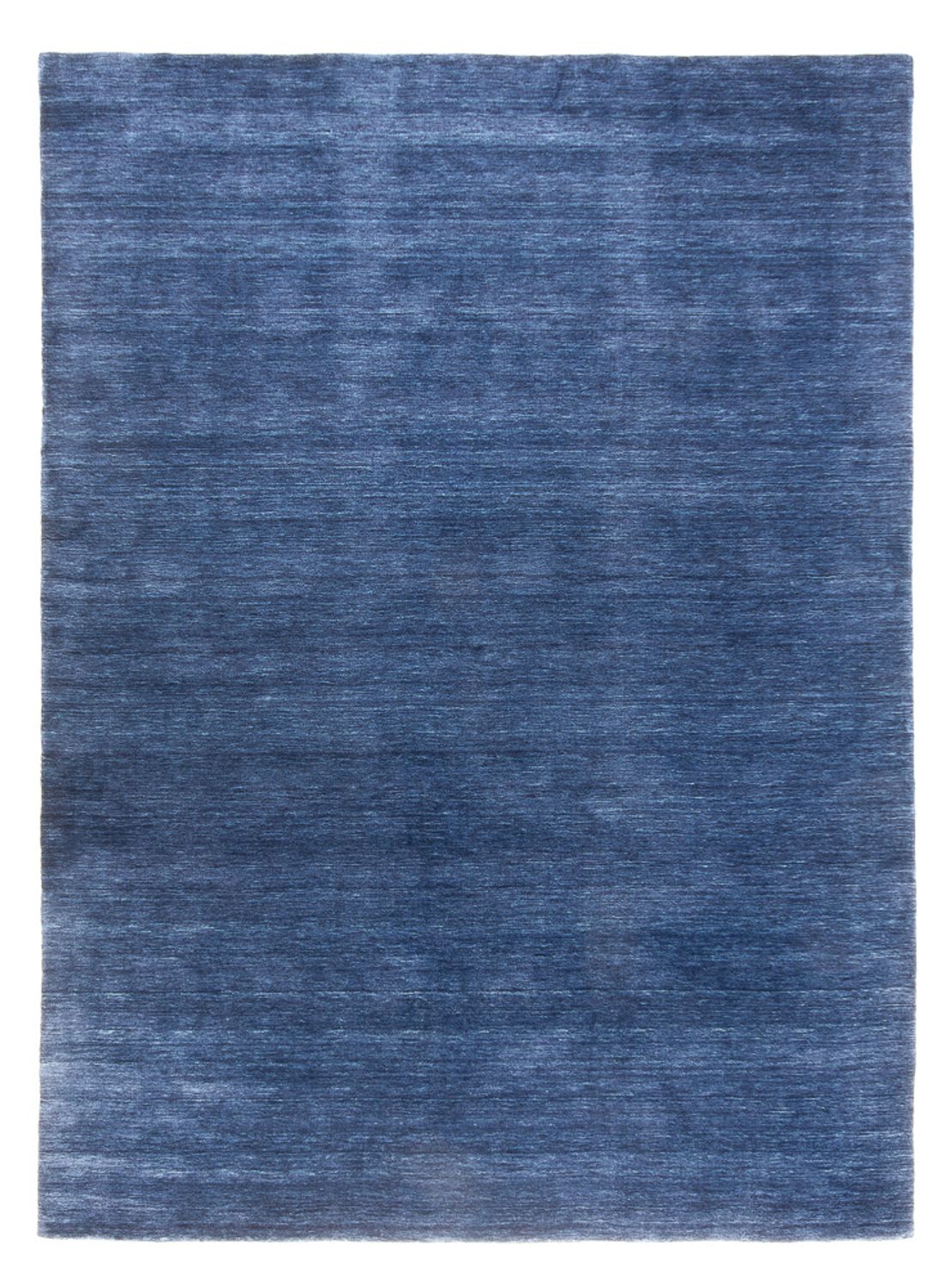
Loribaft rugs are knotted by Lori nomads in the southern Zagros and combine the long pile of a Gabbeh with finer detail work.
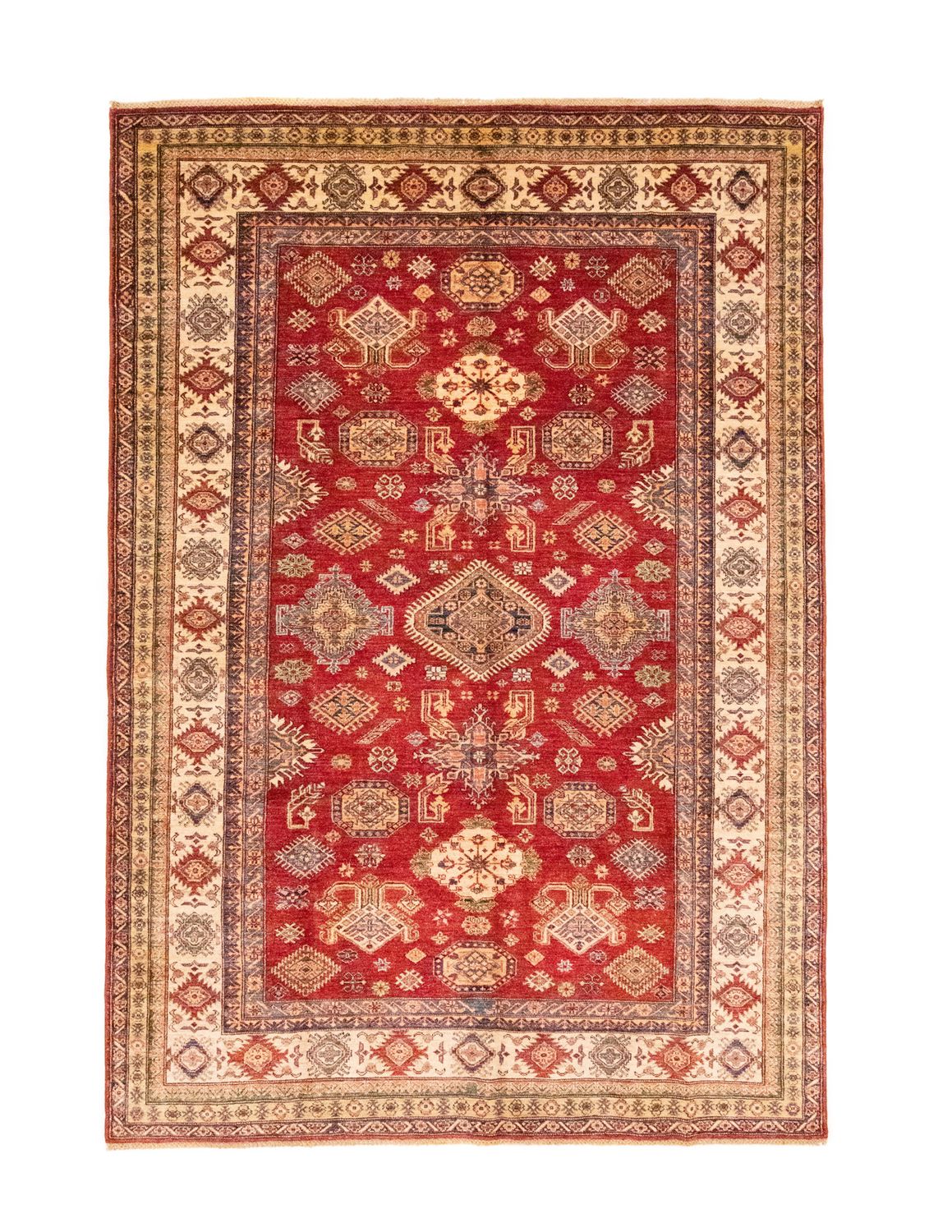
Kazak rugs from the southern Caucasus impress with bold geometric patterns and luminous colors.
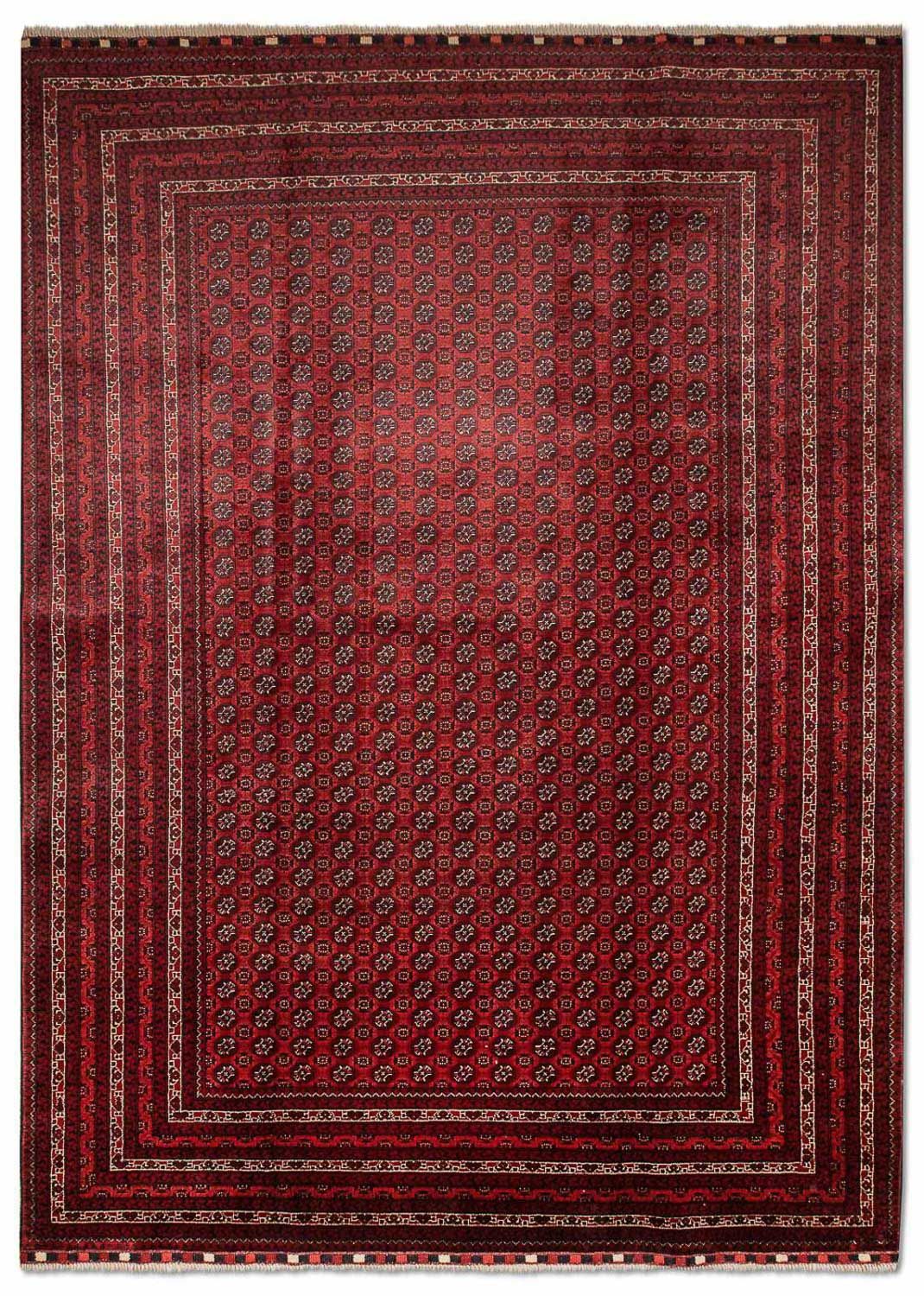
Bukhara rugs are world-famous for their typical octagonal gül medallions on a deep red ground.
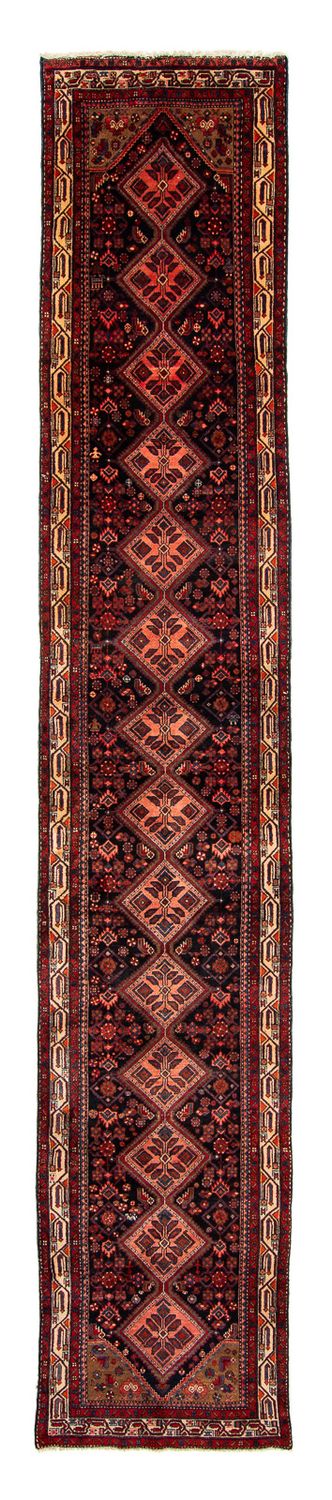
Klardasht rugs are produced in the Caspian highlands and are characterized by warm earth tones and tribal medallions.
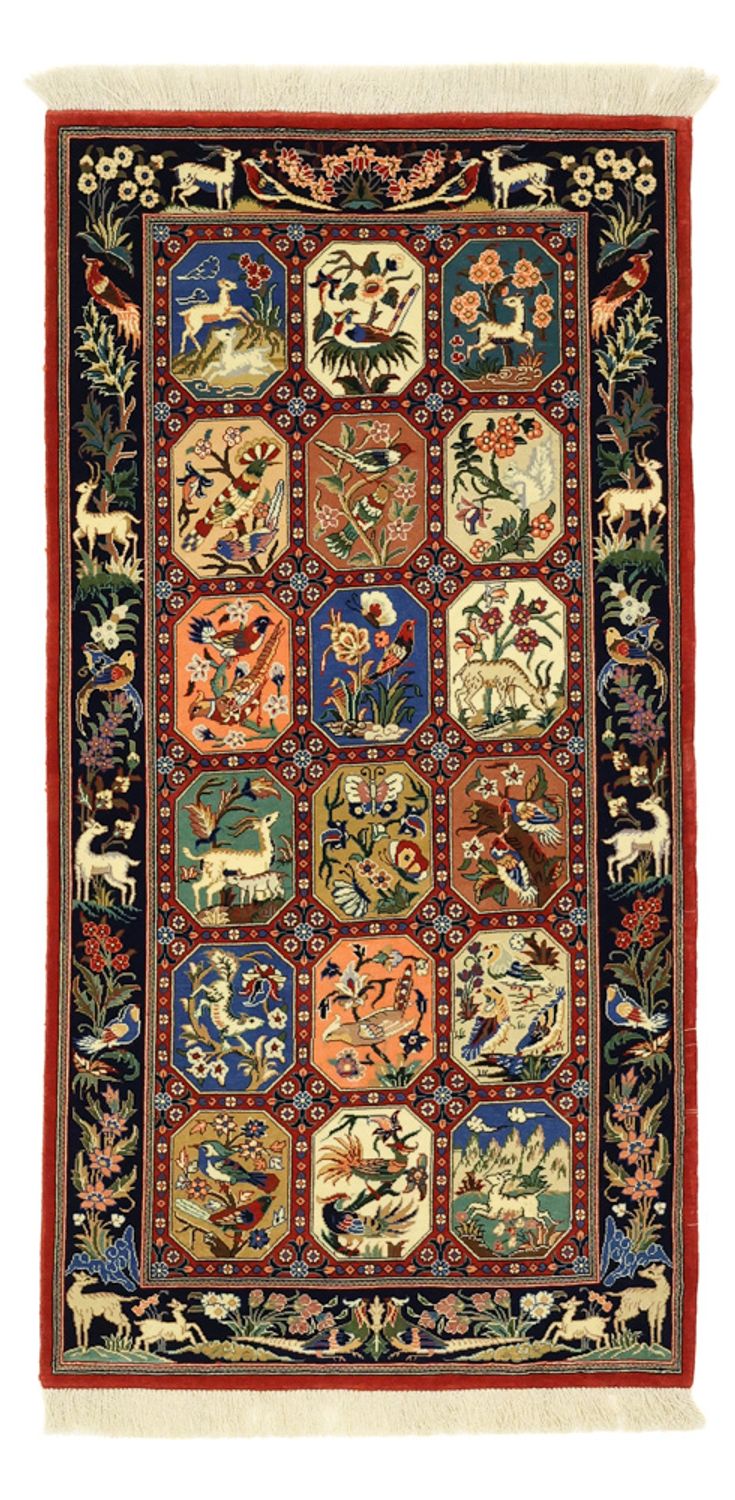
Ilam rugs come from the Zagros highlands of western Iran and combine Kurdish tribal motifs with a robust nomadic character.
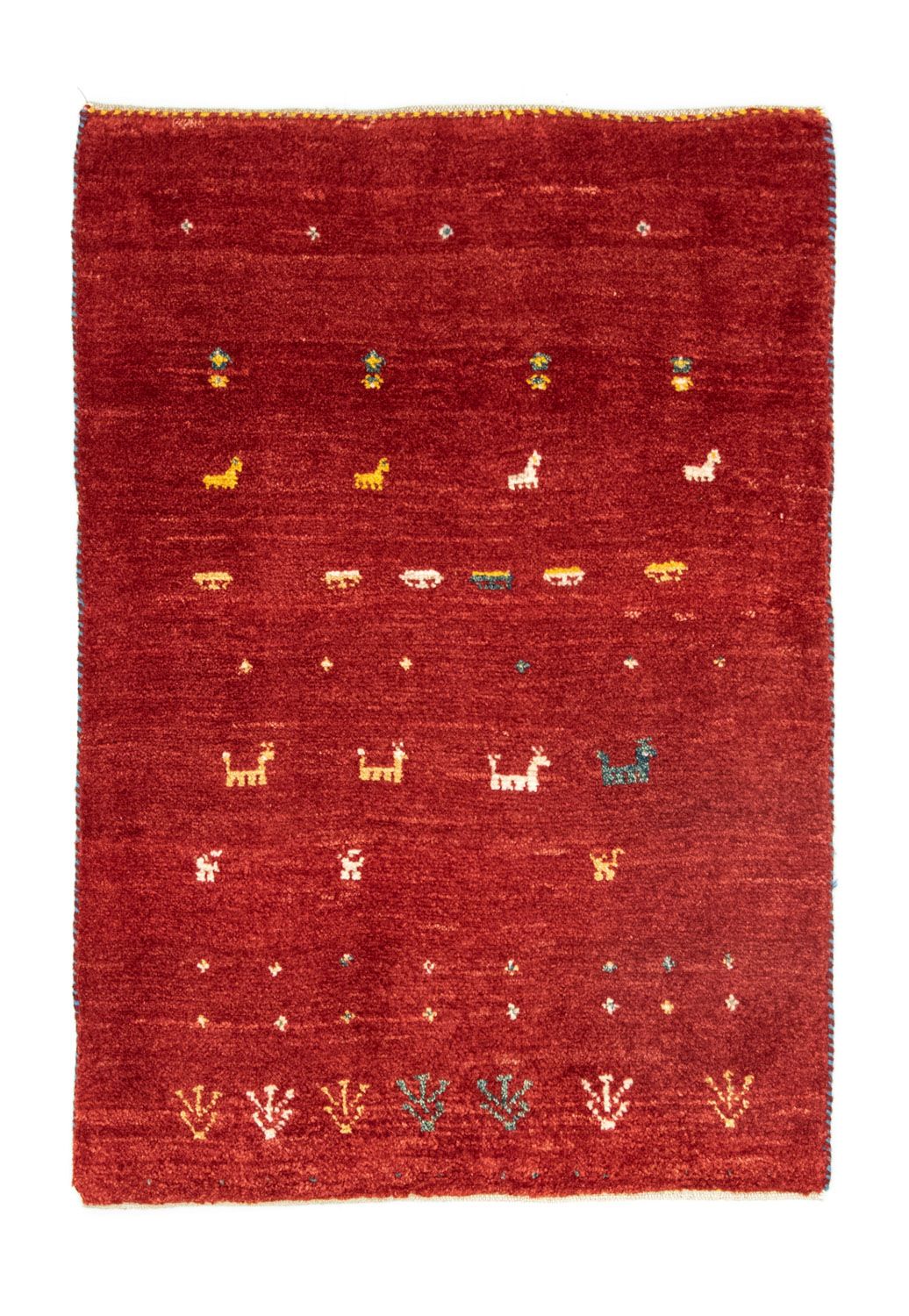
Kashkuli rugs are knotted by a refined Qashqai sub-tribe in Fars and show fine Qashqai medallions in cleaner workshop quality.
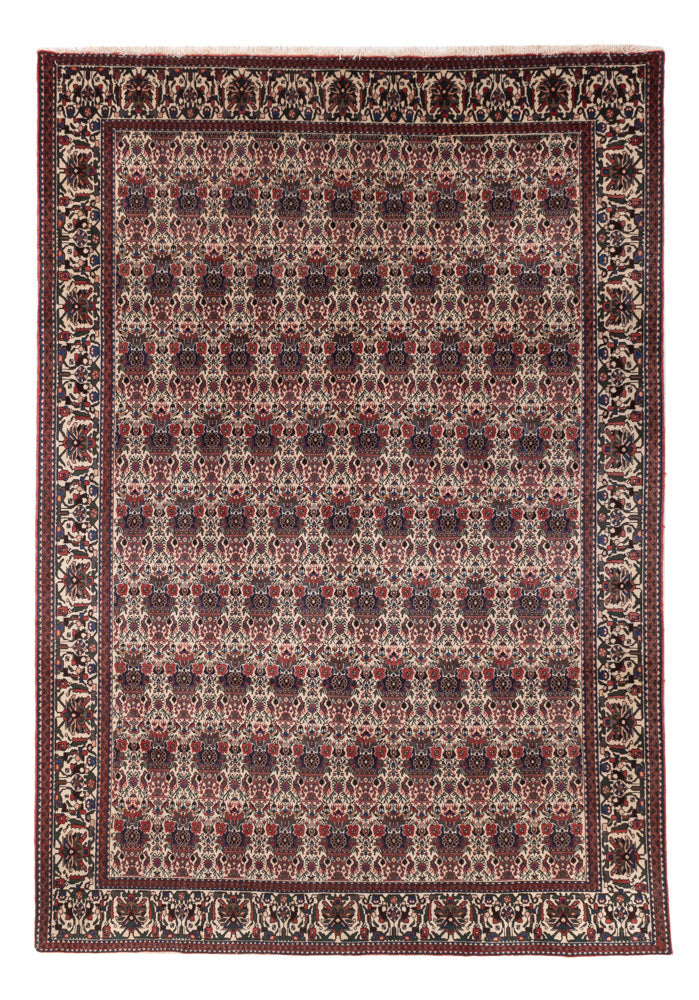
Yalameh rugs are knotted by a Qashqai sub-tribe in Fars and show diamond lattice fields full of nomadic symbols.
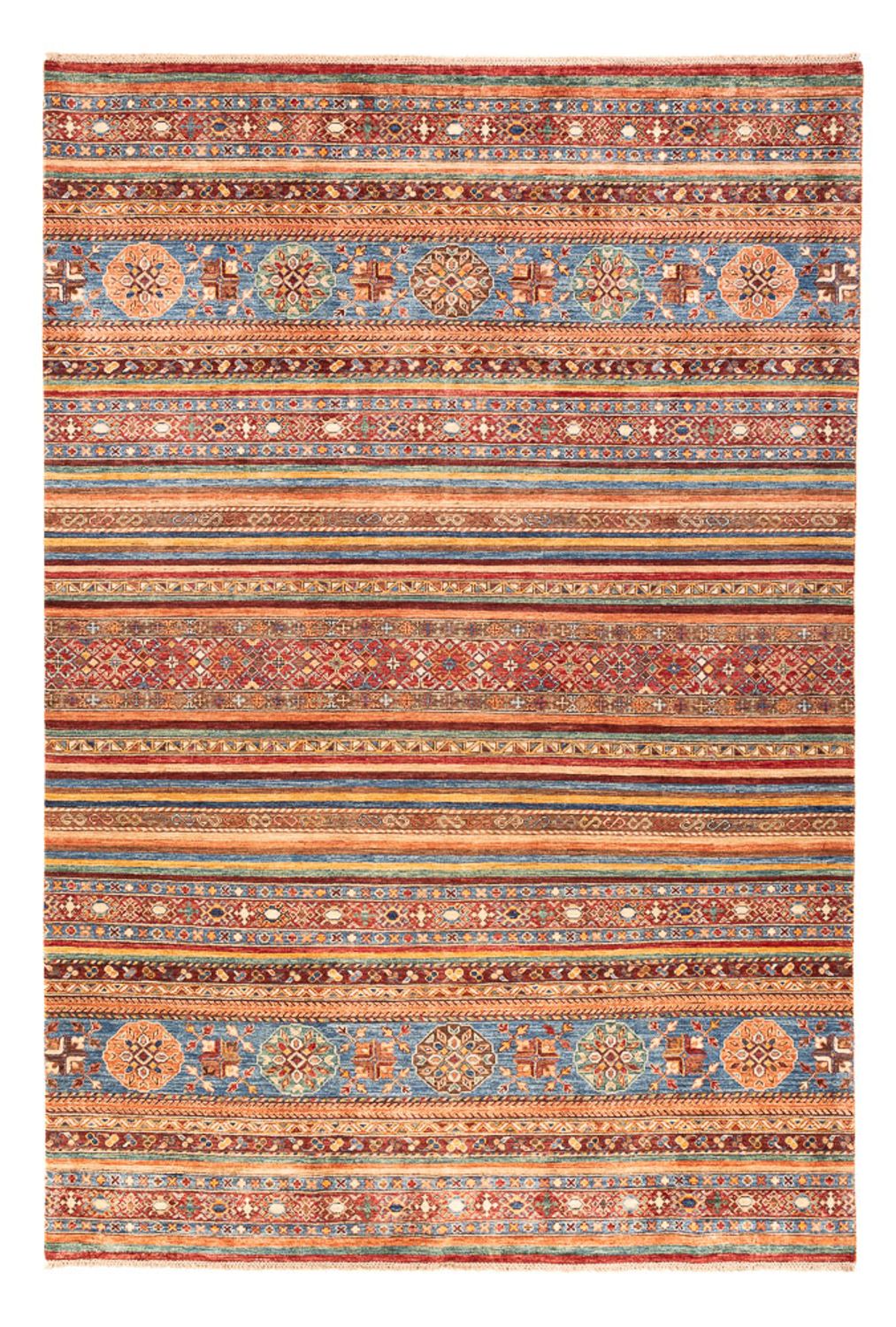
Shal rugs come from the Qazvin region and combine Kurdish tribal motifs with a finer workshop weave.
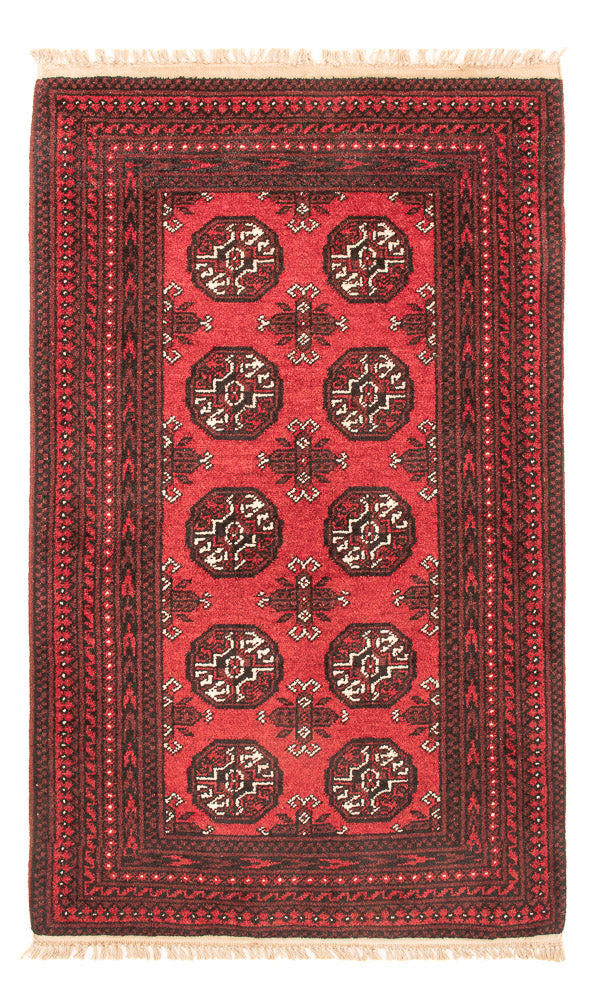
Akcha rugs are produced in northern Afghanistan and show typical Turkmen gül medallions on a deep red ground.
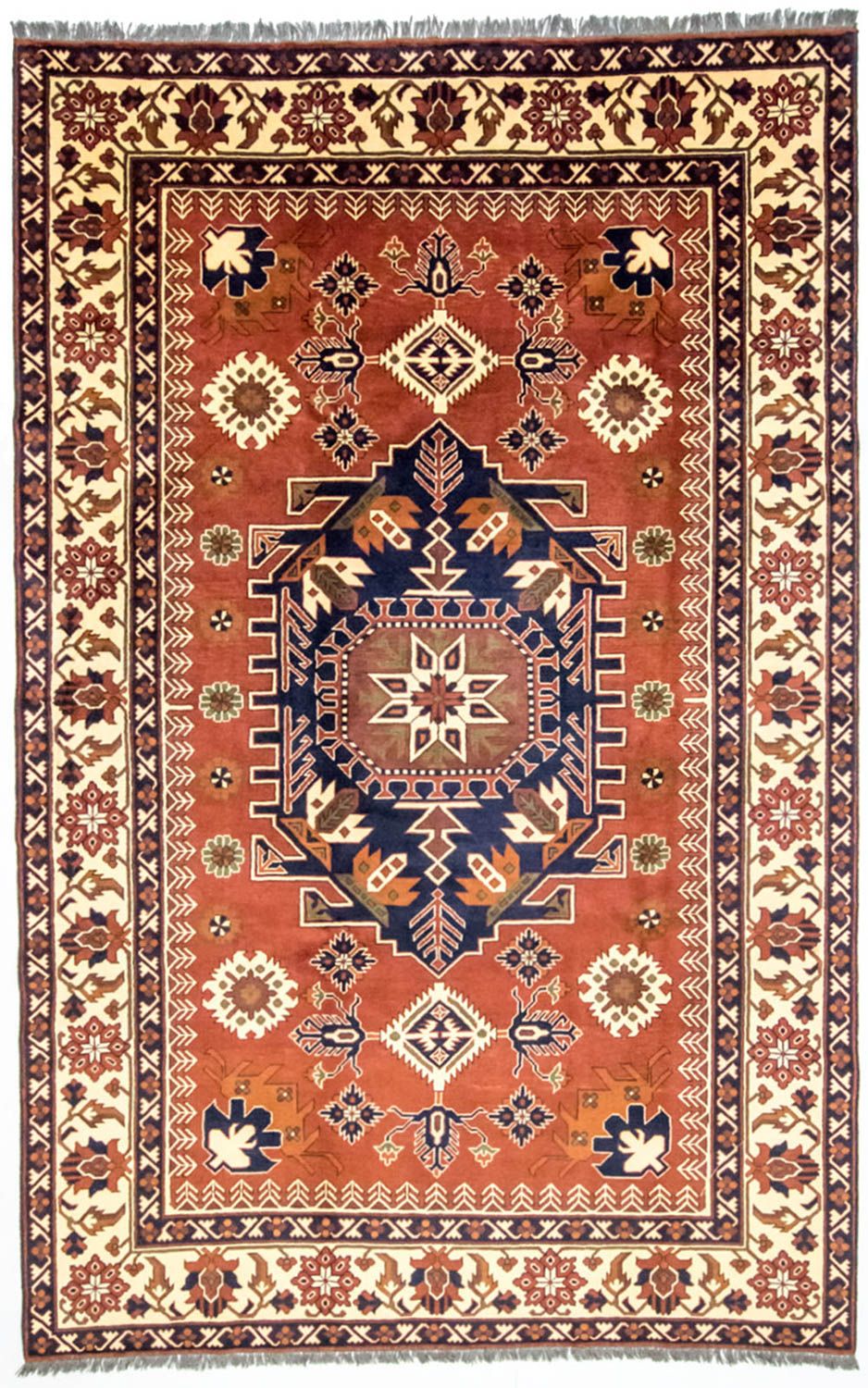
Hatchlu rugs are knotted by Turkmen tribes and show the typical four-field cross pattern of nomadic prayer rugs.
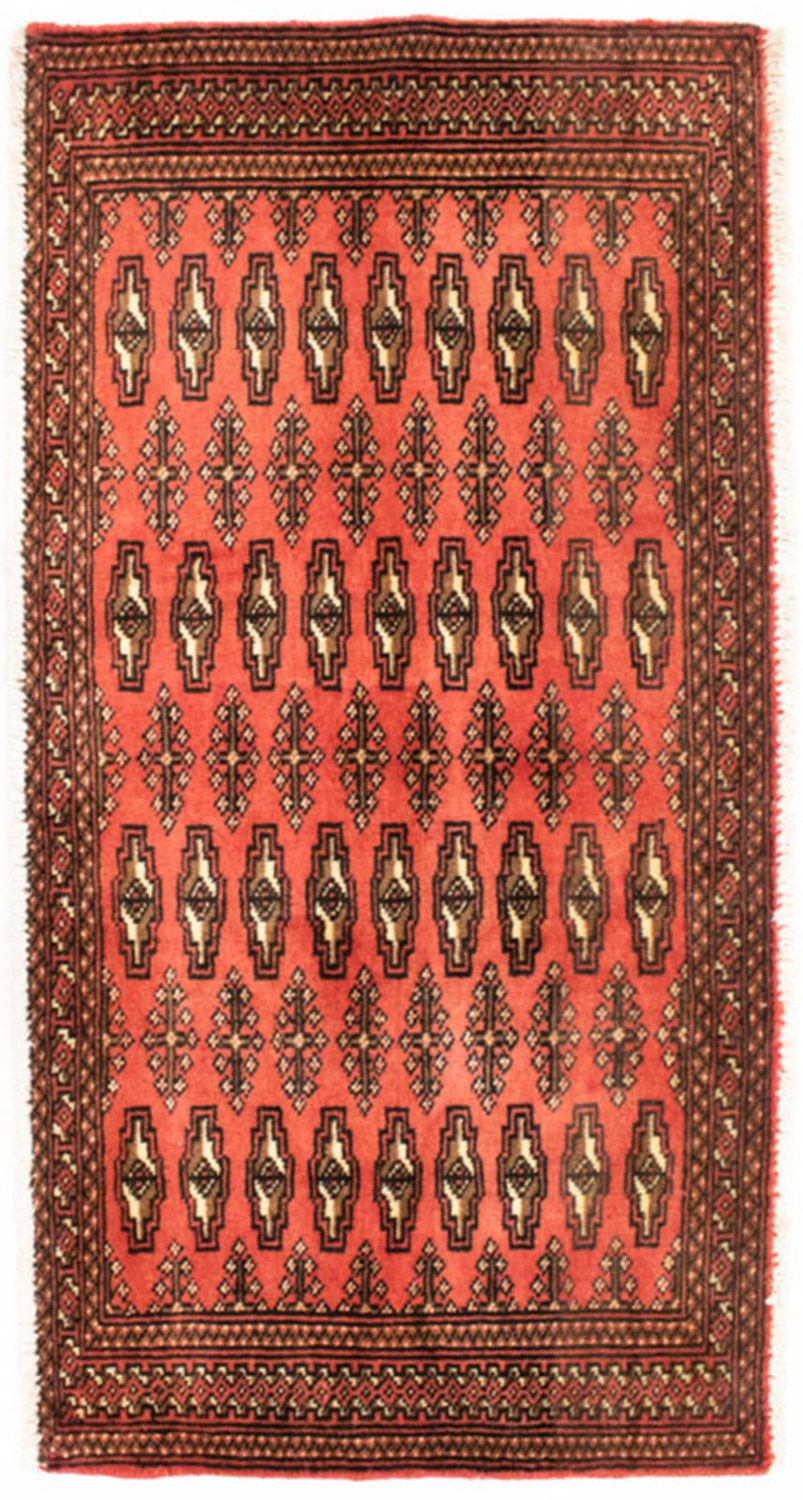
Turkmen rugs come from the Central Asian steppes and are world-famous for their characteristic gül medallions in deep red.
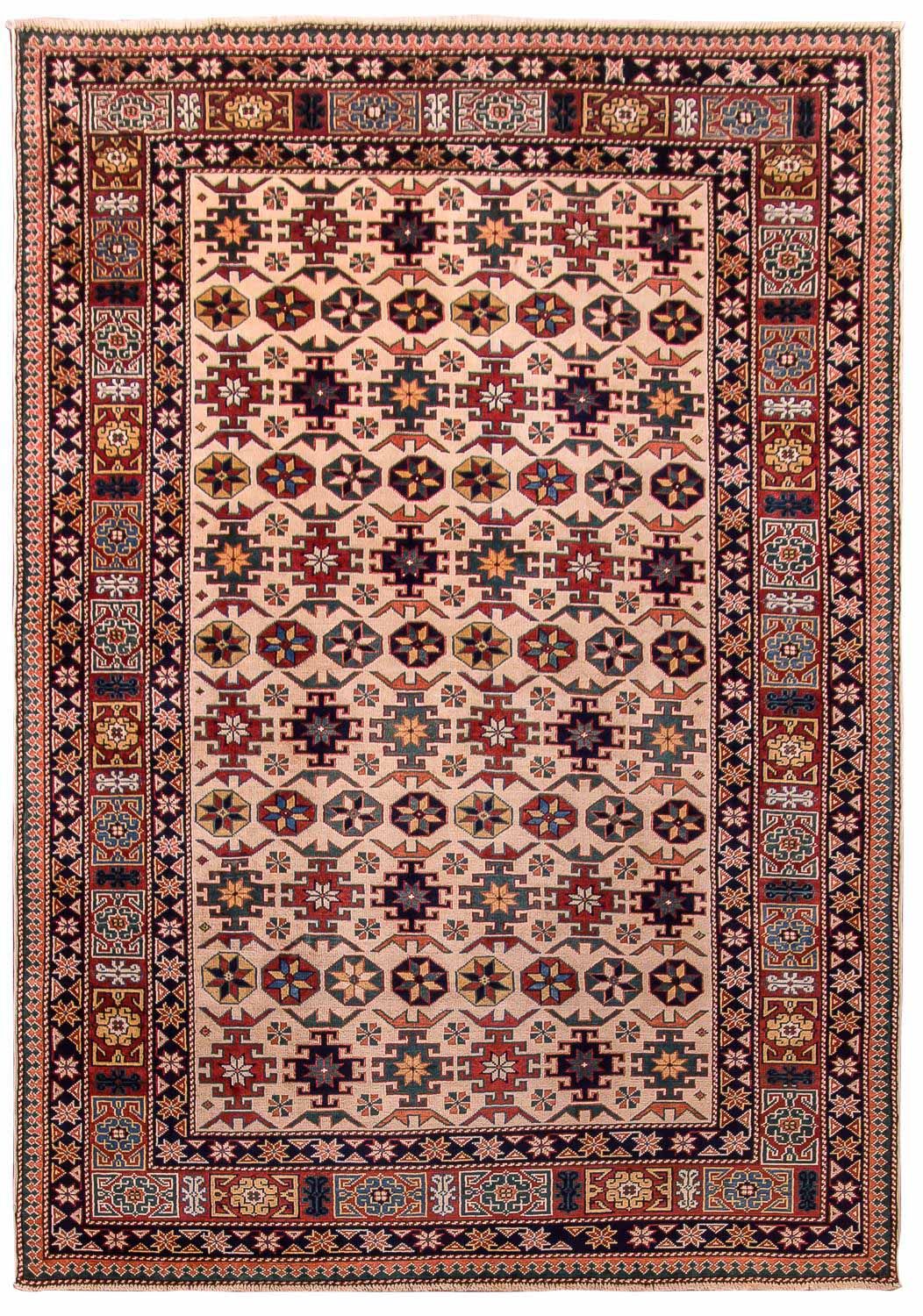
Shirvan rugs come from eastern Azerbaijan and stand out with their fine geometric medallions and clear color contrasts.
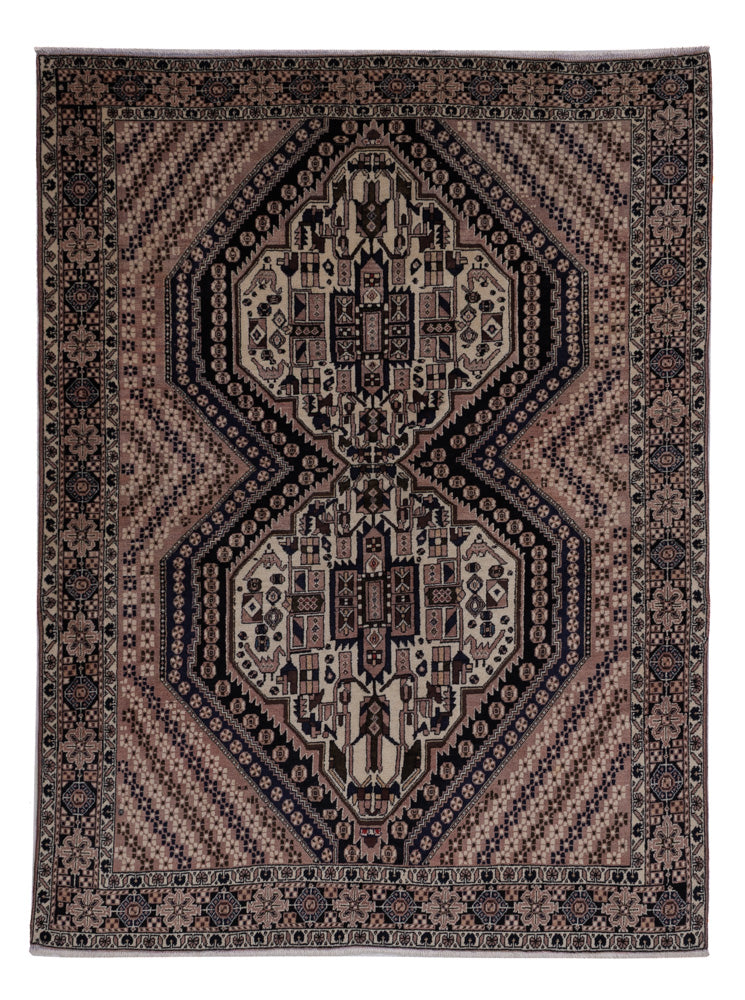
Afshar Sirjan rugs are knotted by Afshar tribes around Sirjan and combine nomadic motifs with refined craftsmanship.