Berber rugs: hand-knotted wool from the Moroccan Atlas
Berber rugs from North Africa, most famously Beni Ourain and Azilal, are known for minimalist patterns on heavy, undyed wool.
Profile
- Manufacturing
- Hand-knotted
- Origin
- Morocco — Atlas mountains
- Pile material
- Sheep wool on wool
- Knot density
- 40,000 – 100,000 knots/m²
- Features
- Minimalist black-on-ivory motifs, thick natural wool
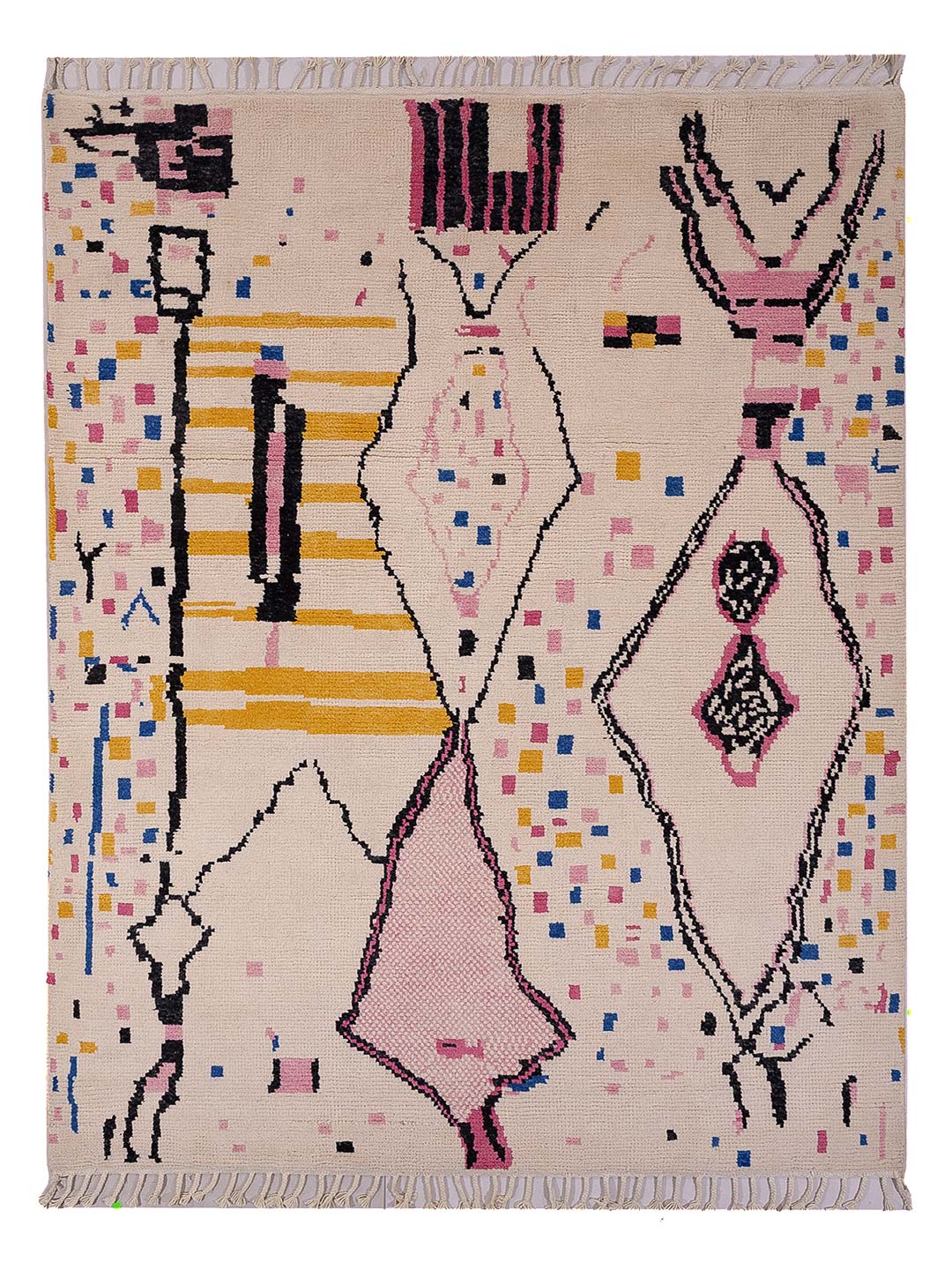
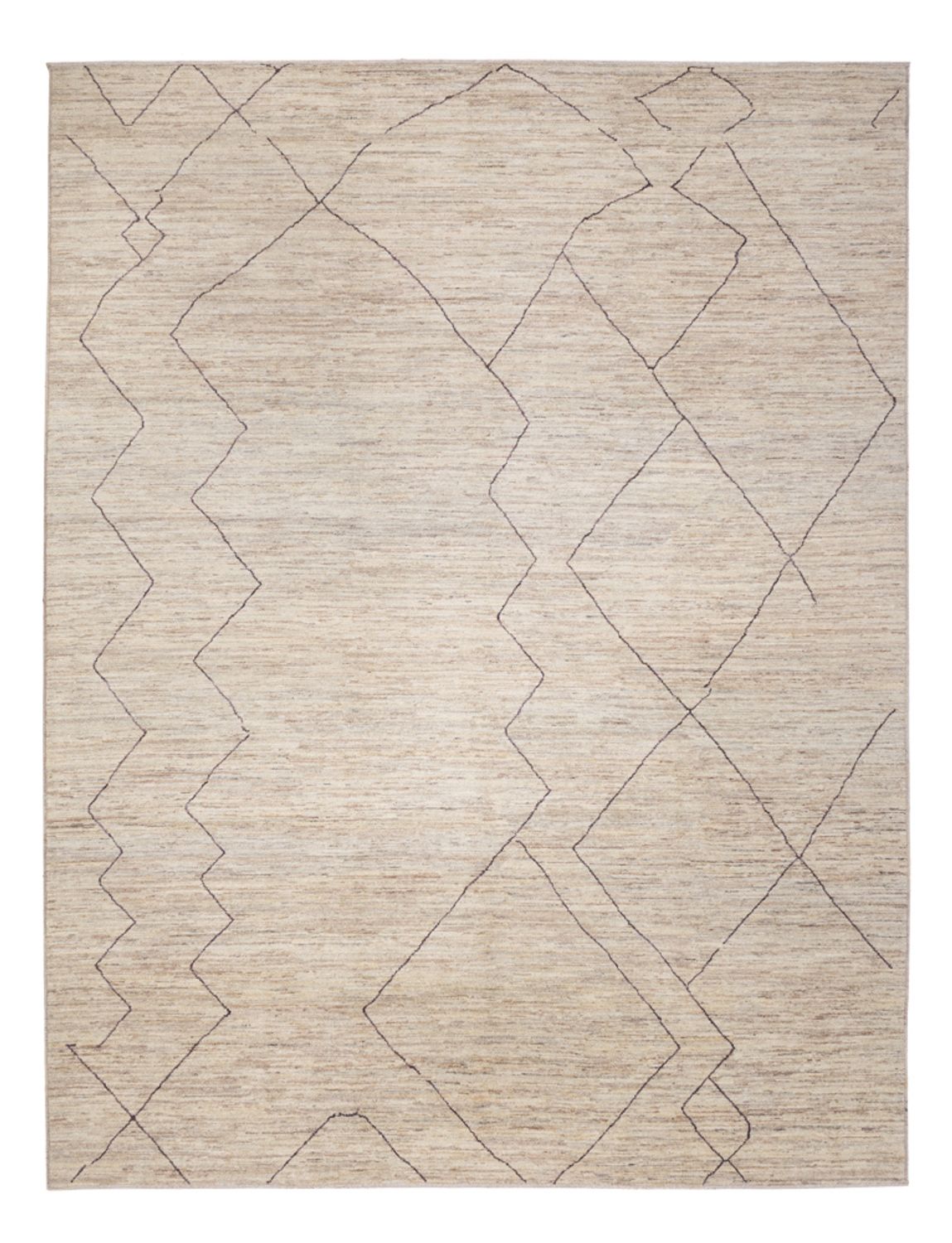
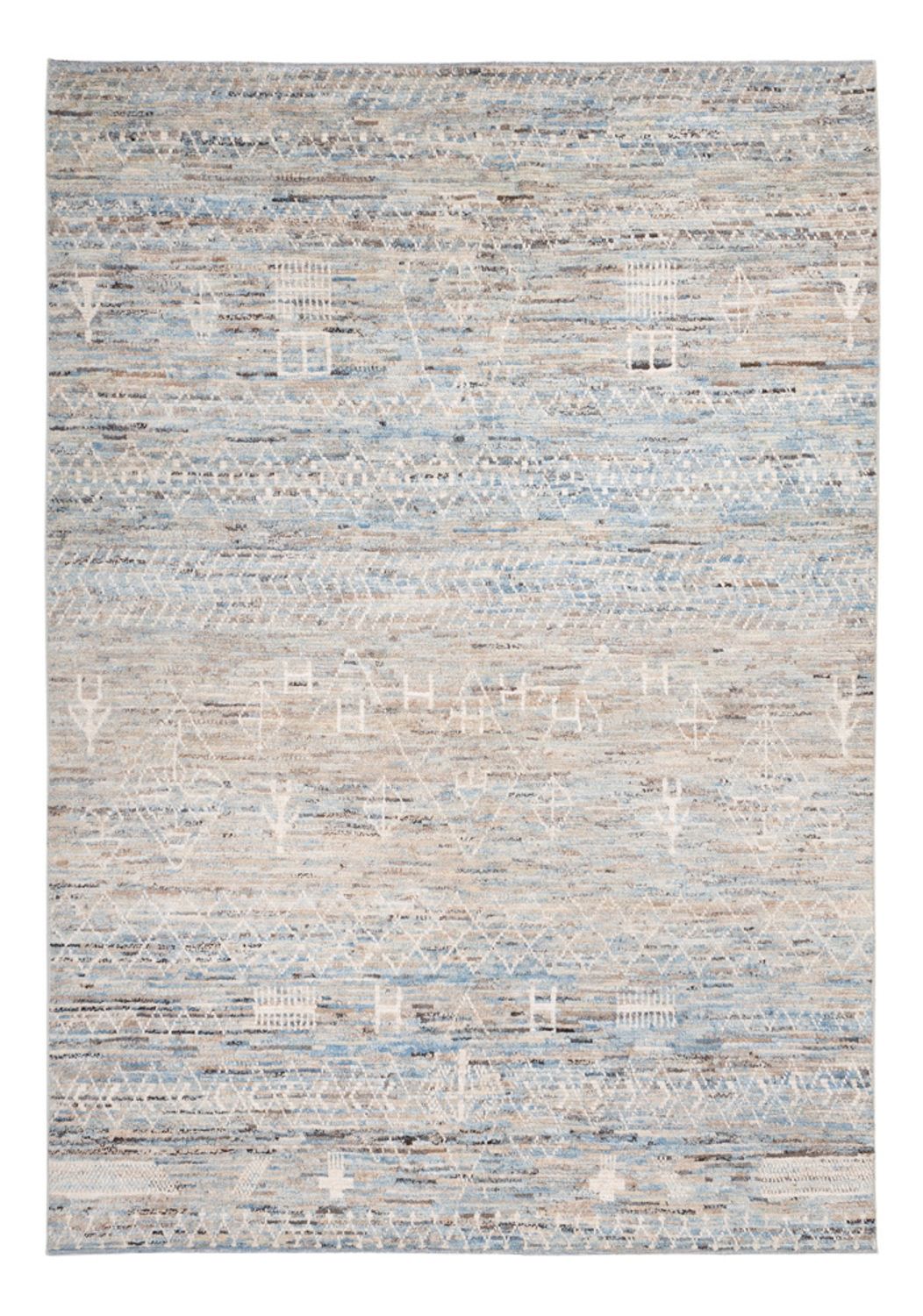
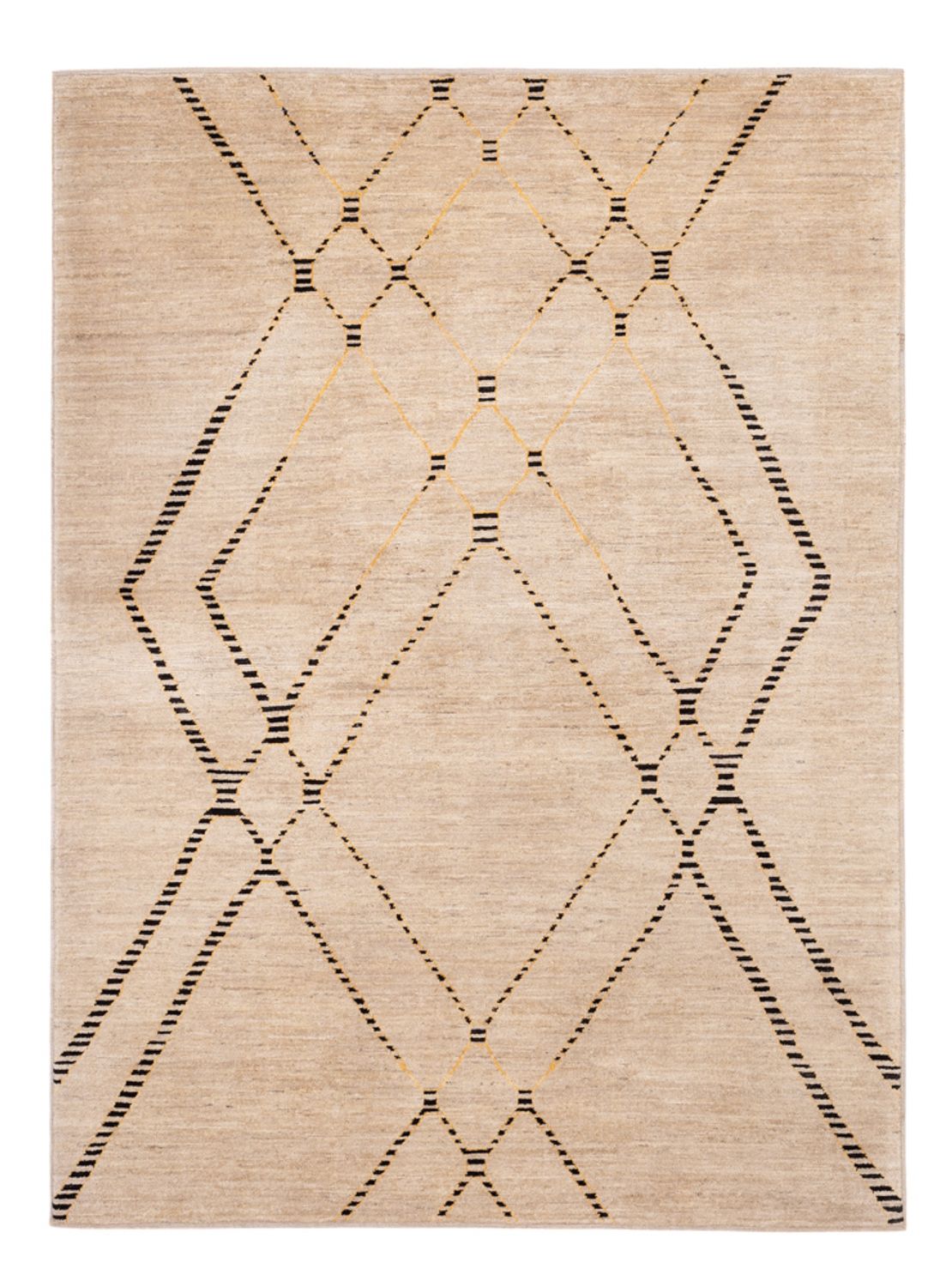
Photo: Morgenland Rugs
Berber rugs are hand-knotted wool rugs from the Berber regions of Morocco, above all from the Middle and High Atlas. They follow their own knotting tradition, independent of Persia and Turkey, with undyed sheep's wool, geometric diamond patterns and a high pile. The best-known subgroups are Beni Ouarain, Azilal and the recycling tradition Boucherouite. Unlike most oriental styles, the Berber is not manufactory goods but a women's craft that arises within the household communities of the tribes.
This article describes the knotted Berber rug as a style. Anyone looking for an overview within the larger market context of wool rugs, tufted imitations and designer variants will find the survey in the Berber category.
What is a Berber rug?
A Berber is a hand-knotted wool rug of the Imazighen, who live in the mountains and high plateaus of North Africa. The weavers, for they are exclusively women, work at vertical looms set up in the living room or in the inner courtyard. The pile consists of undyed or plant-dyed sheep's wool, often hand-spun, with a markedly higher pile than in Persian pieces. The patterning is consistently geometric: diamonds, zigzag bands, tiered squares, hooked meanders.
The tradition is old: finds attest the knotting of wool rugs in the Maghreb since late antiquity. It remained, however, largely within the personal use of tribal culture into the 20th century. The rugs served as floor and seat covers, as sleeping mats, as wall hangings against the cold, as tent partitions, and in individual cases as dowry or status symbol. Only the international modernist reception from the 1950s onwards made the Berber a globally traded design item. Production has changed with that; the style is today also made for the export market, but the knotting craft and the undyed wool have been preserved as the core.
Origin: Atlas mountains and Berber tribes
The main region lies in Morocco, more precisely in the Middle Atlas between Khenifra, Khémisset and Sefrou, as well as in the High Atlas south-west of Marrakesh. Both mountain ranges are thinly populated, climatically harsh, with snow in winter and heat in summer, and have been inhabited for centuries by Imazighen tribes who practise livestock keeping and some crop farming.
Within the Berber region several tribal groups with their own knotting dialects have developed. The Beni Ouarain live in the Middle Atlas and are known worldwide for their cream-white pieces with dark-brown diamonds. The Azilal region in the High Atlas produces more colourful Berbers with looser patterns on a light ground. The town of Boujad brings forth a more vividly coloured variant with a red base tone. Boucherouite rugs, also from the High Atlas and from urban workshops, are a younger recycling tradition: they arise from cut fabric and wool scraps and are knotted or knotted onto a woollen warp. Alongside, Glaoua, Tazenakht and the southern region around Taznakht play a role.
Typical features
The most important calling card of a Berber is the undyed or restrained plant-dyed wool. With Beni Ouarain the ground is cream-coloured or slightly beige, depending on the wool batch; the contour lines sit in dark brown or black and follow a loose diamond grid. The line work is not strictly geometric but slightly wavy, because the pattern is knotted without a cartoon.
In the more colourful variants, madder red, indigo blue, mustard yellow, pomegranate orange and muted green are added, always on a light ground and always in small, clearly bounded areas. The pile height is markedly higher than in Persian wool rugs, often between 1.5 and 3 cm, in individual cases more. This high quantity of wool is not ornament but function: in the mountains the rugs were sleeping and seat mats that had to warm and insulate. The back shows clearly visible rows of knots; the wool is mostly thickly spun, and the knotting is therefore relatively coarse but stable.
Patterns and colours
The patterning of the Berber follows its own symbol world. Diamonds and zigzag bands are linked with the phases of a woman's life, with fertility and with protection from the evil eye. Hooked meanders and comb-like lines read in the tradition as protective signs. The translation of these symbols differs from region to region and is never canonised, which is why each weaver allows herself her own variations. Anyone looking for an overview of protective motifs will find one in protective symbols, the general symbolism in symbols.
The handling of colour is restrained even in the more colourful variants. Even an Azilal with mustard, red and turquoise does not have the saturation of a Persian manufactory piece, because the plant dyes feel softer and the light wool ground balances the tones. The famous natural contrasts of the Beni Ouarain between ivory and anthracite arise entirely from undyed wool batches of different sheep breeds: white ewe's wool and natural black or dark brown wool from the dark ram. How natural dyes can be tested is described in identifying natural dyes; the comparison with synthetic dyes is given in natural versus chemical dyes.
Material and knotting technique
Berber rugs are traditionally made entirely of sheep's wool. The pile consists of virgin wool from local Berber sheep, whose fleece is thick, slightly oily and very elastic. Warp and weft are also wool, often hand-spun. In younger pieces made for export, a cotton warp is occasionally used. More on the fibres is given in the materials overview.
Knotting is done with the symmetric knot, also called the Berber knot in the region. It corresponds to the Turkish or Ghiordes knot and gives the thick wool a firm hold. The construction is usually double-wefted: two weft threads lie between two rows of knots. A survey of the bindings is given in knot types; the knotting process is described in knotting, the whole process in production.
Boucherouite rugs break with the classical wool pile. They are knotted or knotted from cut fabric and wool scraps that are worked by hand into long bands. On a woollen warp a dense, very colourful pile arises, which celebrates the unplanned palette of the available scrap fibres. This variant is markedly younger; it arose in the 20th century when cheap industrial fabrics came into the Berber regions, and is today regarded as a design discipline of its own within the Berber family.
Important for distinction: machine-made Berber imitations or pieces made with a tufting gun are not Berber rugs in the strict sense, even if they reproduce the pattern. The differences to hand-knotting are described in hand-knotted versus machine-made and in tufting; an overview of machine processes is given in machine-made.
Knot density and quality
The knot density of a Berber typically lies between 40,000 and 100,000 knots per square metre, in top pieces also above. This low density compared with Persian manufactory goods is intentional and lies in the thick wool yarn and the high pile. It is not a quality defect but part of the style. How density and wool quality condition one another is described in knot density explained.
Quality with a Berber is decided by the wool, by the cleanness of the contour lines and by the even pile height. High-quality pieces show elastic, lanolin-rich wool, clear line work despite free knotting, and well-worked end borders. The comparison table places the Berber against Persian and Nepalese wool pieces.
| Provenance | Relation to Berber | Knot density | Typical features |
|---|---|---|---|
| Berber | Moroccan tribal rug | 40,000 – 100,000 / m² | natural wool, diamond patterns, high pile, Atlas tradition |
| Beni Ouarain | subgroup in the Middle Atlas | 40,000 – 80,000 / m² | cream-white ground with dark-brown diamonds |
| Boucherouite | Moroccan recycling variant | 30,000 – 80,000 / m² | colourful pile from fabric and wool scraps |
| Gabbeh | southern Persian shepherd's piece | 30,000 – 80,000 / m² | high pile, vigorous colour fields, different knotting tradition |
| Loribaft | Persian counterpart with finer knotting | 100,000 – 200,000 / m² | finer, denser, with smaller-scale motifs |
| Hamadan | western Persian village rug | 60,000 – 150,000 / m² | flat, firm, geometric medallion, an entirely different construction |
What is a Berber rug worth?
The value of a Berber depends on wool quality, age, size, clarity of the pattern geometry and the particular subgroup. Classical Beni Ouarain pieces in larger living-room formats lie in the mid to upper four-figure range; old tribal pieces with hand-spun wool and intact end borders can be traded significantly higher. Azilal and Boujad variants are similarly classed depending on format. Boucherouite rugs as a younger recycling tradition are usually cheaper, but high-quality designer pieces from this family also reach upper price segments.
Anyone wanting to place a piece should first check the wool, then the pattern and the end borders. Orientation is given by the articles recognising valuable Persian rugs, the value overview, old rugs gain in value and why real rugs are expensive. Before buying, the buying guide offers concrete decision aids.
How do you recognise a genuine Berber rug?
Reliable indicators of a genuine knotted Berber:
- Hand-knotted back: the pattern is clearly mirrored on the reverse, and individual knots show as distinct points. Because of the thick wool, the knots look coarser than in Persian manufactory goods.
- Fringes as part of the warp: the fringes are the extended warp threads, not sewn on afterwards.
- Symmetric Berber knot: the knot form corresponds to the Turkish Ghiordes knot and sits firmly on the thick wool.
- Wool in warp, weft and pile: classical Berbers are pure wool rugs. A cotton warp appears only in younger export pieces.
- Undyed or plant-dyed wool ground: the typical cream-white, brown and anthracite tones come directly from the fleece, not from a dye bath.
- High pile and loose line work: characteristic are 1.5 to 3 cm of pile height and slightly wavy diamond lines, because the work is done without a cartoon.
- Geometric symbolism: diamonds, zigzag, hooked meanders, without floral sweep and without a central medallion in the Persian sense.
A step-by-step guide to general authentication is given in Is my rug genuine?. Notes on determining origin through construction and pattern are given in identifying origin. For further information see the recognising overview and the article on age in how old is my rug?.
Care
Berber rugs are very hard-wearing thanks to their high, thick wool pile, but they need a little attention. In the first weeks wool fibres come loose, the so-called wool loss, which subsides once the knots have settled. Vacuum in the pile direction with reduced brush action. With a very high pile a smooth nozzle is better suited than a rotating brush. Every three to five years a professional wash is advisable. Dab fresh stains immediately from the outside inwards with clear water and a light cloth, never rub. Long direct sunlight can slightly yellow the light wool tones, which is why occasional turning of the rug is advisable. More in the care overview, on wool rugs specifically in cleaning a wool rug and generally in cleaning a rug.
Frequently asked questions
What is the difference between Berber and Beni Ouarain?
Beni Ouarain is a particular tribal group in the Middle Atlas and so a subgroup within the Berber family. The designation Berber covers, alongside Beni Ouarain, also Azilal, Boujad, Boucherouite and other regional traditions. Beni Ouarain pieces are cream-white with dark-brown or black diamonds and have achieved the greatest international recognition.
Which knot is used in a Berber?
Berber rugs are worked with the symmetric knot, which locally is called the Berber knot and corresponds to the Turkish Ghiordes knot. This knot form gives the thick Atlas wool the necessary hold and fits the geometric pattern tradition.
Are Berber rugs made of pure wool?
Classical, hand-knotted Berbers consist entirely of sheep's wool, in warp, weft and pile. In younger pieces for the export market a cotton warp is occasionally used. Machine-made Berber imitations and tufted versions are often made of synthetic fibres and are not genuine knotted Berbers.
Why are the lines on a Berber not perfectly straight?
Berber rugs are knotted without a graphic cartoon. The weaver carries the pattern in her head and gives the composition her personal rhythm. From this come the slightly wavy contours and the small asymmetries that belong to the character of the style and distinguish it from machine-made imitations.
What does a genuine Berber rug cost?
Classical Beni Ouarain pieces in larger living-room formats lie in the mid to upper four-figure range, old tribal pieces significantly higher. Azilal and Boujad are similarly classed depending on size. Boucherouite rugs are usually cheaper, but high-quality designer pieces from this family also reach upper segments.
Is a Berber suited to underfloor heating?
Yes. The pure wool conducts heat well and is not sensitive to moderate heating temperatures. A step-by-step warming phase and a moderate flow temperature are important so that the high pile retains its elasticity. Very high-pile Boucherouite pieces insulate more strongly and are less ideal for underfloor heating.
How do I care for a Berber rug properly?
Vacuum in the pile direction with reduced brush action, dab fresh stains immediately with clear water from the outside inwards, and have a professional wash carried out every three to five years. Avoid long direct sun and turn the rug occasionally. More in the care overview.
Impressions of the origin
Places, landscapes and landmarks around the home of Berber rugs. Click any image for a larger view.


