//
Turkey looks back on a thousand-year knotting tradition and is known for the symmetric Ghiordes knot.
Turkey, historic Anatolia, is one of the oldest rug regions in the world. As early as the thirteenth century Marco Polo described Anatolian rugs as the finest in the world, and in the fifteenth and sixteenth centuries they appeared so often on European paintings that whole pattern groups today are named after the painters Lotto and Holbein. Anatolia is also the suspected cradle of the knotted rug itself: the oldest knotted fragments from the site of Çatalhöyük and the Seljuk rugs from the mosques of Konya are among the earliest surviving witnesses of the technique anywhere.
Turkish rugs stand for an independent aesthetic clearly distinct from the Persian one. They work overwhelmingly with the symmetric knot and a geometric, often archaic visual language drawn from the prayer rug, the tribal sign, and the village weaving tradition. Alongside them runs the courtly line of the Ottoman silk manufactories, which reached its peak in Hereke. This page sets the region in geographic order and describes its knotting centers from the Aegean to central Anatolia.
Turkish rug production is spread across the entire Anatolian high plateau and the western coastal regions. The continental climate of hot, dry summers and cold winters, together with elevations between about 800 and 1,500 meters, favors a strong, lustrous sheep wool. The wool from the western Anatolian highlands is regarded as particularly lanolin-rich and long-lived, which gives Turkish village rugs their proverbial durability. Important knotting towns run from the Aegean coast at Milas and Ushak across central Anatolia around Konya and Kayseri and on to Cappadocia.
The Turkish knotting tradition is built on the symmetric knot, also called the Turkish or Ghiordes knot, named after the western Anatolian town of Gördes. It loops the pile yarn around both warp threads and produces a particularly firm pile that resists wear. This binding lends itself to geometric patterns and explains why Turkish rugs less often show the finely curved vines of Persian city goods. The difference between the two basic knots is covered on Knot types, the full production sequence on Production.
The pile is traditionally local virgin wool, in the silk centers also pure silk, dyed with plant colors from the regional flora: madder for red, indigo for blue, weld and reseda for yellow. Many western Anatolian villages still keep this natural dyeing alive today, among other things through the DOBAG project, which has revived the old recipes. How plant dyes differ from synthetic dyestuffs is explained under Recognizing natural dyes.
Anatolia splits into a courtly silk line and a broad village wool tradition. The overview below sorts the best-known centers.
| Knotting center | Known for | Typical traits |
|---|---|---|
| Hereke | Ottoman court quality | finest silk and kork wool, floral patterns, highest knot counts |
| Kayseri | silk and art-silk goods | Persian-inspired patterns, medallions, broad range |
| Ushak | oldest tradition | large-format medallion and star rugs, soft wool, muted red |
| Konya | Seljuk heritage | early prayer rugs, crisp geometry, warm earth tones |
| Milas | Aegean village goods | narrow formats, characteristic mihrab, yellow and rust tones |
| Bergama | western Anatolia | near-square formats, archaic medallions, strong red and blue |
| Yagcibedir | nomadic tradition | dark blue and red, geometric prayer fields, robust wool |
| Gördes | eponym of the knot | classical prayer rugs, columned mihrab, fine borders |
Hereke is regarded as the queen of Turkish centers. The once-imperial manufactory, founded in 1843, knotted for the Sultan's court and reaches up to a million knots per square meter in silk. Hereke silk therefore stands at the peak of Turkish knotting. Kayseri became a versatile center with Persian-influenced patterns, Ushak looks back on the oldest continuous tradition: as early as the fifteenth and sixteenth centuries the large medallion and star rugs immortalized in European paintings were made here. All registered Turkish types sit in the Style overview.
Anatolian knotting has two great sources. The first are the Seljuks, who immigrated from Central Asia into Anatolia in the eleventh and twelfth centuries and brought their knotting tradition with them. From the mosques of Konya and Beyşehir come the oldest datable Anatolian rugs, the so-called Seljuk rugs of the thirteenth century with their strictly geometric fields and Kufic borders.
The second source is the Ottoman Empire. From the sixteenth century under the sultans, a courtly manufactory art emerged that worked silk and fine wool into floral patterns in the style of Ottoman book and tile art. In parallel, the production of the large Ushak rugs flourished in western Anatolia, exported to Europe via Izmir and the Genoese trading houses. They appear on the paintings of Hans Holbein, Lorenzo Lotto, and others as table and floor rugs of the wealthy, which is why the pattern groups carry the painters' names.
With the decline of the empire courtly production also receded, until in the nineteenth century European demand made new centers such as Hereke and Kayseri great. Village and nomadic knotting in Anatolia ran on largely untouched and preserved its old patterns to this day. The long line of the technique is traced on Origin of knotting.
The defining format of Anatolia is the prayer rug with its mihrab, the stylized prayer niche aligned toward Mecca. Alongside it stand large-area medallion and star compositions, fields with offset tribal signs, and multi-stepped borders with meanders, waves, and hook patterns. Unlike the curvilinear Persian city goods, the Turkish pattern almost always stays geometric and organized in crisp planes.
This geometry follows the symmetric Turkish knot, which loops the pile yarn around both warp threads. Knot densities for wool rugs usually lie between 100,000 and 300,000 knots per square meter; for the silk manufactories of Hereke and Kayseri considerably higher. Alongside the knotted rug, Anatolia has a rich kilim tradition: flat-woven rugs in slit-tapestry technique with strong geometric stripe and diamond patterns, without pile. How Turkish and Persian knotting differ in detail is covered in the Style comparison.
The independent Turkish styles include the silk types Hereke, Hereke silk, and Kayseri, as well as the historic large-format goods from Ushak. Added to these are the Anatolian village and nomadic traditions from Milas, Bergama, Konya, and Yagcibedir, traded as regional prayer and home rugs, and the kilim line of flatweaves. Anyone who wants to set Turkish geometry against Persian florals will find the larger frame in the Rug types section, where Persian rugs stand as the counterpoint.
The value of a Turkish rug is set by origin, material, knot density, age, and condition. High-quality silk rugs from Hereke and antique Anatolian village and prayer rugs are considered value-stable. Before buying, the Buying guide and the article Why genuine rugs are expensive help. How to check authenticity and origin sits under Recognizing oriental rugs and Recognizing origin. Care is described in the Care overview.
A Turkish rug is usually knotted with the symmetric knot and shows a geometric visual language crisply organized in planes, often with a mihrab as a prayer niche. The wool is firm and lustrous, and the pattern reads in mirror image on the back. How to determine origin is covered in Recognizing origin.
In Turkey the symmetric knot dominates, also called the Turkish or Ghiordes knot, named after the town of Gördes. It loops both warp threads and produces a particularly firm, abrasion-resistant pile. The comparison with the Persian knot is shown on Knot types.
Turkish rugs are defined by the symmetric knot, a geometric visual language, and the traditional prayer rug format. They are very durable, work with strong natural colors, and run from the robust village piece to the finest silk manufactory from Hereke.
Turkish rugs use the symmetric knot and prefer geometric, planar patterns, while Persian rugs usually use the asymmetric knot and finer floral designs. Turkish work is dominated by the prayer rug motif, Persian by the medallion with vine work. In wool quality, Anatolian rugs are regarded as particularly firm and long-lived.
Anatolian rug is the more precise geographic name for a Turkish rug, since Anatolia forms the Asian main body of Turkey. The term usually emphasizes the village and nomadic knotting tradition from towns such as Ushak, Konya, or Milas.
High-quality silk rugs from Hereke are considered value-stable, as are well-preserved antique Anatolian village and prayer rugs. The decisive factors are origin, knot density, age, and condition. There is no guarantee of appreciation; more on this under Old rugs gain value.
A Turkish prayer rug carries a mihrab, a stylized pointed niche aligned toward Mecca during prayer. This format shapes Anatolian knotting from places like Gördes, Konya, and Milas and belongs to the oldest pictorial motifs of the region.
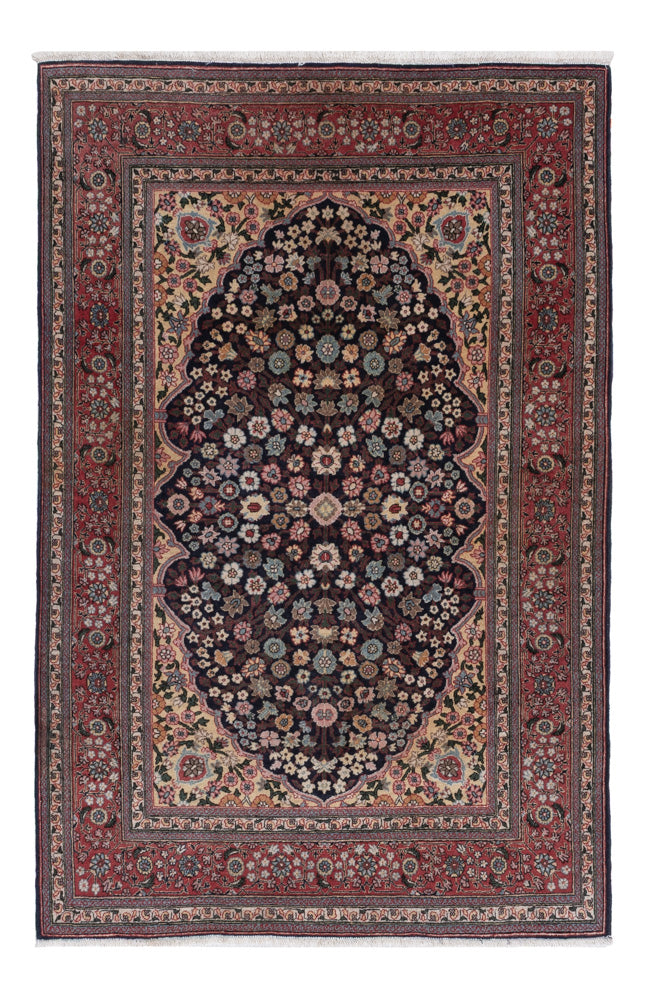
Hereke rugs come from the Ottoman court manufactory in Hereke, Turkey, and are among the world’s finest hand-knotted rugs.
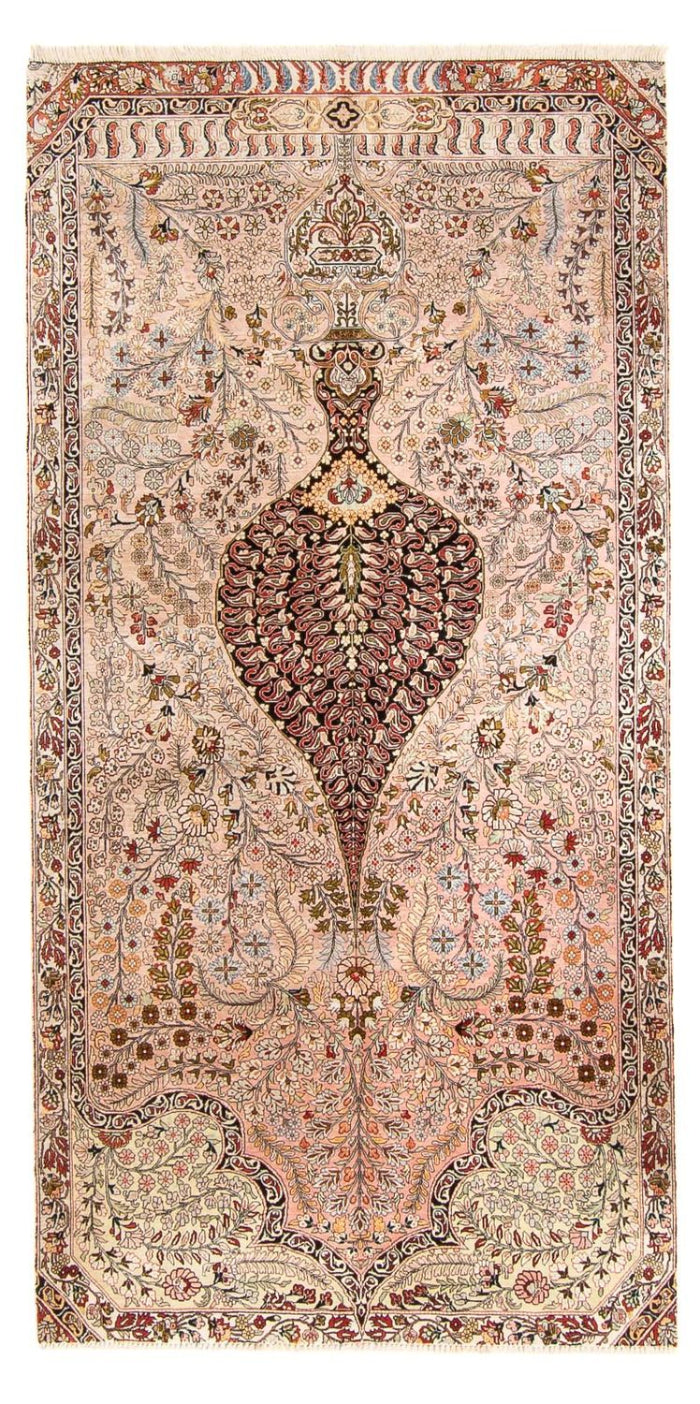
Kayseri rugs come from Cappadocia and offer classical Anatolian patterns in a wide range of qualities and sizes.
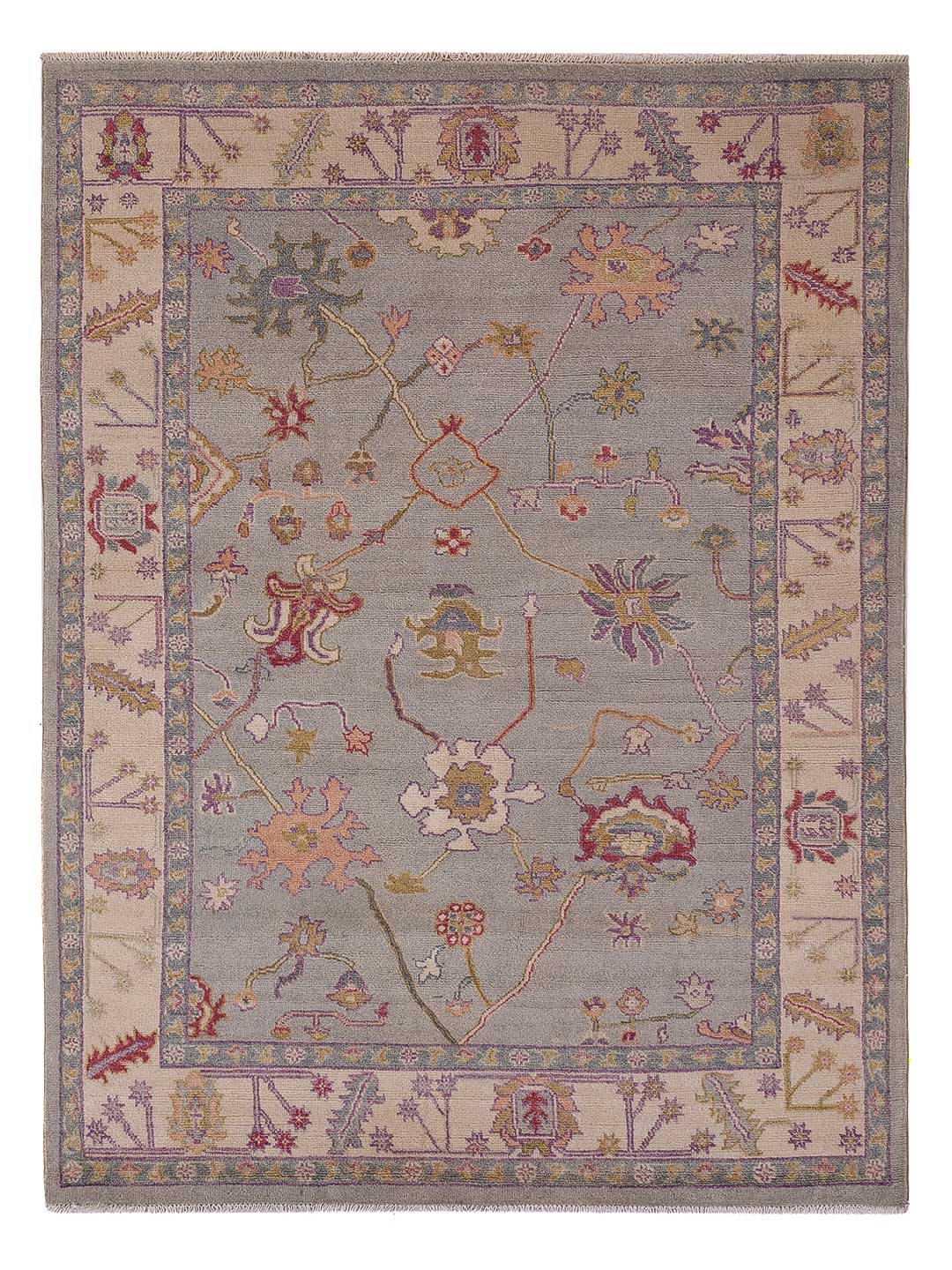
Ushak rugs from western Anatolia are classic Ottoman carpets known for large medallion compositions in soft tones.
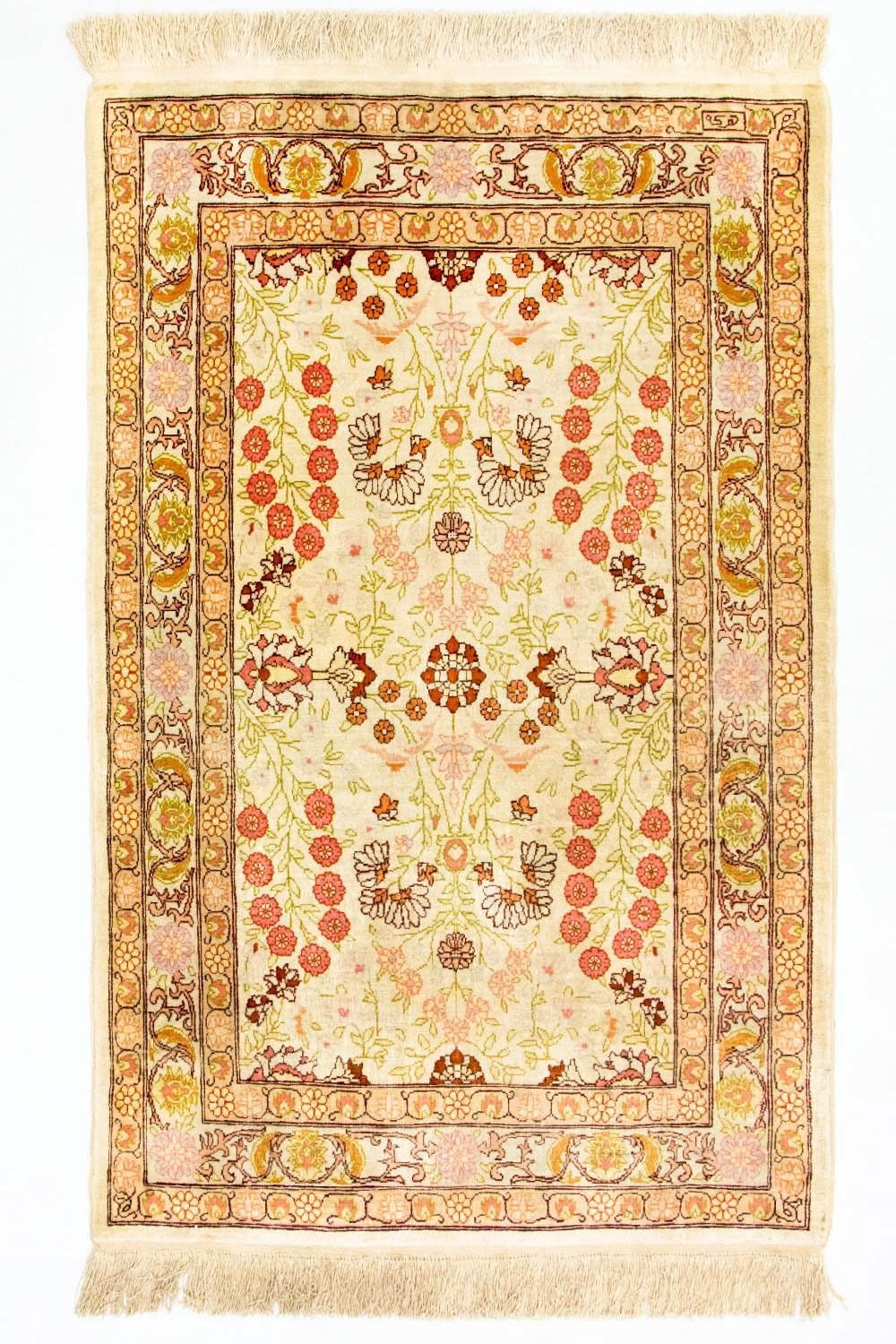
Hereke silk rugs come from the Ottoman court manufactory and are among the world’s most prized silk carpets.