//
India is one of the largest rug producers worldwide, blending Mughal tradition with contemporary design.
India is one of the largest rug producers in the world and looks back on a knotting tradition that reached courtly perfection under the Great Mughals. In the sixteenth and seventeenth centuries the Mughal emperors brought Persian master knotters to their courts in Agra, Lahore, and Fatehpur Sikri, where an independent Indo-Persian court art emerged with animal, garden, and floral rugs of exceptional fineness. From this blend of Persian formal knowledge and Indian weaving skill, the profile of Indian knotting still draws its character today.
Characteristic of the modern Indian market is the skilled reinterpretation of classical Persian designs, traded as Indo-Persian. An Indo-Isfahan or Indo-Qom takes over the pattern of its Persian model but comes from Indian production and is therefore explicitly not a Persian rug. Alongside this, India stands for the finest Kashmir silk, the city manufactories of Agra and Jaipur, and a large range of wool rugs that offer attractive price-performance.
Indian rug production concentrates in the northern states. Uttar Pradesh, with the knotting belt around Bhadohi, Mirzapur, and Varanasi, is the volume center; Rajasthan with Jaipur and Agra stands for city manufactories; Jammu and Kashmir for the finest silk work. In the high reaches of the Himalayas and in Kashmir, high-quality local wool is produced; on the plains many workshops use imported wool from New Zealand and Australia, prized for its evenness and luster.
Indian knotters use mainly the asymmetric Senneh knot, also common in the Persian tradition, which allows the fine resolution of floral patterns. Knot density runs from around 160,000 knots per square meter in simple everyday goods to over 1,000,000 knots in fine Kashmir silk. In the trade, Indian rugs are often classified by the knot count per inch, for example 16/16 or 20/20, from which the density per square meter is derived. More on the techniques sits under Knot types and Production.
The overview below sorts the most important Indian knotting traditions. It runs from the fine silk manufactory to the dense wool goods.
| Center / style | Known for | Typical traits |
|---|---|---|
| Indo-Isfahan | Persian elegance | floral medallions, light palette, fine knotting |
| Indo-Qom | Qom designs | garden and pictorial patterns, often with silk content |
| Indo-Nain | light city look | blue and beige, fine floral resolution |
| Kashmir silk | top quality | pure silk, highest density, intense luster |
| Agra | Mughal tradition | large-format medallions, muted red and blue tones |
| Jaipur | color exuberance | luminous designs, floral and geometric patterns |
| Indo-Mir | boteh pattern | planar paisley grid, calm tonality |
The finest Indian productions are the Kashmir silk and the high-knotted Indo-Persians such as Indo-Isfahan, Indo-Nain, and Indo-Tabriz. Robust builds are supplied by the Indo-Bidjar and floral classics such as Indo-Kashan and Indo-Sarough. Agra and Jaipur stand in the tradition of the Mughal manufactories. All recorded styles sit in the Style overview.
Indian court knotting begins in the sixteenth century under Emperor Akbar, who around 1580 brought master knotters from Persia to his court and had manufactories set up in Agra, Lahore, and Fatehpur Sikri. Under Jahangir and Shah Jahan, the builder of the Taj Mahal, Mughal knotting reached its peak in the early seventeenth century with animal, garden, and naturalistic floral rugs of exceptional fineness. These pieces are today among the most coveted museum exhibits of rug history.
After the decline of the Mughal Empire, the British colonial administration in the nineteenth century drew on the existing skill and had rugs knotted for the European market. In the twentieth century today's production center grew up in the belt around Bhadohi and Mirzapur, deliberately serving Persian models. After partition in 1947 know-how shifted toward Pakistan, while India built up its export industry. The wider development is covered in the article History of knotting.
Indo-Persian is the collective name for Indian rugs that take over the pattern of a Persian knotting center. An Indo-Isfahan follows the floral medallions of Isfahan, an Indo-Qom the garden and pictorial patterns of Qom, an Indo-Nain the blue-and-beige city look of Nain. The decisive point: these rugs are high-quality reinterpretations but not Persian rugs, because they do not come from Iran. Origin decides the classification. How to tell original and reinterpretation apart is covered in Recognizing origin.
The foundation weave of Indian rugs is usually cotton, in fine Kashmir production silk. The pile is knotted from virgin wool, drawing on both local Himalayan wool and imported wool from New Zealand. Pure silk rugs from Kashmir are among the finest knotting work of India and reach very high knot counts. More on the fibers sits under Materials and Silk.
The work uses mainly the asymmetric Persian Senneh knot, which permits the detailed rendering of floral vines and medallions. The pattern language runs from Persian-inspired medallion designs through the Mughal floral rugs of Agra to the planar boteh grid of the Indo-Mir. Modern productions often use plant dyes to reach the warm radiance of the models. How knot fineness affects value is explained in Knot density explained.
India covers the full spectrum from the fine silk manufactory to the robust wool goods. The most important representatives are:
Anyone who wants to compare Indian pieces with their Persian models will find a side-by-side in the Style comparison.
The value of an Indian rug is set by knot density, material quality, fineness of dyeing, and craftsmanship. Kashmir silk and high-knotted Indo-Persians sit at the upper end; wool rugs of medium density offer a good price-performance ratio. Why hand-knotted rugs cost what they do is explained in Why genuine rugs are expensive. Before buying, the Buying guide and the notes under Value are worth a look. The authenticity check sits under Recognizing oriental rugs.
Indian wool rugs are long-lived and, with proper care, last across generations. Regular vacuuming in the pile direction, occasional professional cleaning, and protection from direct sun preserve color and substance. Silk pieces from Kashmir need especially gentle handling. The complete routines sit in the Care overview.
Indian rugs combine Persian formal knowledge with Indian weaving skill, a tradition that reached courtly perfection under the Mughal emperors. Characteristic are the skilled Indo-Persians, the fine Kashmir silk, and the city manufactories of Agra and Jaipur. They offer a broad spectrum from top quality to affordable everyday goods.
An Indo-Persian is an Indian rug that takes over the pattern of a Persian knotting center, for example Indo-Isfahan or Indo-Qom. It is a high-quality reinterpretation but not a Persian rug, because it does not come from Iran. Origin decides the classification, not the pattern.
High-quality Indian rugs are cleanly knotted and stand close to their Persian models in craftsmanship. They often show very even knot density and offer excellent price-performance. The decisive factors for quality are knot density, wool quality, and the cleanliness of the dyeing.
Indian rugs lean strongly on Persian patterns but come from Indian production and so are not Persian rugs. They often show very even knotting and partly work with imported wool. The difference lies in origin, not necessarily in quality.
A Kashmir silk rug is a pure silk work from the Indian region of Jammu and Kashmir, knotted in very high density with intense luster. The fine knotting allows detail-rich floral patterns and pictorial rugs. These pieces are among the most valuable knotting work of India.
Indian rugs are usually classified by knots per inch, for example 16/16 with about 160,000 knots per square meter, 20/20 with about 250,000 knots, up to very fine silk pieces with over 1,000,000 knots. The higher the density, the finer the pattern and the greater the labor input. More on this sits under Knot density explained.
High-quality Indian rugs with high knot density and fine material can be value-stable and often offer a good price-performance ratio. Especially fine Kashmir silk and carefully knotted Indo-Persians keep their use value across decades. There is no guarantee of appreciation.
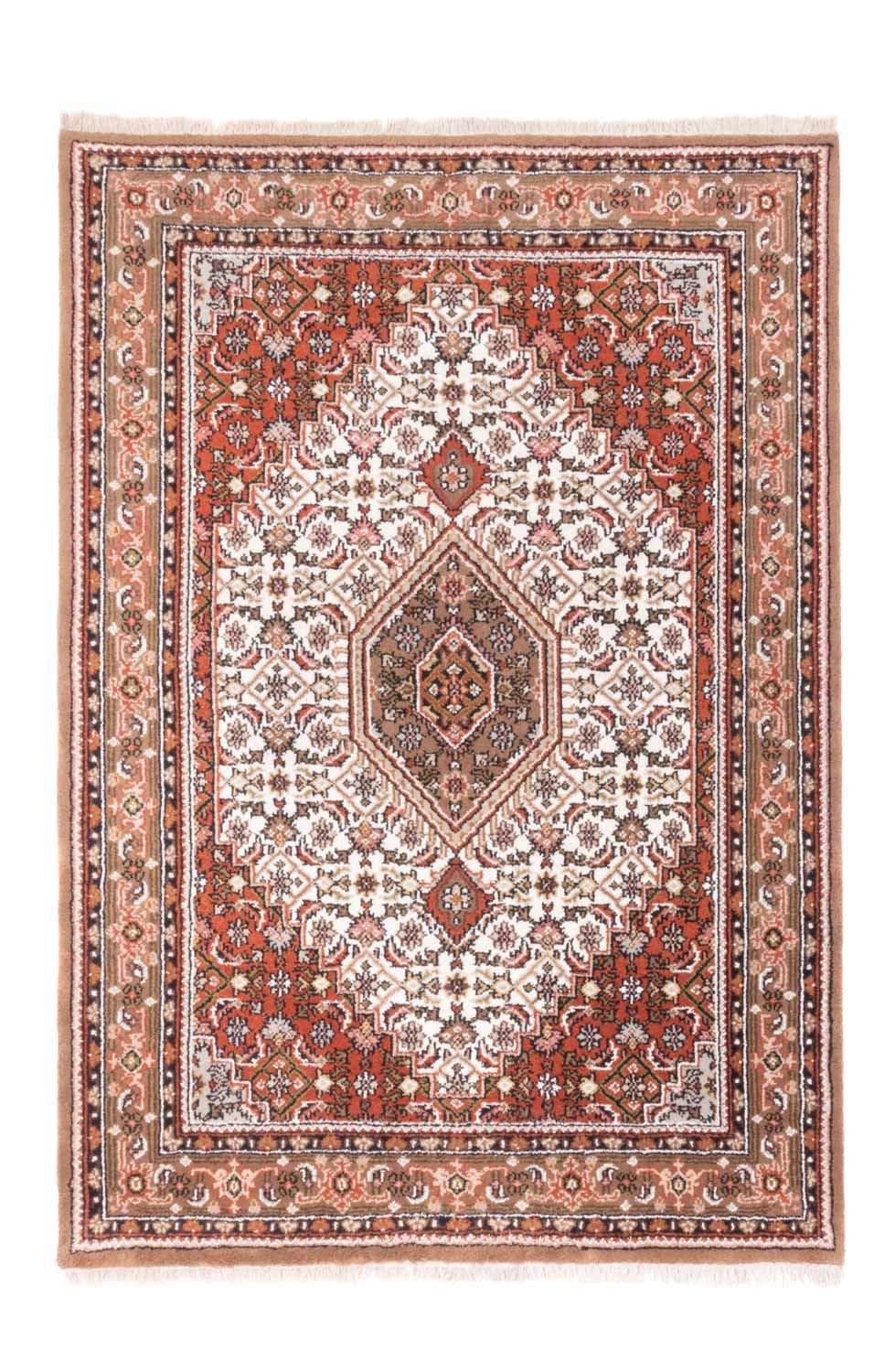
Indo Bijar rugs are produced in India in the style of the original Bijar pieces, densely knotted and very durable.
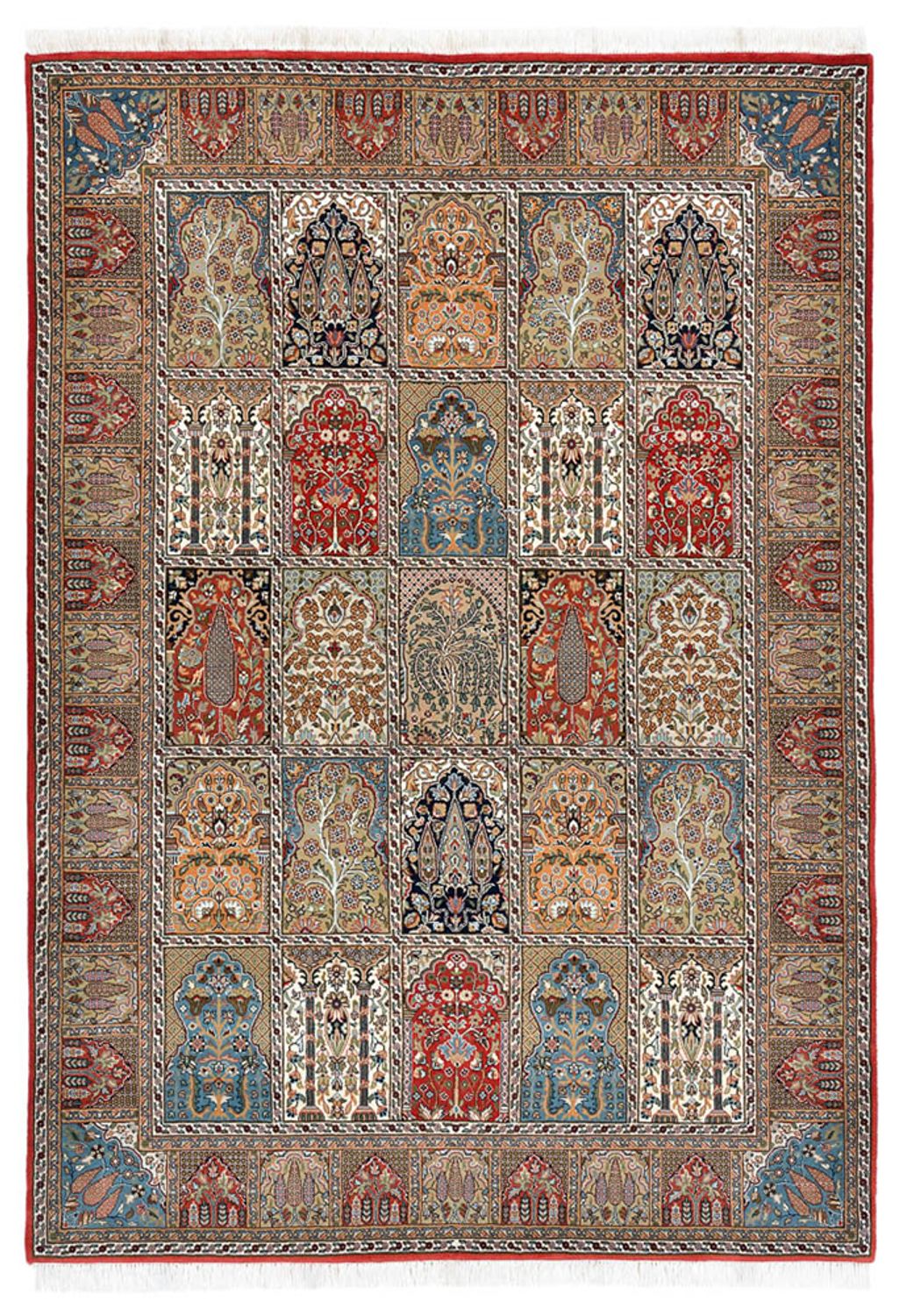
Indo Qom rugs are produced in India in the style of the Persian Qom, fine craftsmanship at more accessible prices.
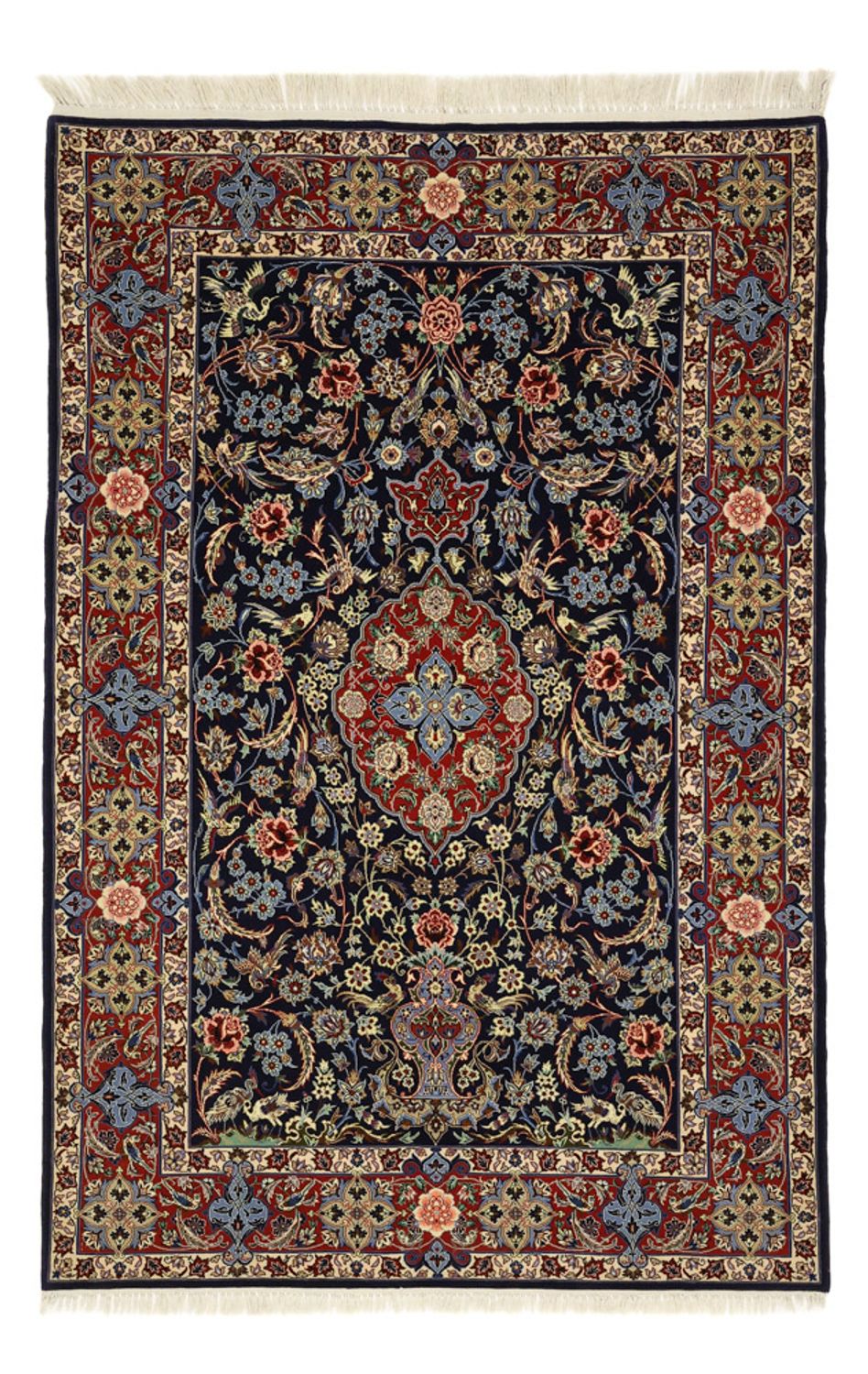
Indo Isfahan rugs are produced in India in the style of the famous Persian Isfahan, fine floral compositions at moderate prices.
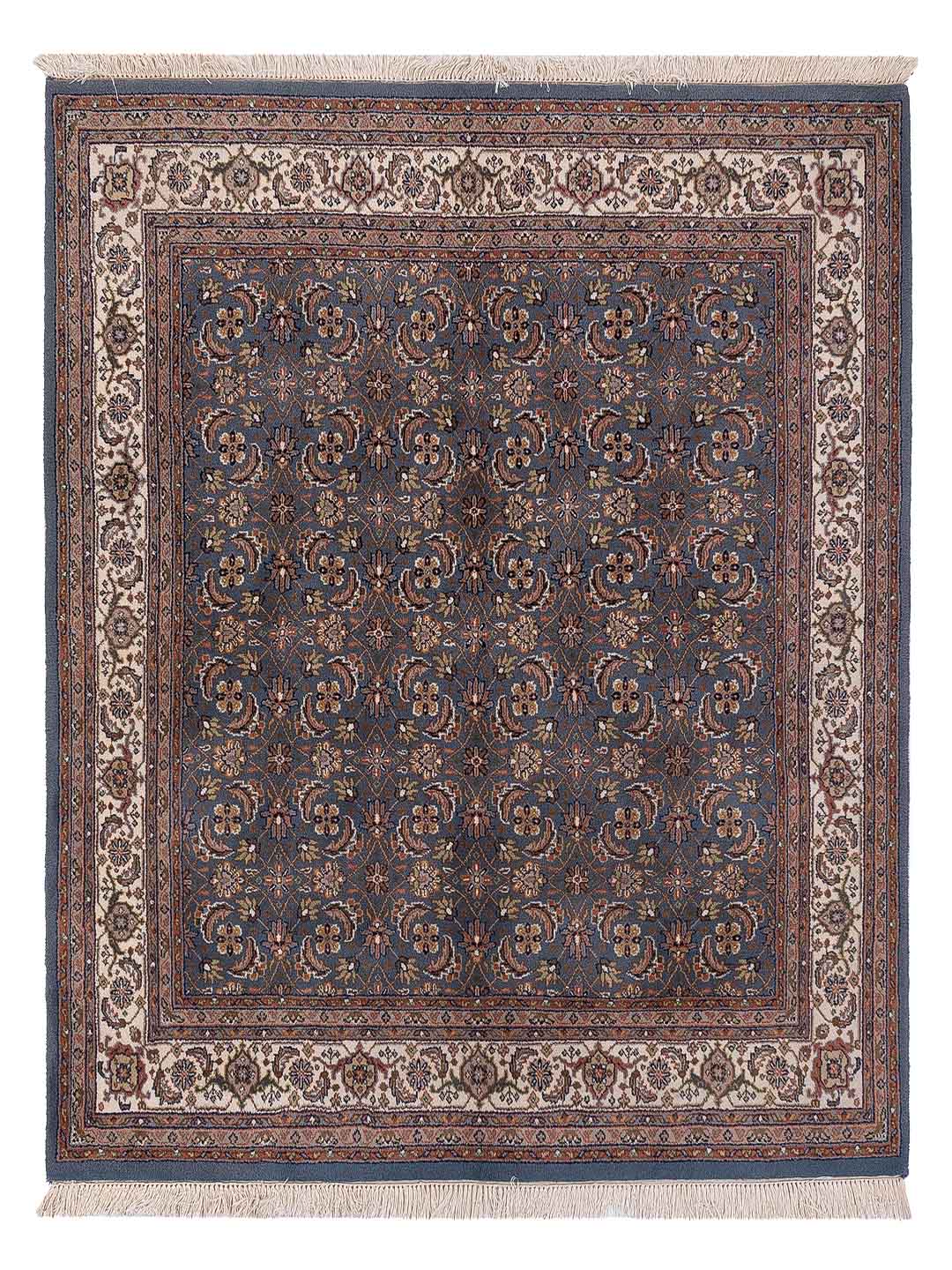
Indo Kashan rugs are produced in India after the classic Kashan model, elegant floral medallions on deep red.
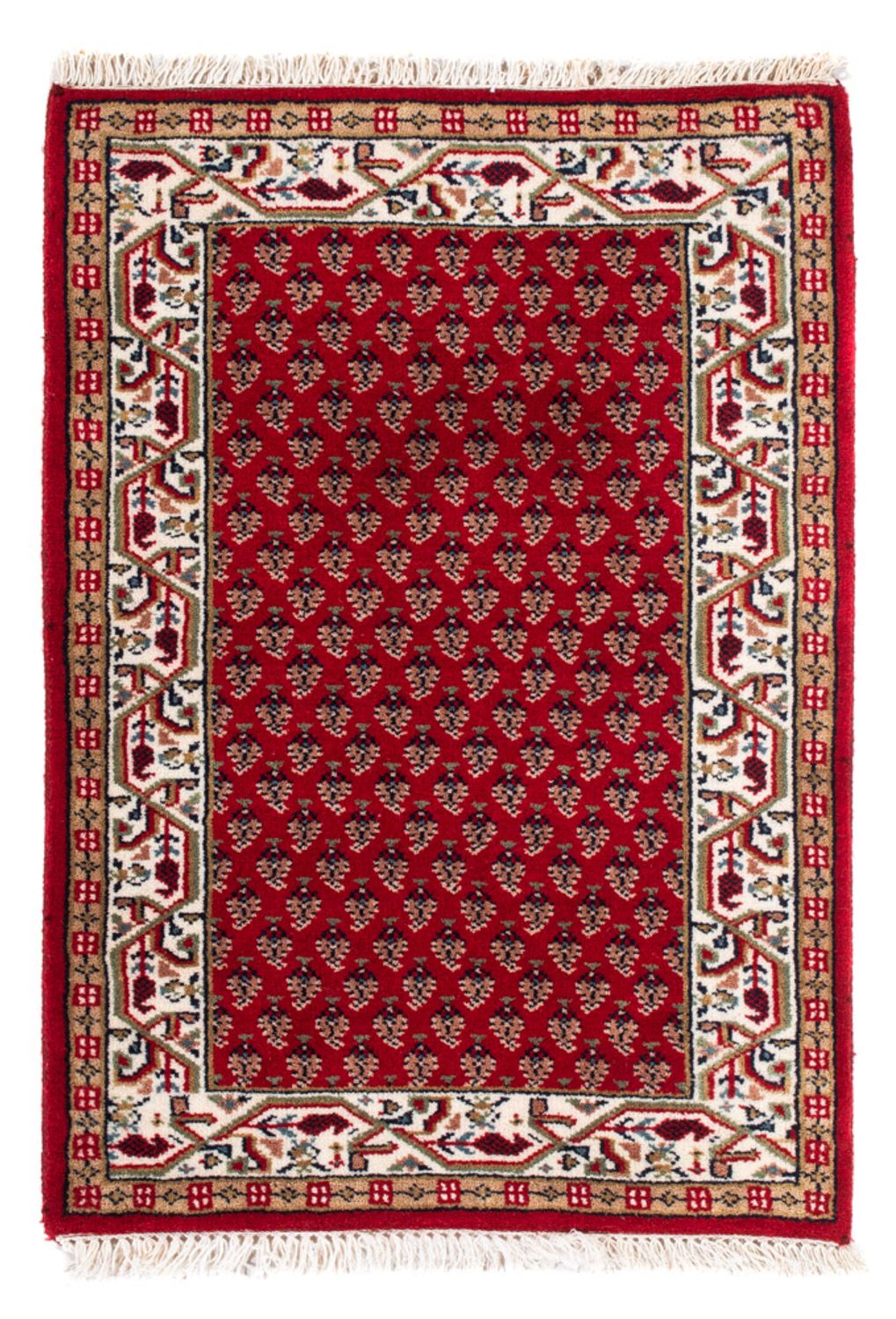
Indo Mir rugs are produced in India and show the classic Mir-e-boteh all-over pattern in great size variety.
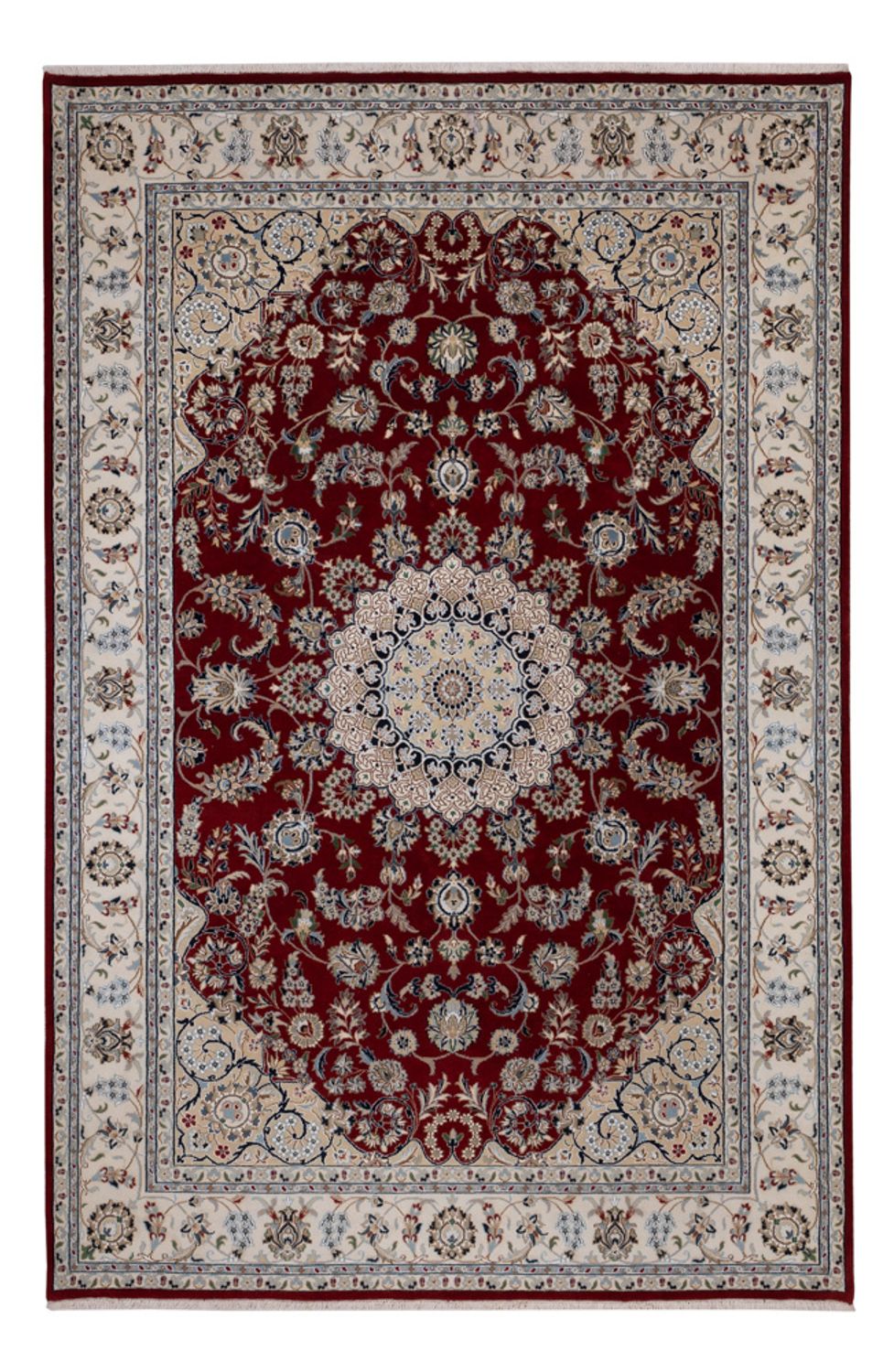
Indo Nain rugs are produced in India in the style of the Persian Nain, the typical ivory-and-blue palette at more accessible prices.
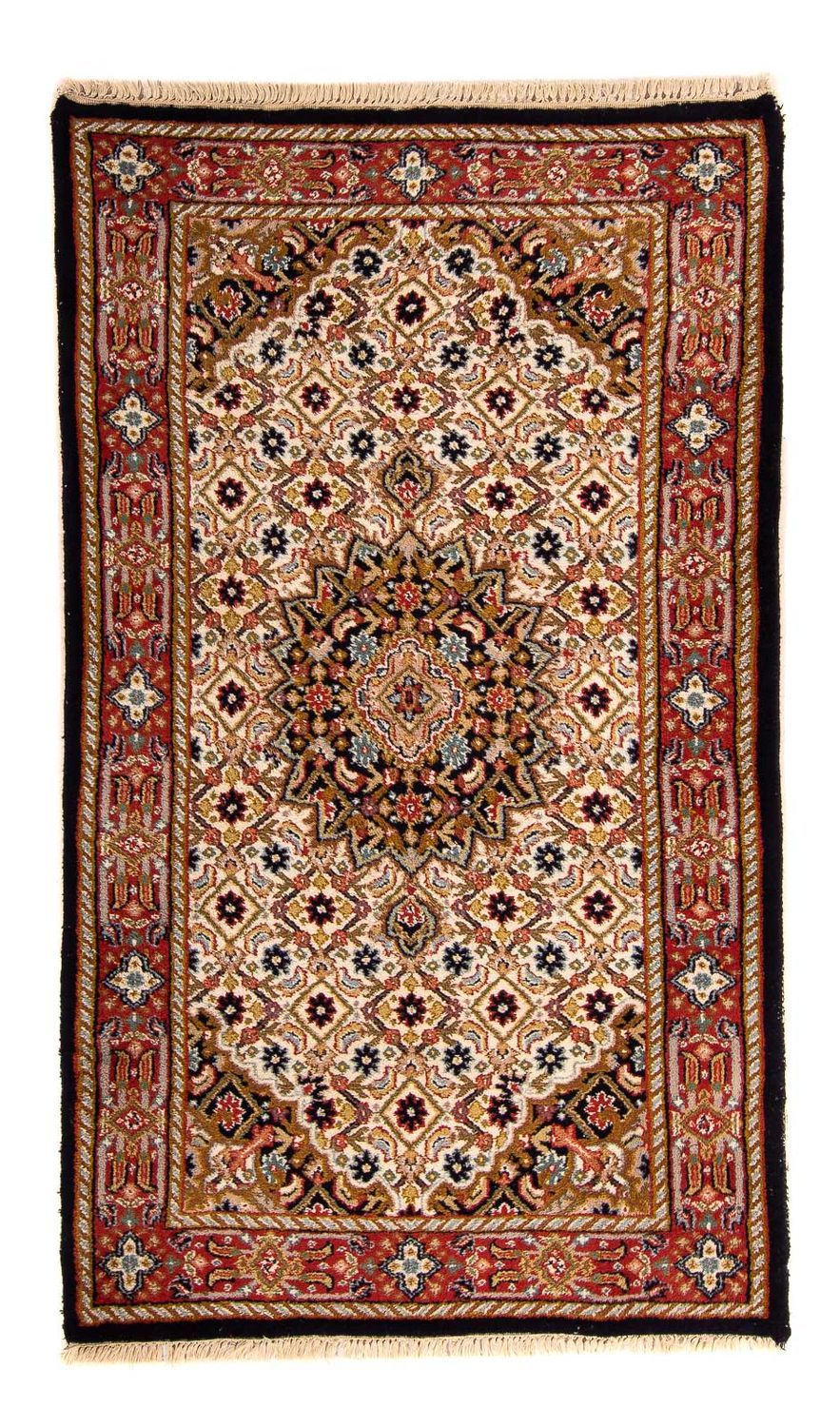
Indo Sarouk rugs are produced in India after the classic Sarouk model, floral medallions on a deep red ground.
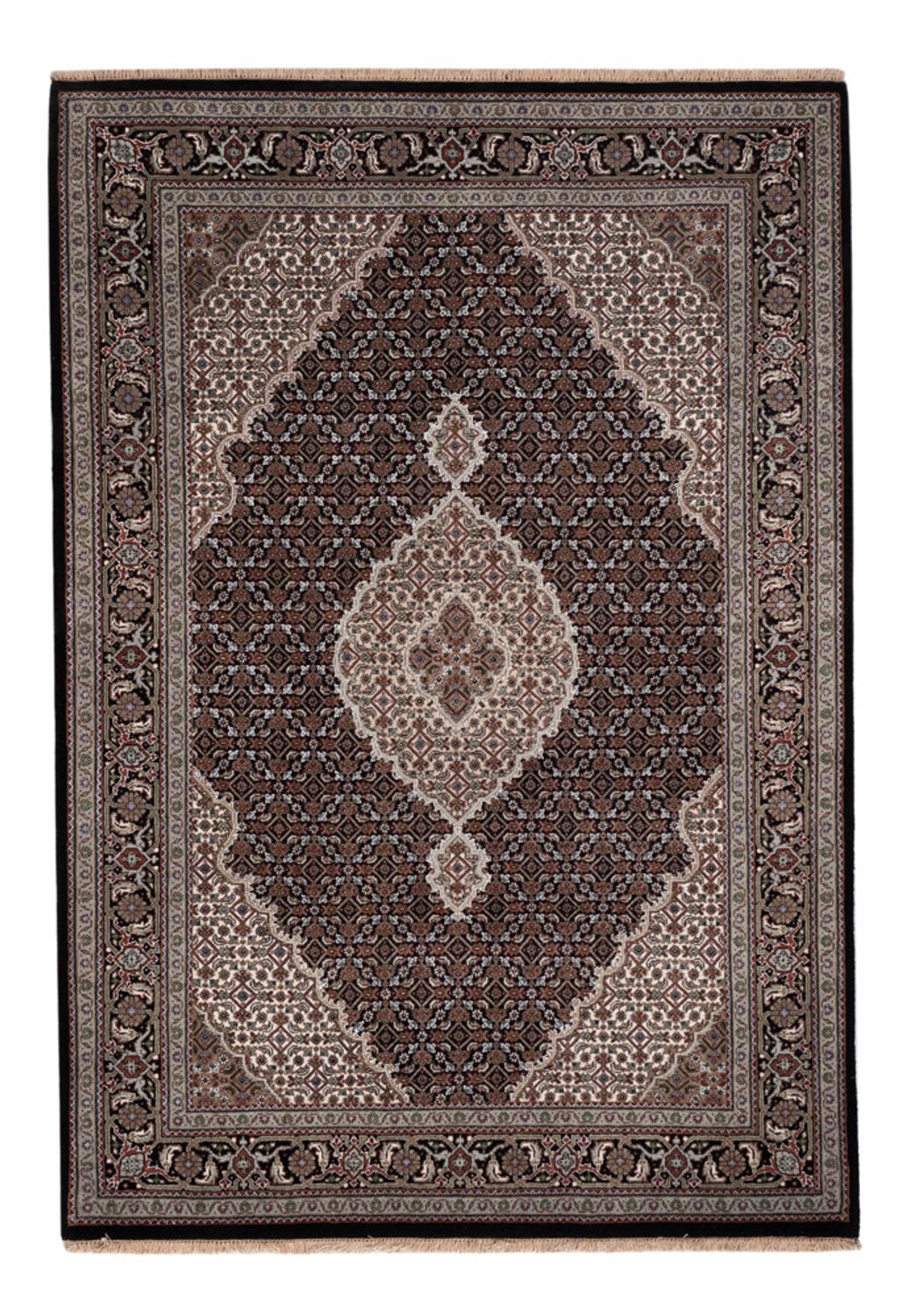
Indo Tabriz rugs are produced in India after the famous Tabriz model, diverse designs and refined craftsmanship.
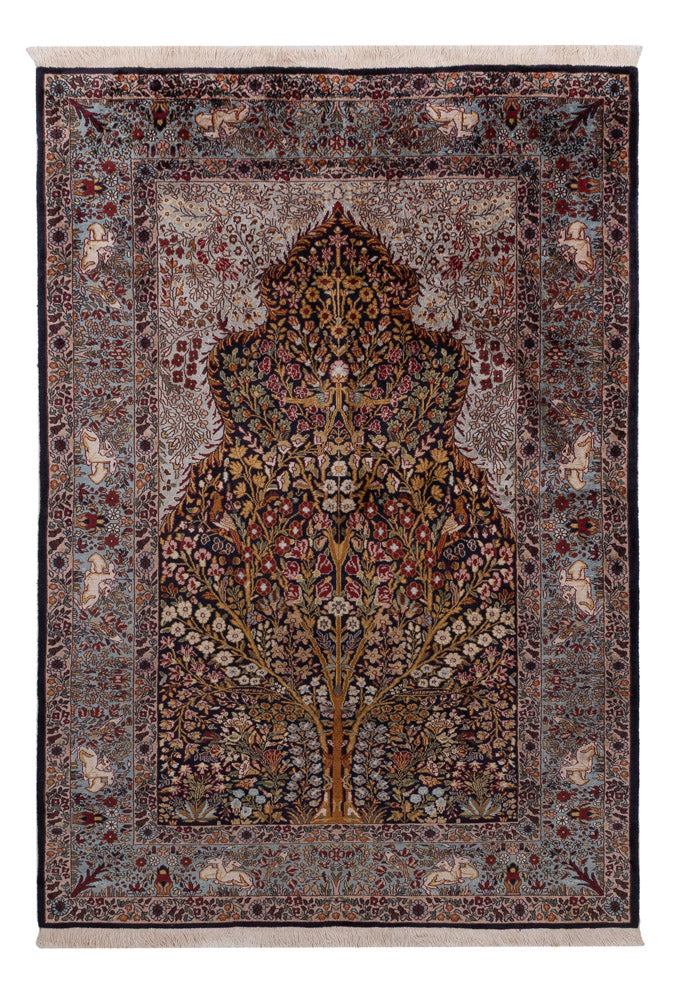
Kashmir silk rugs are knotted in northern India and combine classic Persian designs with the lustrous quality of Kashmir silk.