//
Rugs made from pure silk are considered the most refined form of the knotting craft, exceptionally fine, lustrous, and valuable.
Photo: Morgenland Rugs
Silk rugs are rugs knotted wholly or partly from silk and count as the finest form of the knotting art. Because silk threads can be spun extremely thin, they reach knot densities that would be impossible with wool, often several hundred thousand to over a million knots per square meter. The result is a knife-sharp pattern resolution and the characteristic sheen that shifts as the viewing angle changes. The best-known centers are Qom in Iran, Hereke in Turkey as well as workshops in India and China.
Authentic silk, however, is also the material most often imitated. Mercerized cotton, viscose and artificial silk mimic the sheen without possessing the properties of true mulberry silk. Anyone buying a silk rug should therefore be able to inspect the material reliably. This page places the most important silk origins, explains how to recognize authentic silk, describes production and knot density and names the criteria for value and care.
Authentic mulberry silk differs from its imitators in several clear points. The most important indicator is the combination of deep, angle-dependent sheen, cool-smooth handle and the fineness of the knotting. Pure silk rugs feel stable even at very thin pile and are light in relation to their area.
In the trade several test methods circulate. The burn test on a single fiber is the most telling: authentic silk smolders slowly, smells of burnt horn or hair and leaves a crumbling pellet, while viscose flares up like paper and artificial silk melts. The rub test also gives clues, since authentic silk becomes slightly warm when rubbed. The complete guide with all tests is in Recognize silk, the material comparison in Silk vs. wool and in the material portrait Silk.
Each silk center has its own profile of pattern, coloring and knot fineness. The overview below places the best-known.
| Origin / style | Known for | Typical features |
|---|---|---|
| Qom silk | finest Persian silk | precise floral patterns, high density, often signed |
| Hereke silk | Ottoman top quality | very fine borders, prayer and medallion motifs |
| Kashmir silk | Indian elegance | floral paisley patterns, soft sheen |
| Isfahan | kork wool with silk | silk warp, floral medallions, top city quality |
| China silk | own motif world | dragons and cloud bands, clear color fields |
| Silk kilim | flat-woven silk | woven rather than knotted, soft sheen |
| Afghan silk | nomadic tradition | dark ground tones, tribal patterns in silk |
The finest pure silk rugs come from Qom and Hereke. Isfahan combines a silk warp with the finest kork wool and silk accents and counts among the highest city qualities of Persia. The complete style list is in the styles overview.
Silk knotting reached its first peak under the Safavids in the 16th and 17th centuries, when in the court workshops of Isfahan, Kashan and Tabriz pure silk rugs and silk-metal-thread works were produced for the court and as diplomatic gifts. These pieces today belong to the most expensive surviving rugs of any kind.
In Turkey, Hereke developed into the imperial manufactory of the Ottoman court in the 19th century and shaped a distinctive, particularly fine silk style of its own. Qom is comparatively young in silk production and only rose to be the leading Persian silk center in the 20th century. The historical line of the knotting art is covered in the History of knotting section, the regions of origin are described in Persia and Turkey.
The highest-grade silk rugs are made of mulberry silk, obtained from the cocoon of the silkworm. Before processing, the raw silk is degummed, reeled, twisted and dyed. In pure silk rugs, warp, weft and pile are made of silk; in mixed qualities a cotton or silk warp serves as foundation, while the pile is knotted from silk or a combination of kork wool and silk. The material portrait is in Silk.
Knotting is predominantly done with the fine asymmetric Persian knot, which allows precise pattern resolution. The knot density ranges from several hundred thousand knots per square meter to over a million in top pieces from Qom and Hereke. An experienced knotter completes only a few square centimeters per day, which is why a mid-sized silk rug is in production for months to years. What the knot count means in concrete terms is explained in Knot density explained, the fineness grades in La grades explained, the techniques in the Knot types and Production sections.
Several features together give a reliable picture. The following points matter:
The complete inspection is in Recognize silk and Is my rug authentic?. The origin of an unknown piece can be narrowed down via Recognize origin.
The value of a silk rug is determined by knot density, purity of the material, origin, age, condition and whether the piece is signed. Pure silk rugs from Qom and Hereke fetch the highest prices, mixed qualities and silk-like materials sit significantly below. Why authentic knotted rugs command their prices is explained in Why authentic rugs are expensive.
When buying, material inspection is decisive, since the difference between authentic silk and imitation multiplies the value. Before buying, the buying guide, the article Identifying valuable Persian rugs and the value overview are worth it. Pure silk rugs, because of their delicacy, suit representative, lightly used areas or use as a wall hanging.
Silk rugs need particularly gentle care. Vacuum only in the direction of the fibers and with reduced suction, ideally without a rotating brush. Silk reacts sensitively to moisture, heat and aggressive cleaning agents, which is why wet cleaning and stain treatment should be left to a specialist. Direct sun fades the colors. All routines are in the care overview.
Authentic silk shifts in sheen depending on the viewing angle, feels cool and smooth and resolves the pattern knife-sharp on the back as well. The most reliable proof is the burn test on a single fiber: authentic silk smolders slowly and smells of burnt horn, while viscose flares up and artificial silk melts.
The price depends on knot density, material purity, origin and size and varies widely. Pure, finely knotted silk rugs from Qom or Hereke sit significantly above mixed qualities. Silk-like materials such as viscose are not authentic silk rugs and are correspondingly cheaper.
Authentic mulberry silk is a natural fiber with a deep, angle-dependent sheen and high tensile strength. Viscose is a cellulose-based artificial fiber that mimics the sheen but is softer, less tear-resistant and more moisture-sensitive. In the burn test viscose flares up like paper, silk smolders.
The finest pure silk rugs come from Qom in Iran and Hereke in Turkey and reach knot densities of up to over a million knots per square meter. Isfahan combines a silk warp with the finest kork wool and silk accents and counts among the highest city qualities of Persia.
Pure silk rugs are delicate and suit above all representative, lightly used areas or use as a wall hanging. For heavily used rooms or households with children, sturdier wool rugs are better suited.
Vacuum only in the direction of the fibers and with reduced suction, ideally without a rotating brush. Silk reacts sensitively to moisture and heat, so wet cleaning and stain treatment belong in a specialist firm. Direct sun is to be avoided since it fades the colors.
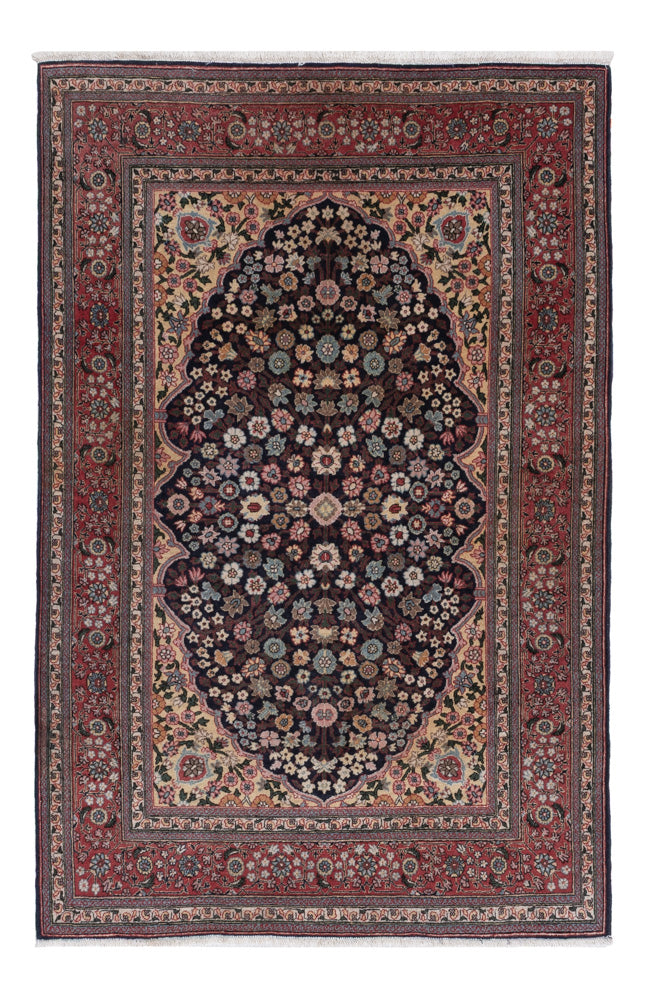
Hereke rugs come from the Ottoman court manufactory in Hereke, Turkey, and are among the world’s finest hand-knotted rugs.
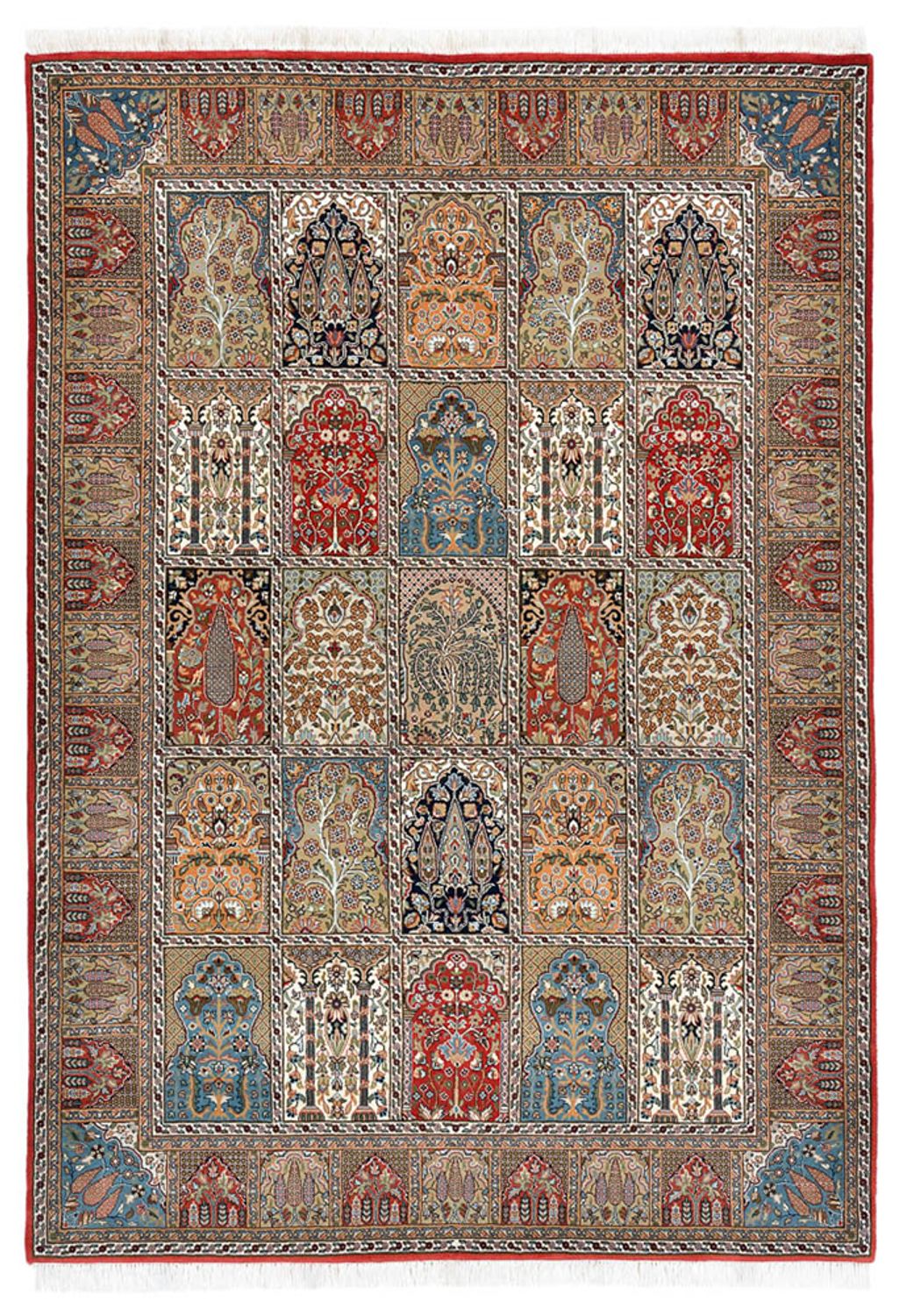
Indo Qom rugs are produced in India in the style of the Persian Qom, fine craftsmanship at more accessible prices.
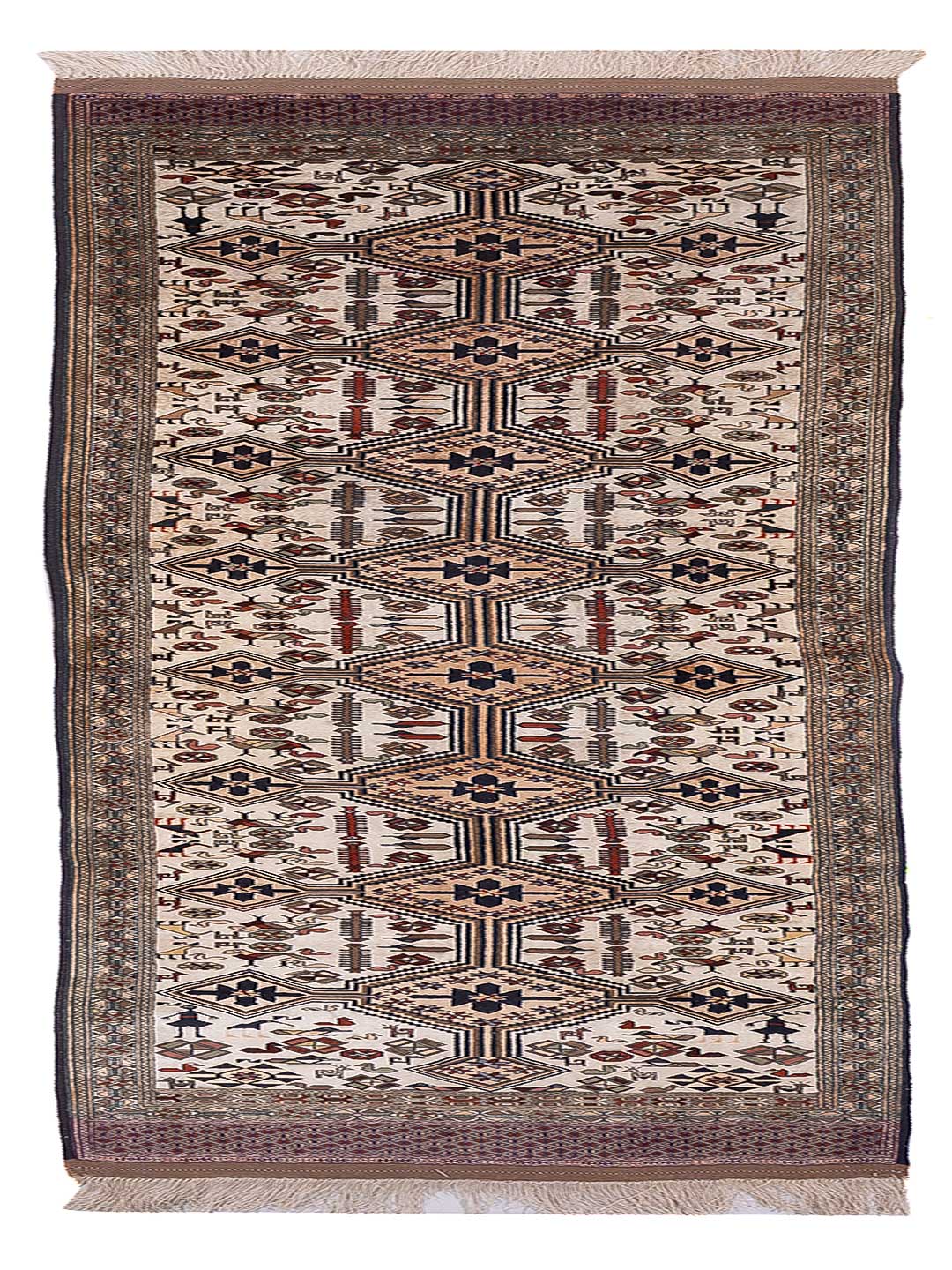
Silk kilims are flat-woven from pure silk and are among the most refined flat weaves, luminous and finely detailed.
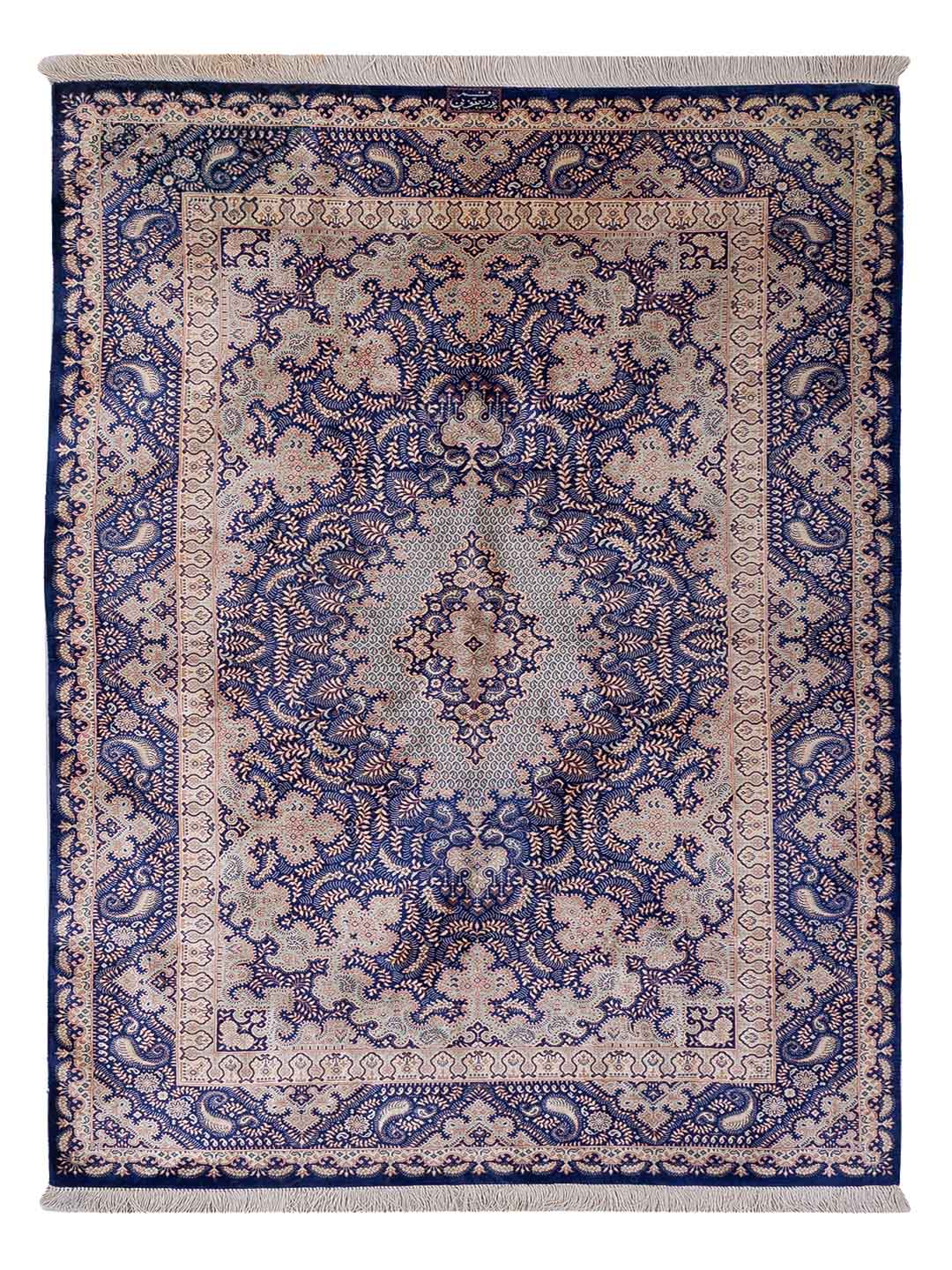
Qom silk rugs are knotted from pure silk in the holy city of Qom and rank among the world’s finest hand-knotted carpets.
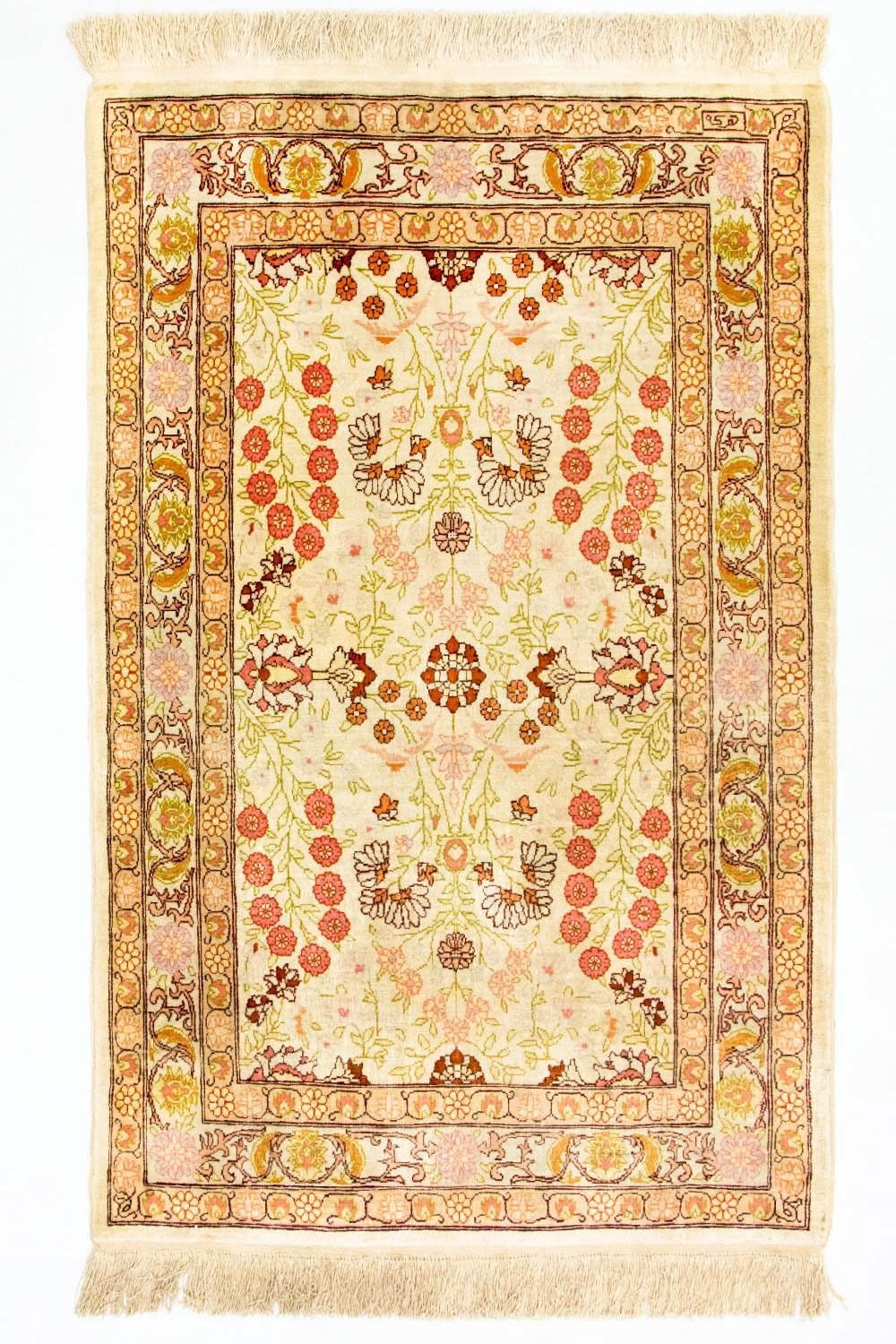
Hereke silk rugs come from the Ottoman court manufactory and are among the world’s most prized silk carpets.
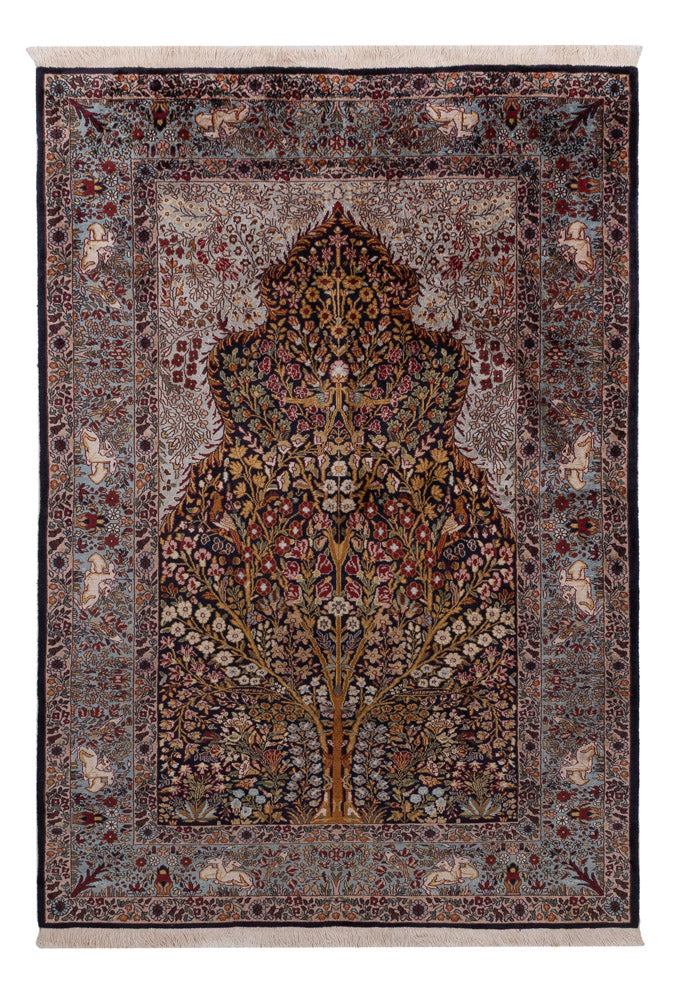
Kashmir silk rugs are knotted in northern India and combine classic Persian designs with the lustrous quality of Kashmir silk.
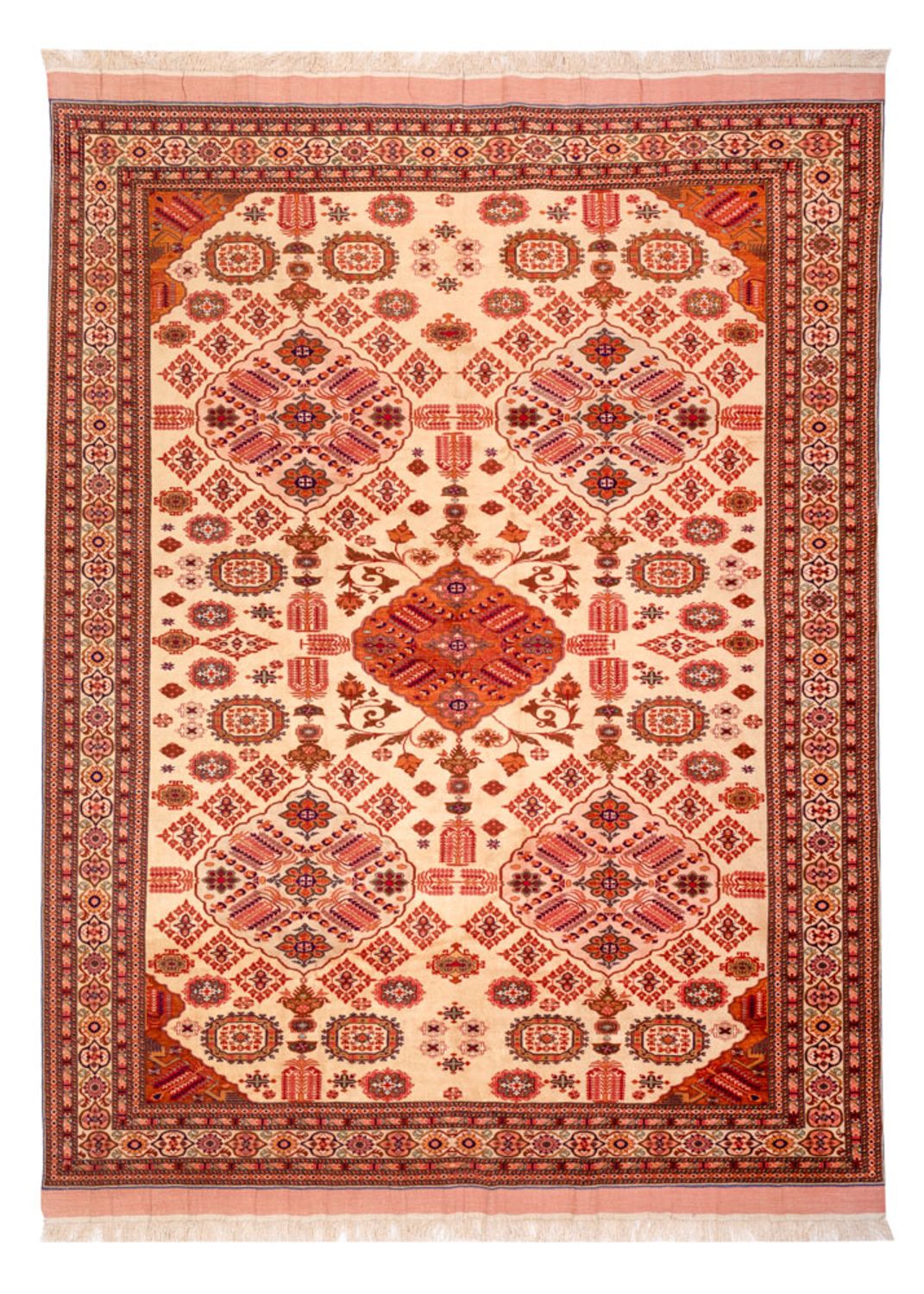
Afghan silk rugs are produced in western Afghanistan and combine traditional Persian designs with luminous silk fibers.
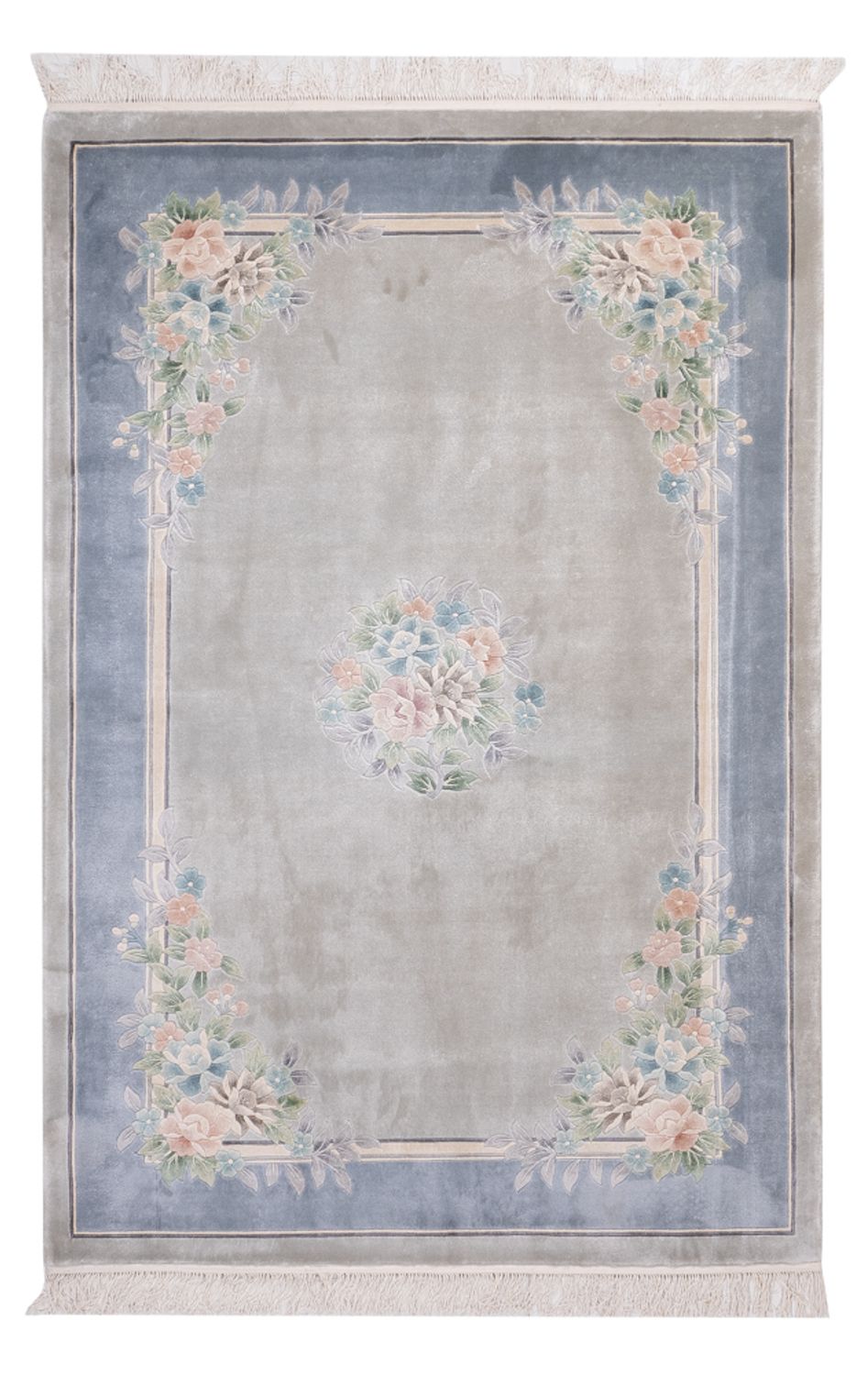
Chinese silk rugs are knotted in pure silk and stand out with their distinctive motifs, dragons, medallions, and Buddhist symbols.