//
Modern interpretations of oriental knotting, where tradition meets contemporary design.
Photo: Morgenland Rugs
Designer rugs are rugs made to the designs of named designers, oriented toward contemporary aesthetics rather than inherited regional patterns. Behind them stand interior architects, artists or specialized rug labels who deliberately redefine pattern, color and choice of materials. A significant share of high-grade designer goods is hand-knotted in Nepal and India, alongside pieces from China and Turkey. The range runs from the fine Tibetan-knotted Nepalese rug to the machine-made series.
Unlike the classical oriental rug, whose value rests on tradition, origin and knot density, the designer rug puts the design in the foreground. That explains the great span of the category: it covers both hand-knotted one-offs in pure wool and silk and industrially produced series goods. This page places the most important countries of production, explains the difference from the classical knotted rug, describes material and technique and names the criteria by which quality can be determined.
The difference lies not in technique but in the design basis. A classical oriental rug follows a regionally inherited repertoire of medallion, Herati, boteh or gül, whose patterns were passed down over generations. A designer rug rests on an individual, dateable design and aims at modern interiors.
Both can be hand-knotted. A high-grade Nepalese rug is made with the same handwork as a Persian but carries a modern design. Decisive is therefore the question of how it was made, not what label it carries: the comparison of hand and machine is covered in Hand-knotted vs. machine-made, the distinction between Tibetan and Persian knotting in the Nepalese rug vs. Persian rug comparison. Anyone looking for tradition will find it in the Persian rug, in the Ziegler or in Vintage.
Designer rugs are made worldwide, but a few centers shape the picture. The overview below places the most important.
| Origin / line | Known for | Typical features |
|---|---|---|
| Nepal | Tibetan knotting | thick highland wool pile, modern fields, often silk contours |
| India | large manufactory capacity | broad design variety, wool and viscose, washed look |
| Ziegler | muted Persian designs | soft pastel tones, large floral patterns, modern interpretation |
| Loribaft | modern Gabbeh | reduced color fields, thick wool pile |
| China | precise series production | clear geometry, even color gradients |
| Turkey | flatweave and mixed lines | kilim look, material mixes |
The backbone of hand-knotted designer goods is the Nepalese rug, whose thick highland wool pile is well suited to large-scale, calm designs. Modern interpretations of Ziegler designs and the Gabbeh-related Loribaft combine traditional roots with restrained, interior-friendly coloring. The complete style list is in the styles overview.
Modern designer goods go back at their core to the Tibetan knotting tradition, which reached Nepal after 1959 with refugee weavers. There, from the 1980s, a production developed around Kathmandu that combined the Tibetan knotting method with Western design briefs. From this connection arose the type of hand-knotted designer rug as the European market knows it today.
In parallel, the large Indian manufactories opened up to cooperation with interior architects and labels and increasingly took on creatively demanding commissions. So from pure reproduction of classical patterns grew an independent design discipline. The historical line of knotting on which this development builds is covered in the History of knotting section.
High-grade designer rugs are made in the pile of virgin wool, often Tibetan highland wool, frequently combined with silk or silky-sheen viscose to set contours and gloss accents. The foundation is mostly cotton. The material overview is in Materials.
Technically, several processes are distinguished. Hand-knotted pieces, especially from Nepal, are made knot by knot at the loom, the knot density mostly sits lower than in fine Persians, since the pile is thick and the design generous. Alongside these there are tufted and machine-woven designer goods, whose reverse differs clearly from authentic knotting. The techniques are described in Knot types and Production, the basic distinction in Hand-knotted vs. machine-made.
Since the category runs from one-off to series goods, inspection decides actual value. The following matters:
Whether a piece is hand-knotted or machine-made can be read off the reverse: the guide is in Is my rug authentic? and in the Hand-knotted vs. machine-made comparison.
The value of a designer rug arises from the manufacturing method, material grade, the reputation of the designer and the edition size. A hand-knotted one-off in pure wool and silk sits significantly above a machine-made series with a similar design. Why hand-knotted rugs command their prices at all is explained in Why authentic rugs are expensive.
Value development is less predictable than with classical knotted rugs, since it depends on design trends and artist names. Before buying, the buying guide and a look at the value overview are worth it. What size a room can take is covered in the format overview.
Care depends on the material. Pure wool is robust and dirt-repellent, silk and viscose accents react more sensitively to moisture and friction. Regular vacuuming in the pile direction and occasional professional cleaning preserve the look. Tufted pieces should not be saturated, since the latex backing can detach. The complete routines are in the care overview.
That depends on the individual piece. High-grade designer rugs, especially from Nepal and India, are hand-knotted, alongside which there are tufted and machine-made series goods. The manufacturing method can be recognized from the reverse and the fringes.
An oriental rug follows regionally inherited patterns and knotting traditions, a designer rug rests on an individual, modern design by a named designer. Both can be hand-knotted, the difference lies in the design basis, not necessarily in the technique.
A Nepalese rug is a rug made by hand in Nepal using Tibetan knotting technique, with a thick highland wool pile, often with silk contours. It forms the backbone of hand-knotted designer goods and is particularly suitable for modern, large-scale designs.
Decisive are the manufacturing method, the material grade and the cleanness of the contours. A hand-knotted reverse with visible knots, pure virgin wool or authentic silk and a dense, even pile speak for quality, a latex backing and high synthetic share against it.
Designer rugs are bought primarily for their aesthetics, not as a safe investment. Limited editions by renowned designers can gain in value, but the development is tied to design trends and less predictable than with classical knotted rugs.
Hand-knotted designer goods come above all from Nepal and India, alongside which pieces are made in China and Turkey. Many Western designers have their designs realized in these countries in traditional handwork.
Care depends on the material. Pure wool is robust, silk and viscose accents react more sensitively to moisture. Regular vacuuming in the pile direction and occasional professional cleaning suffice, tufted pieces should not be saturated.
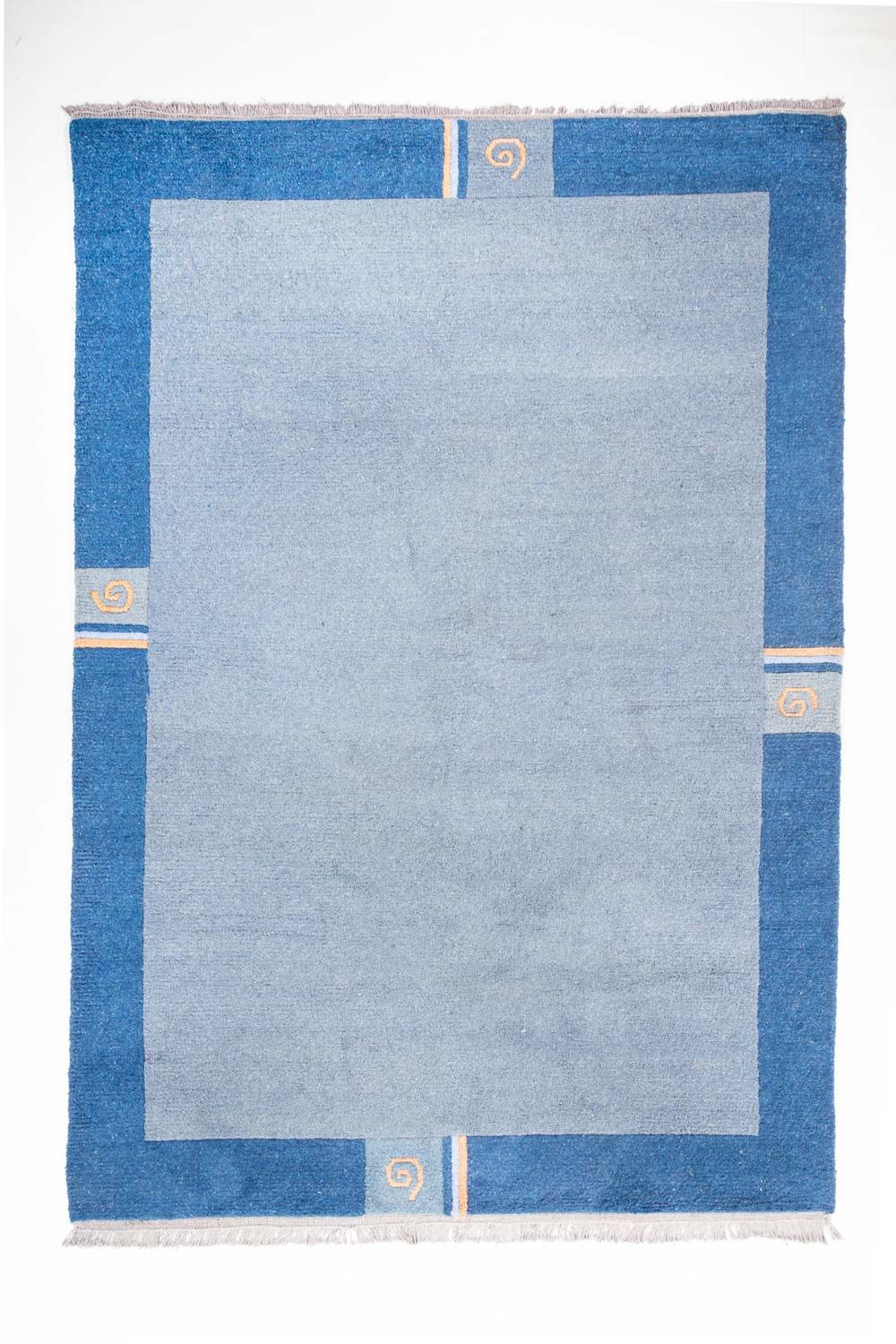
Nepal rugs are produced in Kathmandu in the Tibetan tradition, coarsely knotted, soft, and often with modern designs.
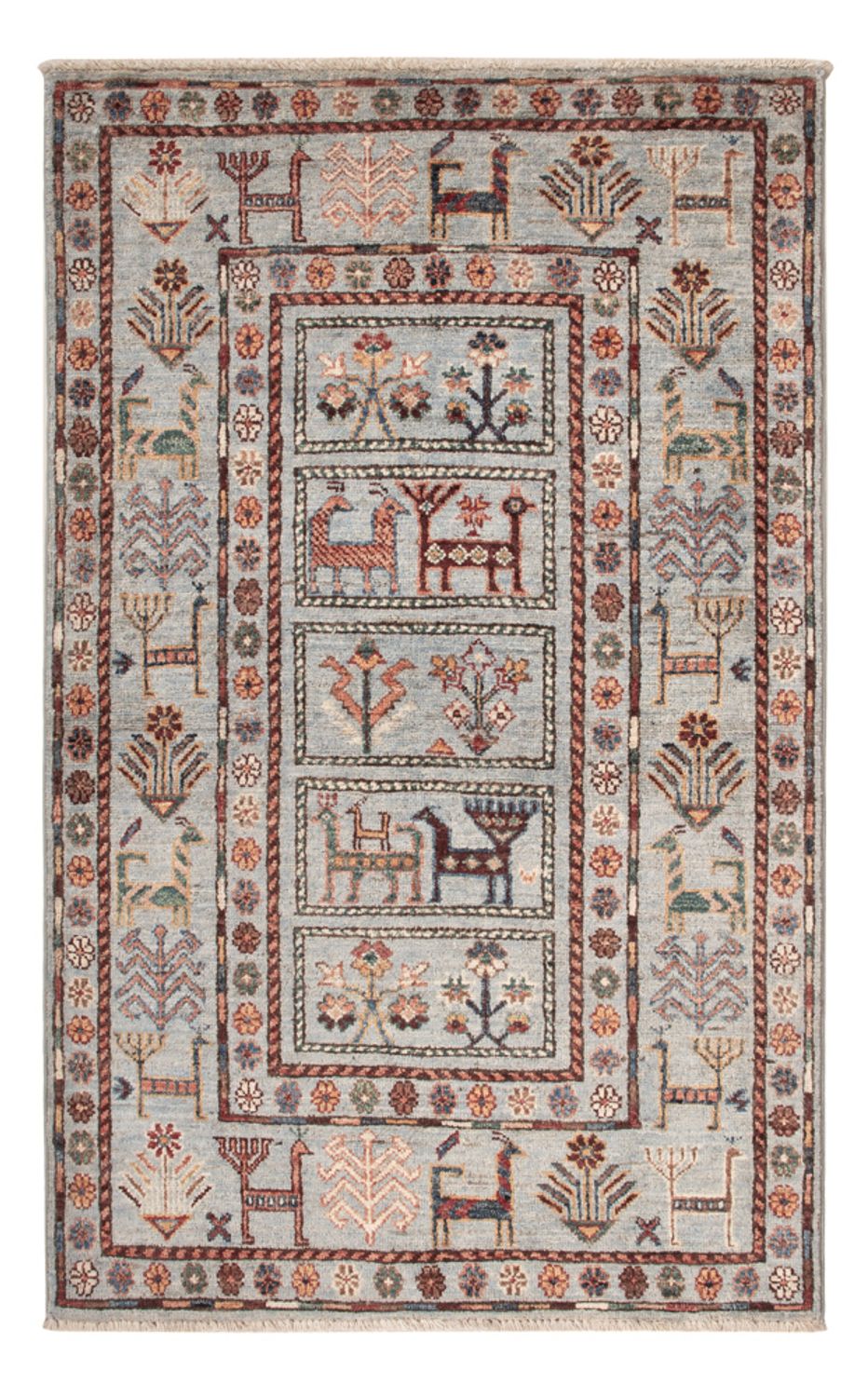
Ariana rugs are produced in northwestern Afghanistan and combine traditional Persian designs with Afghan craftsmanship.