Nepali rug vs. Persian rug
Nepalese and Persian rugs are often sold in the same showroom, but technically and culturally they are very different. Both are hand-knotted, both belong to the broader category of oriental rugs. What concretely separates them is the subject of this page.
Six criteria compared directly
A compact overview of the most important differences.
| Criterion | Nepali rug | Persian rug |
|---|---|---|
| Knot system | Tibetan loop knot around a rod | asymmetric Senneh knot |
| Material | Highland wool from Tibet, often with silk or bamboo | wool, kurk wool, silk |
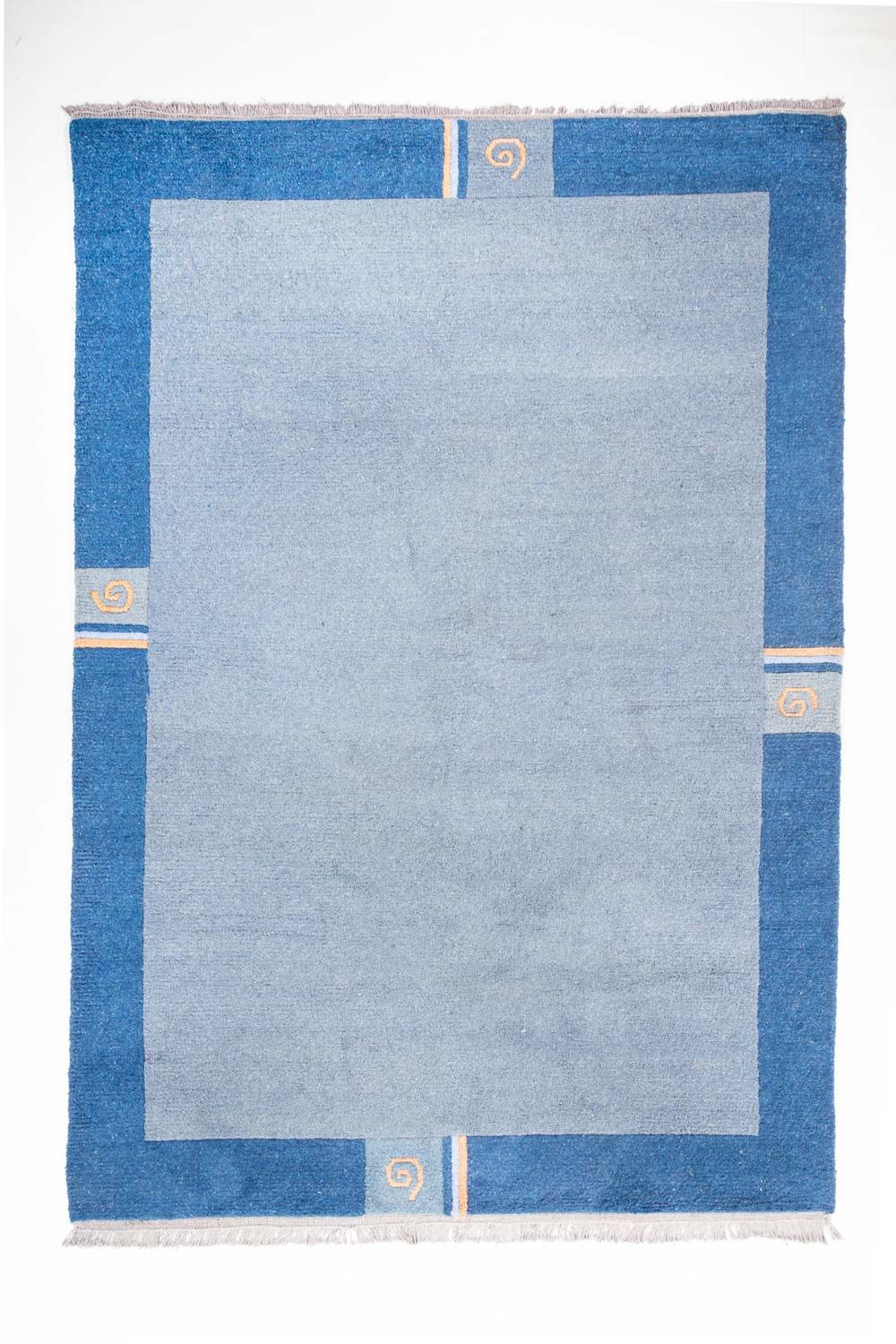
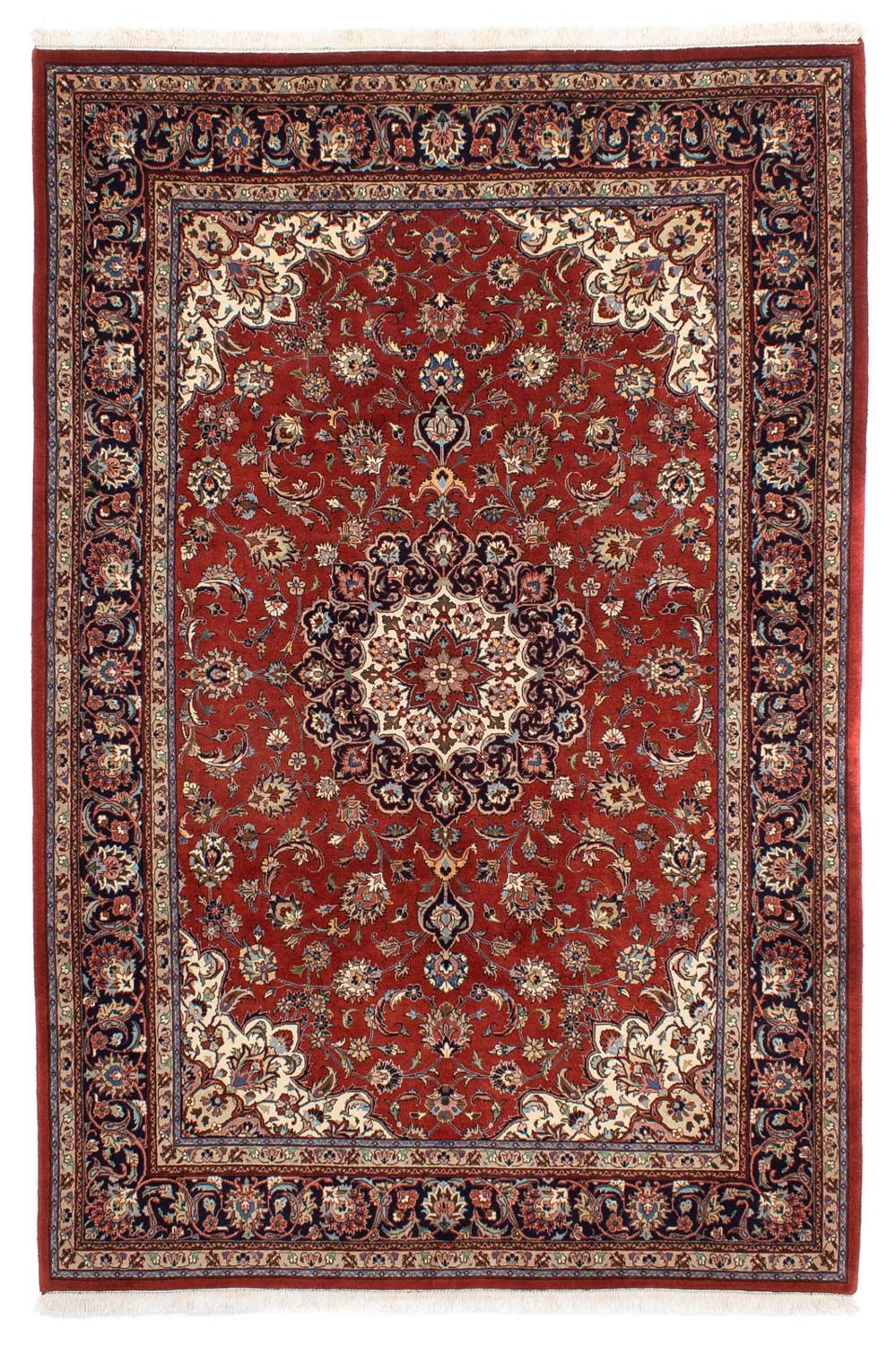
| Design language | abstract-modern, often in contemporary designer style | classic ornamental, medallion, floral |
| Knot density | 60–150 knots per inch (24–60/cm) depending on quality | 120–800 knots per inch (50–320/cm) |
| Tradition | Tibetan, knotted in Nepal since the 1960s | Iranian, documented for 2,500 years |
| Value development | modern designer pieces gain value slowly | antique pieces, established auction market |
#What is the Tibetan loop knot?
The decisive technical difference lies in the knot. Persian and Turkish knots are tied directly around two warp threads, then pulled tight and trimmed. The Tibetan knot works differently: the yarn is wound around a horizontal rod running parallel to the loom, then the rod is removed and the loops are cut open with a pair of scissors.
This loop knot allows two things the Persian knot does not. First, different yarn thicknesses can be combined in one rug, which makes abstract designs with texture changes possible. Second, wool, silk, and bamboo can be combined in a single knot, which lets the weaver control the play of sheen.
Knot density in Nepal is traditionally given in knots per inch (KPI). Standard is 60 KPI, premium 80 KPI, top pieces 100 or 150 KPI. For comparison: 60 KPI is roughly 24 knots per centimeter, that is around 60,000 knots per square meter. A good Tabriz has three to five times that.
#How does the design language differ?
Nepalese rugs have been knotted in Kathmandu by Tibetan refugees since the late 1960s. At first these were traditional Tibetan designs, but from the 1990s onwards Western designers took over the styling. Workshops such as Stepevi, Tai Ping, or Jaipur Rugs have rugs knotted in Nepal today that are sold in high-end furniture stores.
The style is abstract-modern. Geometric fields, gradient-like color transitions, monochromatic designs with subtle texture changes, often very large in format. A typical Nepali rug for a modern loft measures 250 × 350 or 300 × 400 cm.
Persian rugs come from a 2,500-year-old tradition with an established design language. Boteh, Herati, Mihrab, tree of life, medallion. These patterns are culturally loaded and carry meaning beyond pure visual appeal. Buying a Persian rug means buying a piece of design history, not a contemporary product.
#Which one fits which home?
Nepali rugs fit modern architecture. Loft, Bauhaus, Scandinavian, japandi. The abstract design language complements clear lines and material shifts between concrete, steel, wood, and glass. In a classically furnished parlor with solid wood, a Nepali design often feels out of place.
Persian rugs fit classically or eclectically furnished rooms. Period buildings, founder-era flats, traditional, eclectic, bohemian. The pattern language carries centuries-old residential culture and harmonises with bookshelves, solid wood, and muted wall colors. In a minimalist loft, a classic Isfahan often feels too heavy.
For mixed forms, for example modern furniture on old parquet, both work. Personal taste decides.