High pile vs. low pile
High pile and low pile are not styles but pile heights. Both exist in hand-knotted oriental rugs and in machine-made industrial goods. This page shows what pile height means in practice, in which rooms which height makes sense, and what to look out for when buying.
Six criteria compared directly
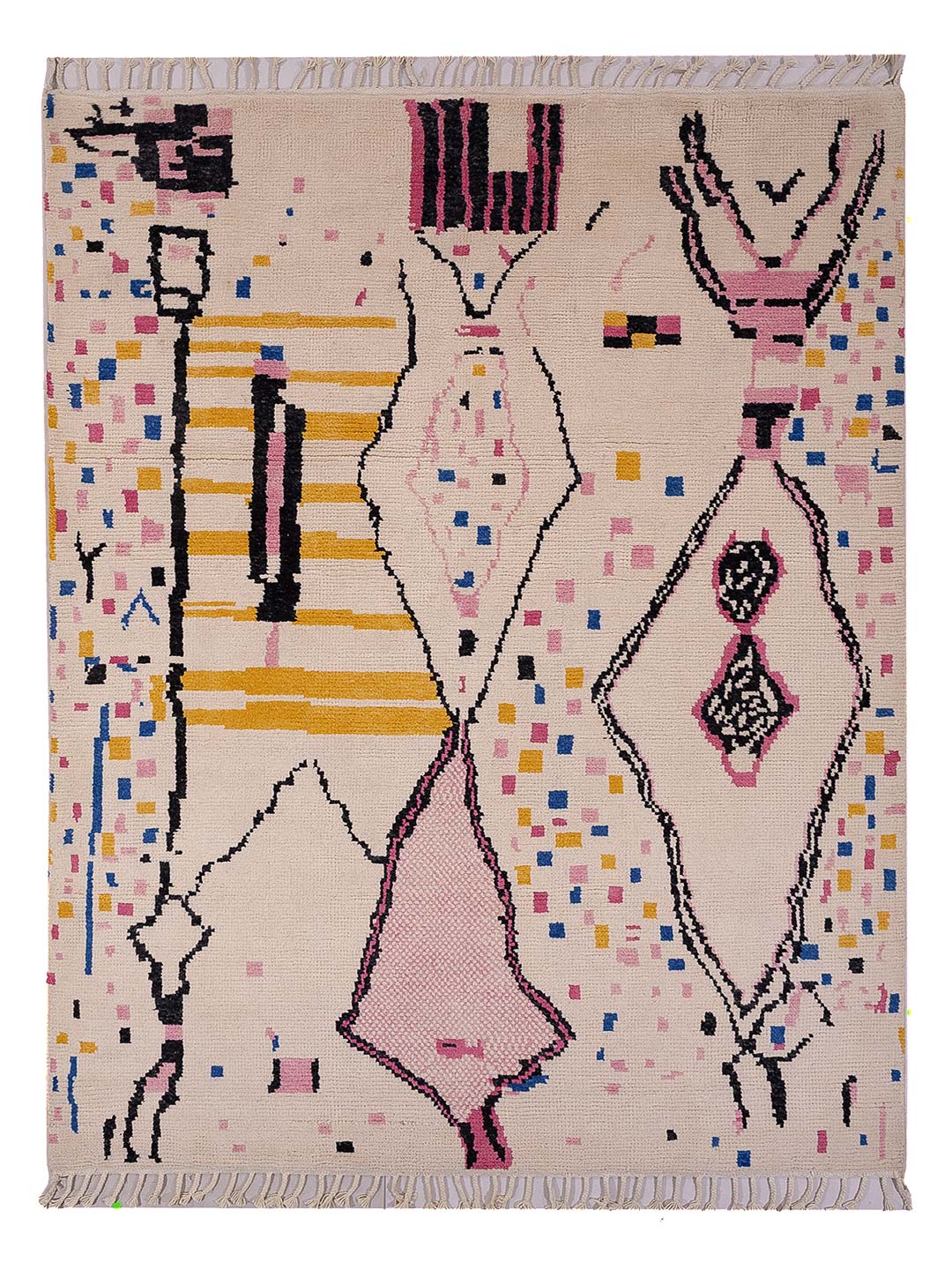
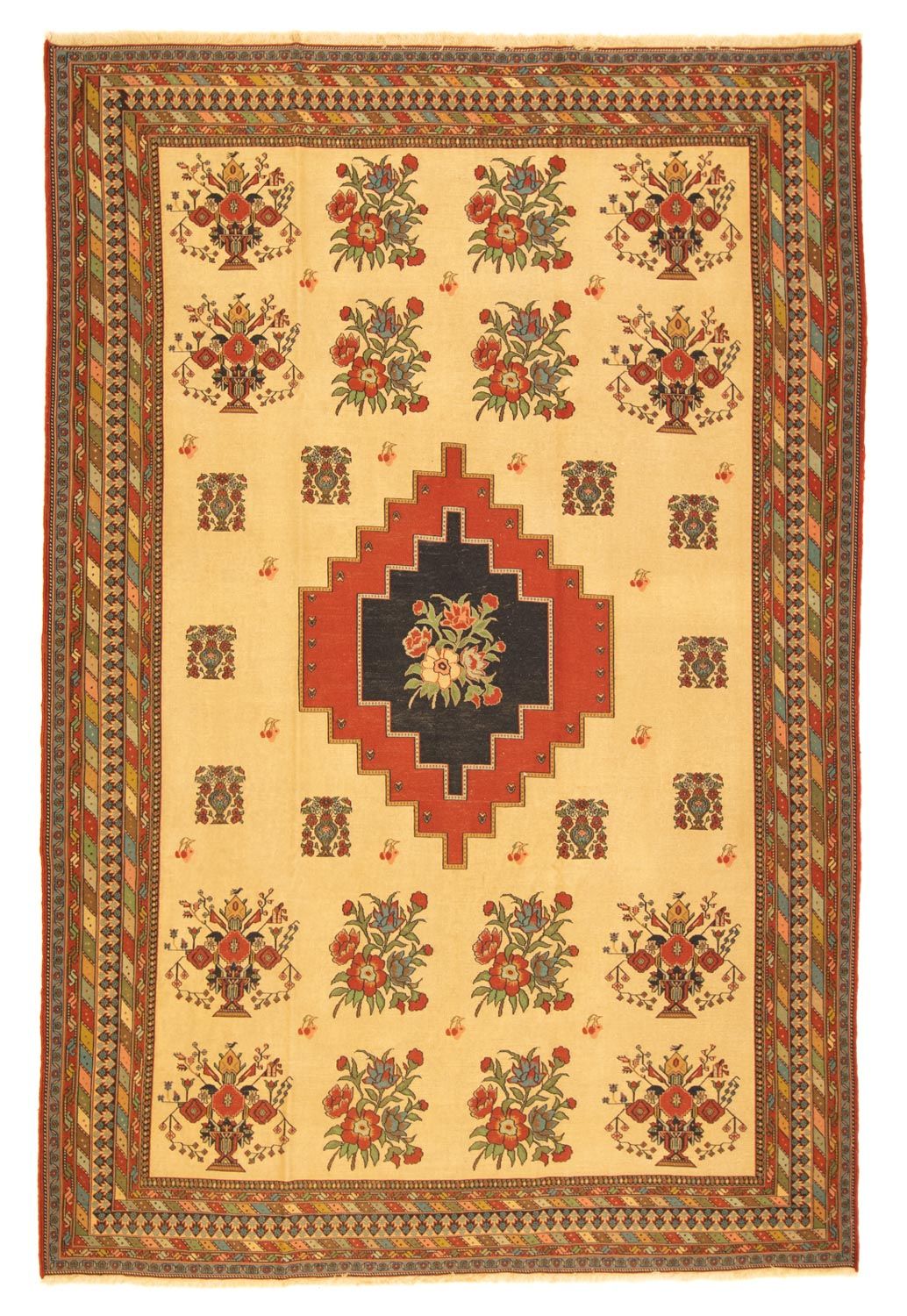
The short form before the detailed explanations. Both pile heights have clear strengths in different rooms.
| Criterion | High pile (over 15 mm) | Low pile (under 10 mm) |
|---|---|---|
| Feel | soft, fluffy, cushioning underfoot | firm, smooth, clear sense of contour |
| Care | more demanding, vacuum at reduced suction | easy, vacuum as usual, fast drying |
| Durability | traffic lines visible, pressure marks frequent | robust, hardly any pressure marks, long lifespan |
| Look | softly textured surface, soft contours | sharp patterns, clearly readable designs |
| Suitable rooms | bedroom, low-traffic living room | dining room, hallway, stairs, living room with seating group |
| Classic examples | Berber, Gabbeh, modern high-pile industry | Bidjar, Heriz, Tabriz, Hereke, kilim |
#What does pile height mean technically?
Pile height is the length of the knot threads sticking up out of the base fabric. On a finely knotted Tabriz with 800,000 knots per square meter, the pile is typically 5 to 8 millimeters high. On a Moroccan Berber rug from the Atlas mountains, 20 to 40 millimeters of pile are common, and over 50 in special cases.
Pile height is not a result of knotting skill, but of knot spacing and yarn thickness. Tightly knotted, finely spun wool produces a short, dense pile. Loosely knotted, thickly spun wool a tall, soft one.
Low pile is not automatically of higher quality than high pile. Both have their tradition. Low pile stands for the Persian, Turkish, and Caucasian knotting schools with fine detail work. High pile for nomadic and Berber traditions with a focus on warmth and simple construction.
#How does pile height affect lifespan and traffic lines?
High pile has a fundamental disadvantage under intensive use. The long pile threads bend with every step, spring back, bend again. Over the years a traffic line remains visible that the rug can no longer level out on its own. In a living room with a central path around the coffee table, this shows clearly after 5 to 10 years.
Low pile has the advantage here. The short pile threads are packed more tightly and hold their height better. A good Bidjar or Heriz still looks acceptable in the traffic line after 30 years of intensive use, and even after 50 years it is usually only slightly flattened.
For high-traffic rooms, that is dining rooms, hallways, stairs, or living rooms with children and pets, low pile is the first choice. High pile belongs in rooms where the load is even or low.
#Which pile is more work in everyday use?
The care effort with high pile is significantly greater. Dust and crumbs fall deep into the pile and can only be removed with slow, repeated vacuuming. Some high-pile rugs, especially synthetic ones, do not tolerate normal vacuuming because the brush head pulls the fiber out. Here only vacuuming with reduced suction or by hand without a brush makes sense.
Low pile is markedly easier to care for in everyday life. Dirt stays on the surface, the vacuum removes it fully, the material dries quickly after cleaning. Most oriental low-pile rugs in wool are surprisingly forgiving with spills, provided you blot quickly.
For families and shared flats, low pile is more pragmatic. High pile is an aesthetic decision at the price of extra care time.
#When is high pile the right choice?
The bedroom is the classic high-pile room. Stepping onto a soft Berber in the morning is much more pleasant than stepping onto a firm Bidjar. The load is limited to the area beside the bed, the rest of the rug hardly ages.
Low-traffic living spaces, for example a reading room or a rarely used formal living room, also benefit from high pile. The soft character supports a calm atmosphere.
For allergy sufferers, the answer is complex. High pile binds more dust and pollen, which can improve air quality short term, but becomes a burden if cleaned rarely. Low pile can be cleaned more often and more thoroughly and is often the better choice long term, unless Berber wool is chosen specifically for its hypoallergenic lanolin properties.
Keep reading
Care and cleaning
Vacuuming, stains, moth protection, storage: how to keep your rug beautiful for generations.
ReadMaterials for oriental rugs
Wool, silk, cotton, jute, and synthetic fibers. What sets each apart, what it suits, and how it feels.
ReadSilk or wool?
What practically separates silk and wool rugs. Sheen, durability, care, and price compared side by side.
Read