Gabbeh vs. Ziegler
Gabbeh and Ziegler stand for two very different worlds within the hand-knotted oriental rug. Both are popular today in Central European homes, but for completely different reasons. This page compares the two styles head-on.
Six criteria compared directly
The overview for those in a hurry. The sections under the table go deeper into each point.
| Criterion | Gabbeh | Ziegler |
|---|---|---|
| Origin | southern Iran, Qashqai and Lori nomads | Pakistan and Afghanistan, commercial production |
| Design language | abstract, naive figures, bold fields | classic Persian ornament, muted palette |
| Knot density | 60,000–150,000 knots/m², high pile 12–18 mm | 150,000–300,000 knots/m², medium pile 8–12 mm |
| Dyeing | natural dyes, bold, madder red and indigo dominant | natural dyes with stone wash, muted, pastel tones |
| Character | spontaneous, lively, one-of-a-kind | harmonious, calm, complementing the furniture |
| Price level | 300–1,500 €/m² depending on knotting quality | 400–1,800 €/m² depending on workshop |
#What defines a Gabbeh?
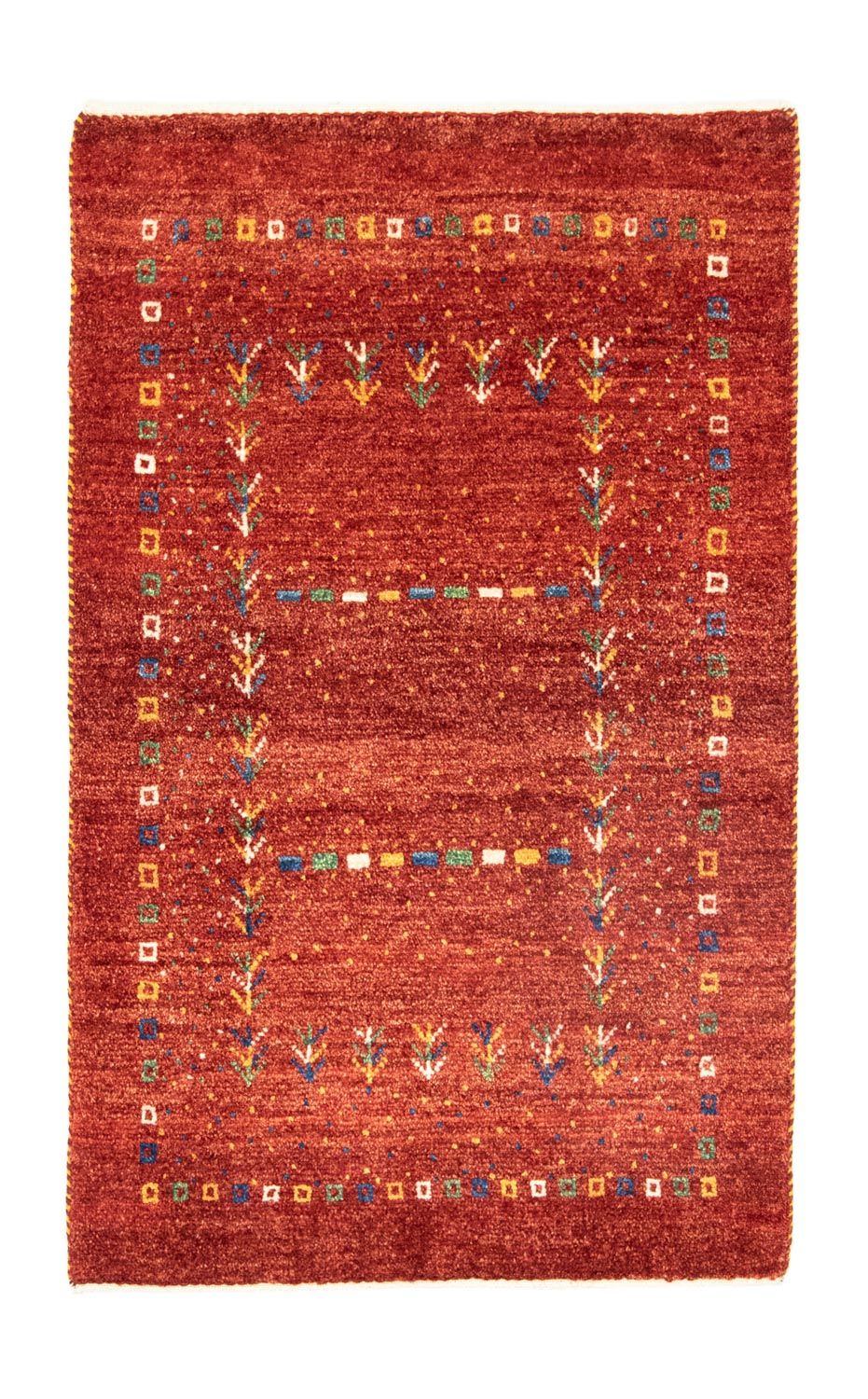
A Gabbeh is a nomadic rug from southern Iran, traditionally knotted improvised by Qashqai and Lori women. There is no drawing, no template, no industrial design office. The weaver sits at the loom and decides during the work what comes next.
The result is a set of characteristic quirks. Fields with uneven color distribution, small animals or trees that come from the longing motifs of the nomadic world, crooked borders, an interplay between symmetry and asymmetry. Every Gabbeh is a one-off.
The wool is high-pile mountain wool, often hand-spun and naturally dyed. Knot density is low, which makes the style less detailed but warmer to the touch. A Gabbeh in a living room feels like a gesture, not like a piece of furniture.
#What defines a Ziegler?
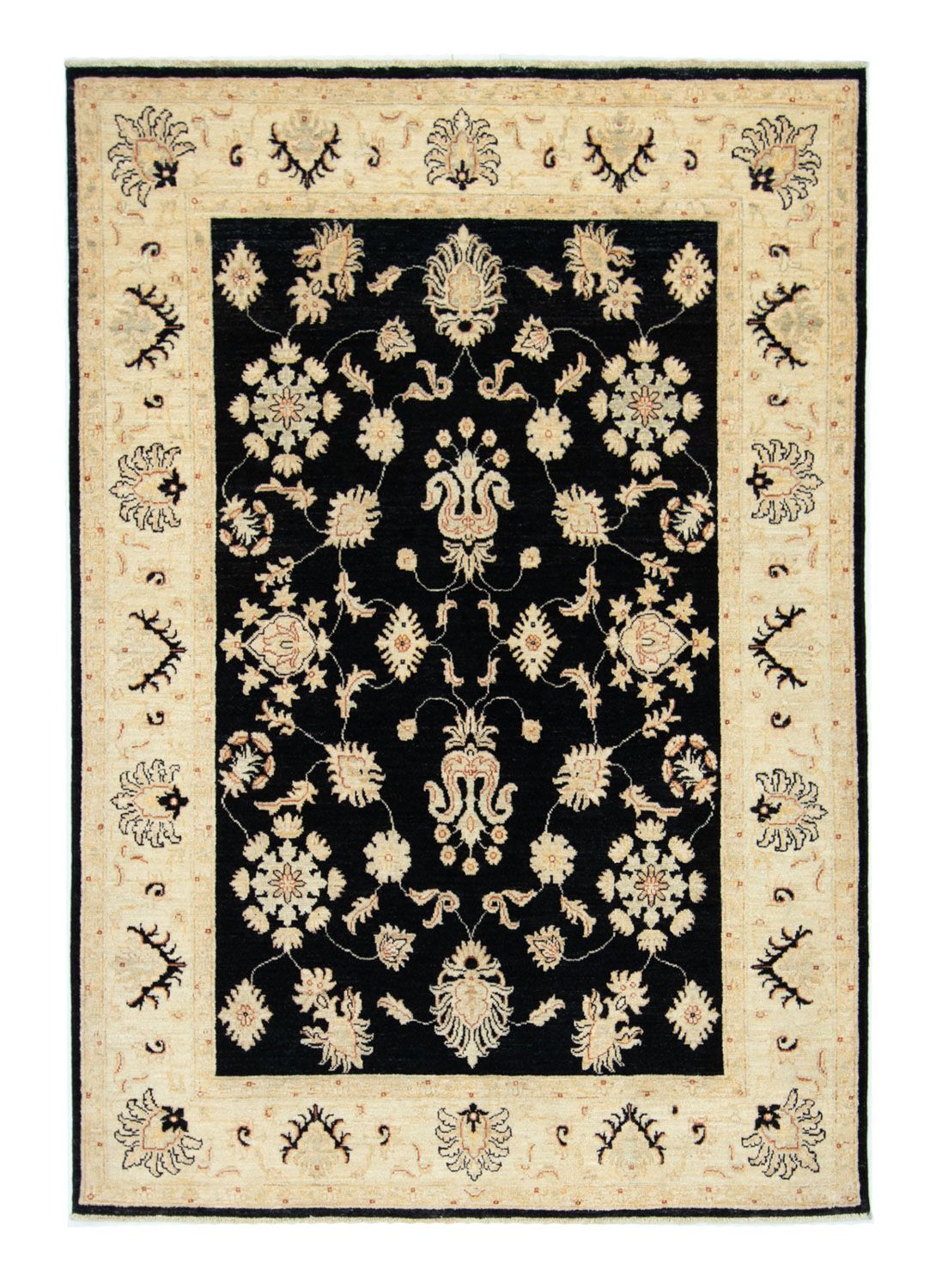
Ziegler is a contemporary style, named after the Swiss trading company Ziegler & Co., which financed Persian knotting workshops in Sultanabad (today Arak) in the late 19th century and adapted them to European taste. Ziegler rugs traded today are mostly knotted in Pakistan and Afghanistan in modern workshops.
The style is based on classic Persian ornament, but with one decisive modification. The dyeing is muted chemically or by stone wash, so the original madder red becomes salmon pink, the indigo blue turns pale blue, the walnut brown turns beige. This muted palette suits modern Northern European interiors, where strong colors are often felt as a disruption.
In substance, a good Ziegler is a fully fledged hand-knotted rug. Knot density around 200,000 per square meter, wool, cotton warp, comparable lifespan to an average Persian.
#When does a Gabbeh fit, and when a Ziegler?
Gabbeh suits flats where the rug should be a statement. Anyone with a modern minimalist living room with white walls and the wish to set a strong accent is right with a Gabbeh. The style also works in studio flats, creative work spaces, or children's rooms (because of the durable wool and the playful motifs).
Ziegler, by contrast, suits classically or Scandinavian-furnished rooms in which the rug should harmonise rather than dominate. Beige, pale blue, salmon pink fit into a modern interior without standing out. Anyone seeking a Persian-rug character but finding the bold colors of the original too intense ends up with Ziegler.
For collectors the choice is often clear-cut. Antique Gabbeh are rare and sought after, new Gabbeh have a collector market for pieces with a particular character. Antique Ziegler from the 19th century are very valuable, new Ziegler are more of a consumer good with decorative ambition.
#How do care and lifespan differ?
Both styles are robust and long-lived in good quality. Thanks to the thick wool and low knot density, Gabbeh has a particularly durable construction that still looks good even under intensive use. That said, high pile is more care-intensive: vacuuming takes longer and dirt falls deep into the pile.
Ziegler is easier in care because the pile height is lower. Vacuum as usual, no problems with stain removal. The lifespan of a good Ziegler is 50 to 80 years, comparable to other Pakistani rugs.
For both: natural dyeing is not the same as chemical dyeing. Anyone buying a Gabbeh or Ziegler should have the dealer confirm the dye type, because chemically dyed pieces fade faster and lose value on resale.
Keep reading
High pile or low pile?
Plush warmth or crisp definition? What practically separates high pile and low pile in care, durability, and looks.
ReadColors and dyeing
Natural dyes from madder, indigo, walnut, and reseda versus synthetic colors. Plus what abrash reveals about authenticity.
ReadSilk or wool?
What practically separates silk and wool rugs. Sheen, durability, care, and price compared side by side.
Read