
Rug or no rug
Not every room needs a rug. Sometimes it improves the atmosphere considerably, sometimes it disturbs the effect of the floor. This page lists the arguments for and against, broken down by room type.
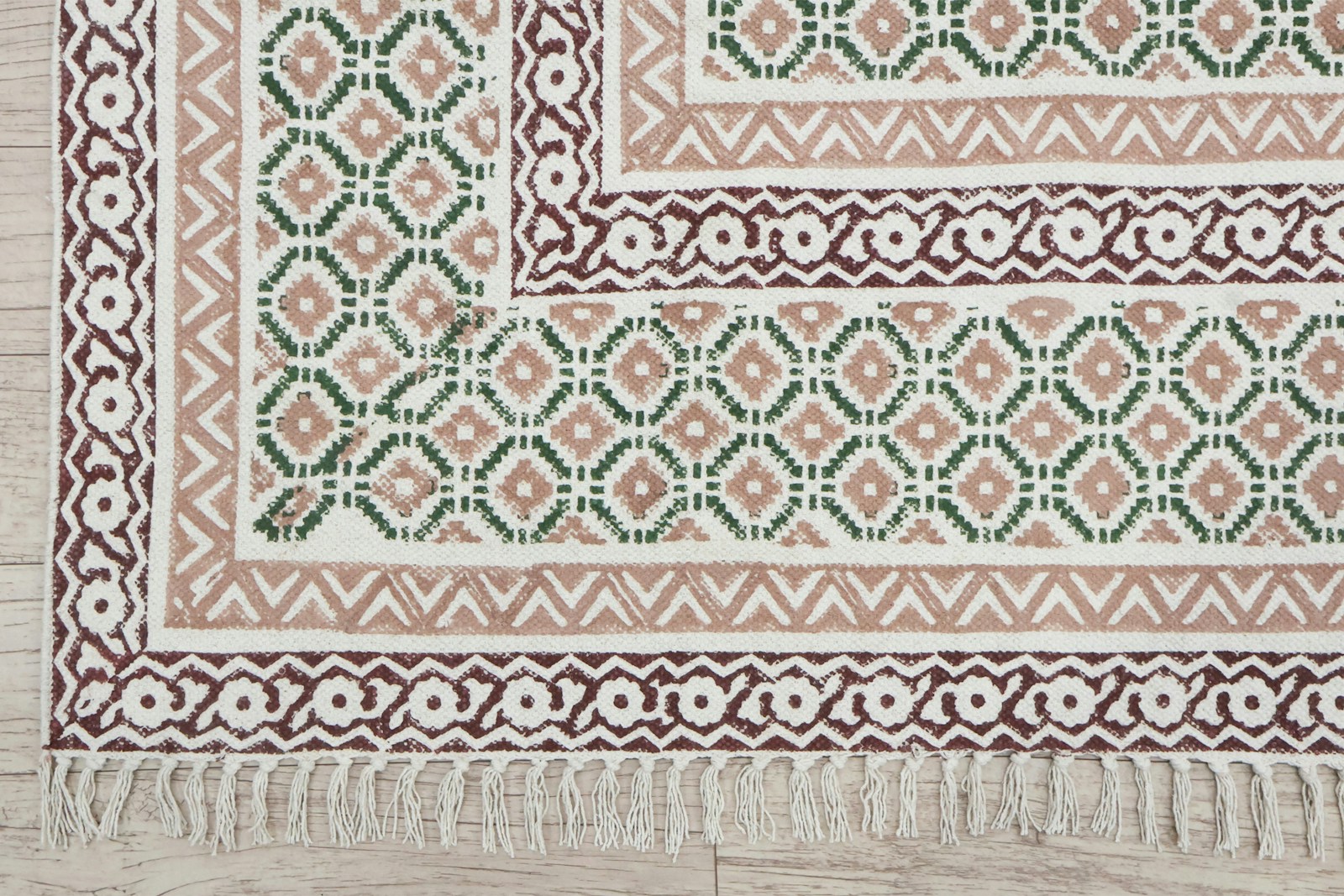

Pro and contra
Six aspects to weigh up.
| Aspect | With rug | Without rug |
|---|---|---|
| Acoustics | noticeably softer room tone, less echo | hard reflection on wood, tile, stone |
| Warmth | warm to bare feet, helps perceptibly in winter | cold floor, especially with tiles |
| Visual effect | room feels structured, cosier, often smaller | room feels more open, larger, clearer |
| Care effort | vacuuming, occasional washing, spot cleaning | wiping, floor care depending on material |
| Investment | 200–4,000 €/m² depending on quality | no purchase price, but possibly higher floor costs |
| Combination | defines zones, seating group, dining table | more flexible furniture placement, more open room |
#How much does a rug improve room acoustics?
The biggest effect of a rug in a modern living space is acoustic. A living room with oak parquet, seating group, coffee table, and otherwise little fabric sounds hard. Voices reflect, footsteps are loud, the television booms. A 200 × 300 cm wool rug audibly changes the room tone.
The effect is measurable. Acoustic studies show that a high-pile rug lowers reverberation time by 30 to 50 percent. With a low-pile wool rug it is still 15 to 25 percent. In rooms with high ceilings or open-plan kitchens, that is a noticeable comfort gain.
In rooms with plenty of fabric anyway (curtains, upholstered furniture, full bookshelves) the acoustic effect is smaller. Here the rug is primarily a visual decision.
#How does a rug change the feel of a room?
A rug can structure a room or make it feel smaller. To make a small room feel more open, leave the rug out, or choose a very large one that reaches almost to the walls. A small rug in the middle of a small room makes the space feel more cramped.
In large rooms the question is different. An open living-and-dining area of 30 or 40 square meters often needs several rug zones to define the spaces. A rug in front of the seating group, a second under the dining table. Without rugs the room flows, which can be desirable in modern architecture, but often loses warmth.
For rooms with historic flooring (old stone, planks, mosaic tiles) the question is especially sensitive. Here the rug can hide a floor that should actually be shown. A runner in front of the seating group, covering only part of the floor, is often the best solution.
#When is a room better without a rug?
First: with allergies that are not triggered by wool, but by house-dust mites or pet hair. Here a wipeable floor can actually be healthier, provided it is wiped daily.
Second: with very bright or strongly patterned flooring that should be on display. A marble floor or a herringbone parquet in smoked oak is itself a design element. A rug on top competes with it.
Third: in rooms with high humidity or soiling. Entrance areas with shoes, bathrooms, utility rooms, conservatories. Here a rug would always be damp or dirty, without being able to deliver acoustic or warmth benefits sensibly.
Fourth: in tenancies with short commitments, where the effort for selection, purchase, and care eats into the investment. A cheap interim solution is more sensible here than a high-quality rug.
Keep reading
Rug formats and sizes
Scatter, gallery rug, runner, and salon rug. Which size suits which room and how to measure correctly.
ReadBuying guide
Quality, size, price: what to look for when buying an oriental rug.
ReadCare and cleaning
Vacuuming, stains, moth protection, storage: how to keep your rug beautiful for generations.
Read