//
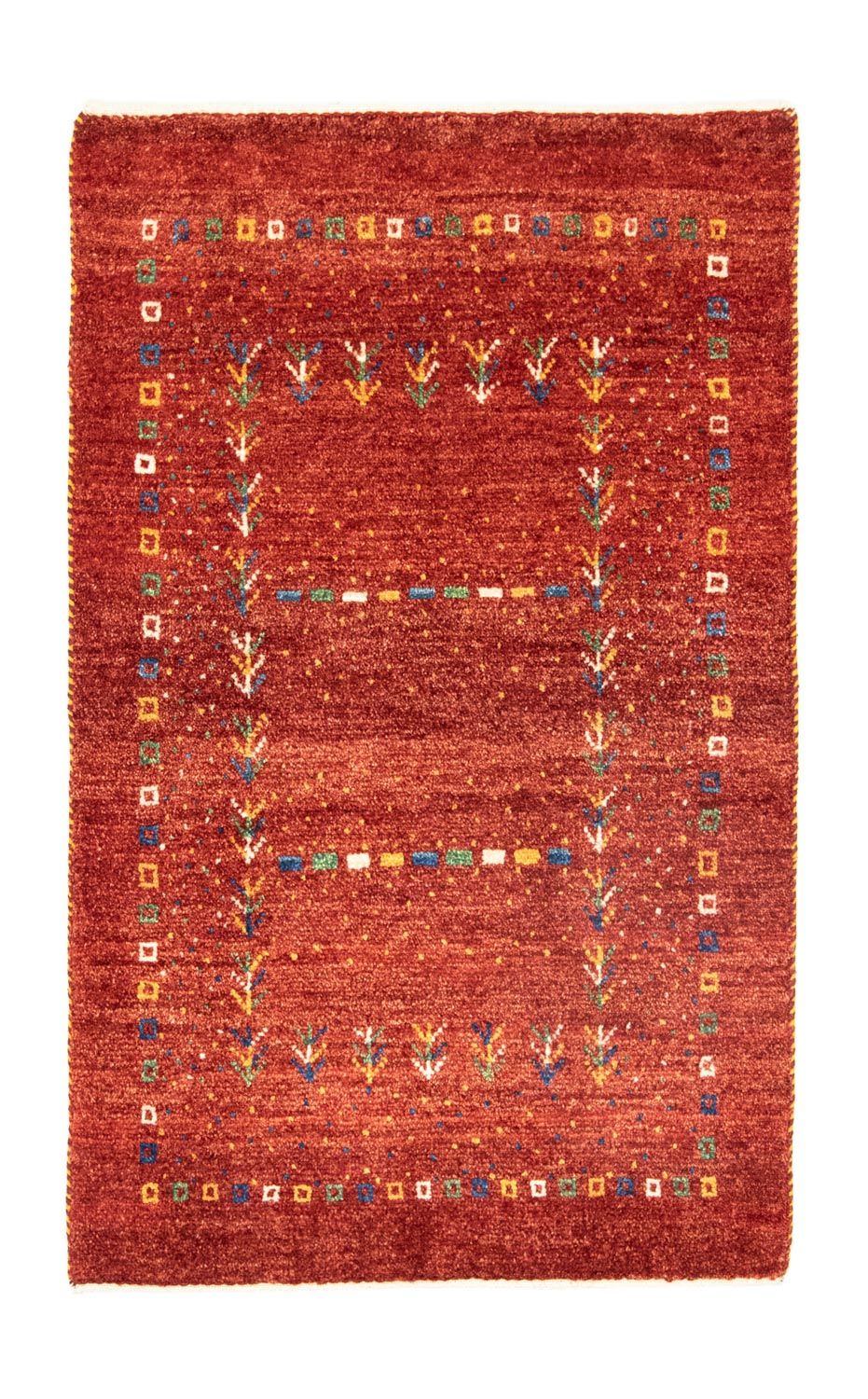
Coarsely knotted with a long pile and abstract motifs, Gabbehs are the modern classics among oriental rugs.
Photo: Morgenland Rugs
A Gabbeh is a thickly knotted, high-pile rug from southwestern Iranian Fars, traditionally made by the Qashqai and the Lur tribes. The Persian word gabbeh means raw or unworked and describes the aesthetic precisely: simple, often abstract patterns, strong natural colors and a long, soft pile. Unlike the finely patterned city rugs from Isfahan or Nain, the Gabbeh follows a reduced, almost modern formal language.
Gabbehs arose from the nomads' practical need for warm, robust sleeping and seating rugs for their tents. The weavers worked without a cartoon, placed individual animals, trees or fields spontaneously and left large open spaces. This page explains the difference between Gabbeh and the related Loribaft, the most important variants, the coarse knotting, what a Gabbeh costs and what to look for when buying.
Gabbeh and Loribaft come from the same region and the same tribes but differ in fineness and pile. The classic Gabbeh is coarsely knotted, has a long, thick pile and large-scale abstract patterns. The Loribaft (literally woven by the Lurs) is the finer relative: more densely knotted, with a shorter pile and clearer, smaller-scale patterns. You can think of the Loribaft as the refined workshop variant of the Gabbeh.
In the trade, the term Gabbeh is used for the coarse, thick-pile type, Loribaft for the finer version with higher knot density. Both belong to the family of nomadic rugs and share material, natural colors and free pattern handling. Anyone wanting to see both terms side by side will find the finer line under Loribaft.
A Gabbeh is a hand-knotted Persian tribal rug with a thick, high pile, coarse knotting and simple, often abstract patterns in strong natural colors. It is made from pure virgin wool from the tribe's own flocks and follows no template but arises from the weaver's design will. Every authentic Gabbeh is therefore a free, unmistakable one-off.
Gabbehs can be ordered by knot fineness, tribe and design. The overview below shows the most important variants.
| Variant | Known for | Typical features |
|---|---|---|
| Classic Gabbeh | tribal work of the Qashqai | long pile, large color fields, individual animal motifs |
| Loribaft | finer Lur work | shorter pile, higher density, clearer patterns |
| Fine Gabbeh | workshop production | finer knotting, soft color gradients |
| Lori Gabbeh | Lur tribes | monochrome or two-color fields, calm surfaces |
| Shiraz Gabbeh | trading market Shiraz | lively colors, diamond lattices, animal figures |
| Natural-color Gabbeh | undyed wool | tones from natural wool colors, beige to brown |
The classic Qashqai Gabbeh is the most original type, the Loribaft and the Fine Gabbeh are the finer workshop forms. Natural-color Gabbehs do without dyes entirely and use the various natural tones of the wool. All recorded styles can be found in the styles overview.
Gabbeh is a young term for an old thing. Tribal women in southwestern Iranian Fars had been knotting thick, simple wool rugs for their own use for generations. These long counted as low-grade utility goods and barely entered the trade. Only in the 1980s did dealers and collectors discover the archaic beauty of these pieces and introduce them as a category in their own right on the Western market.
The tradition is carried mainly by the Turkic-speaking Qashqai and the Lur tribes around Shiraz. With growing demand, additional workshop productions emerged that under names such as Loribaft and Fine Gabbeh deliver finer qualities without giving up the characteristic aesthetic. More on tribal culture is in Nomadic rugs and Origin of the knotting art.
A Gabbeh is made almost entirely from virgin wool: pile, warp and weft come from the tribe's own flocks. Highland wool counts as particularly rich and glossy, which gives the pile its softness. Dyeing is traditionally done with plants and minerals, madder for red, indigo for blue, pomegranate skins and weld for yellow, whose identification is covered in the article Recognize natural dyes.
Knotting is coarse, with around 40,000 to 160,000 knots per square meter, significantly less than in fine city rugs. This low density allows the weaver to work freely and spontaneously and produces the high, dense pile. After knotting, the rug is sheared, washed and often given a treatment that harmonizes the colors. The process is in the Production area, the technique on the page Knotting, the meaning of density in the article Knot density explained.
An authentic Gabbeh shows several clear features:
The complete guide is in Recognize an oriental rug and Is my rug authentic?. The difference between dyes is explained in Natural dyes vs. chemical dyes.
What a Gabbeh costs depends on size, wool quality, knot fineness and the purity of the natural colors. Coarse tribal Gabbehs sit in the affordable range, finer Loribaft qualities and large formats cost considerably more. Pure natural colors and high-grade highland wool drive the price because they improve patina and durability. Why handwork has its price is explained in Why authentic rugs are expensive.
Before buying, the buying guide and the direct comparison Gabbeh vs. Ziegler are worth a look when a flat, calm rug is the goal. Anyone torn between styles uses the style comparison. Look for an even pile cut and a strong, richly glossy wool.
Gabbehs are robust and low-maintenance. Regular vacuuming in the pile direction with the brush roll switched off is enough in everyday use. The high pile hides dirt, but crumbs and sand should still be removed quickly because they settle at the knot base. Dab stains at once with clean water, never rub. A professional cleaning every three to five years preserves the substance, harsh cleaners attack the natural dyes. The complete routines are in the care overview.
A Gabbeh is a coarsely knotted, high-pile Persian tribal rug from southwestern Iranian Fars, made by the Qashqai and the Lurs. It shows simple, often abstract patterns in strong natural colors and consists of pure virgin wool. Every authentic piece is a free one-off without a cartoon.
Both come from the same region and the same tribes. The Gabbeh is coarsely knotted, has a long, thick pile and large-scale abstract patterns. The Loribaft is the finer variant: more densely knotted, with a shorter pile and clearer, smaller-scale patterns.
The price depends on size, wool quality, knot fineness and natural colors. Coarse tribal Gabbehs are comparatively affordable, finer Loribaft qualities and large formats cost considerably more. Pure natural colors and high-grade highland wool raise the value.
Authentic Gabbehs have a high, thick pile, coarse knotting with clearly visible knots on the reverse and free, abstract patterns. Strong natural colors with a natural color shift (Abrash) and pure handspun wool confirm authenticity.
The Gabbeh comes from the southwestern Iranian province of Fars and is traditionally knotted by the Qashqai and Lur tribes around Shiraz. As a trade category in its own right it was only introduced on the Western market in the 1980s, although the knotting tradition is much older.
Gabbehs made of pure virgin wool with natural colors count as allergy-friendly, since wool repels dirt and regulates moisture. Regular vacuuming is important to prevent dust from settling in the high pile. With a house dust mite allergy, occasional professional cleaning helps in addition.
Regular vacuuming in the pile direction with the brush roll switched off is enough. Dab stains at once with clean water, do not rub. A professional cleaning every three to five years preserves the substance, harsh cleaning agents should be avoided because they attack the natural dyes.