

Identifying oriental rugs
Use eight reliable tests to tell genuine hand-knotted oriental rugs from machine-made pieces and imitations — in the store or at home.
#The back tells everything
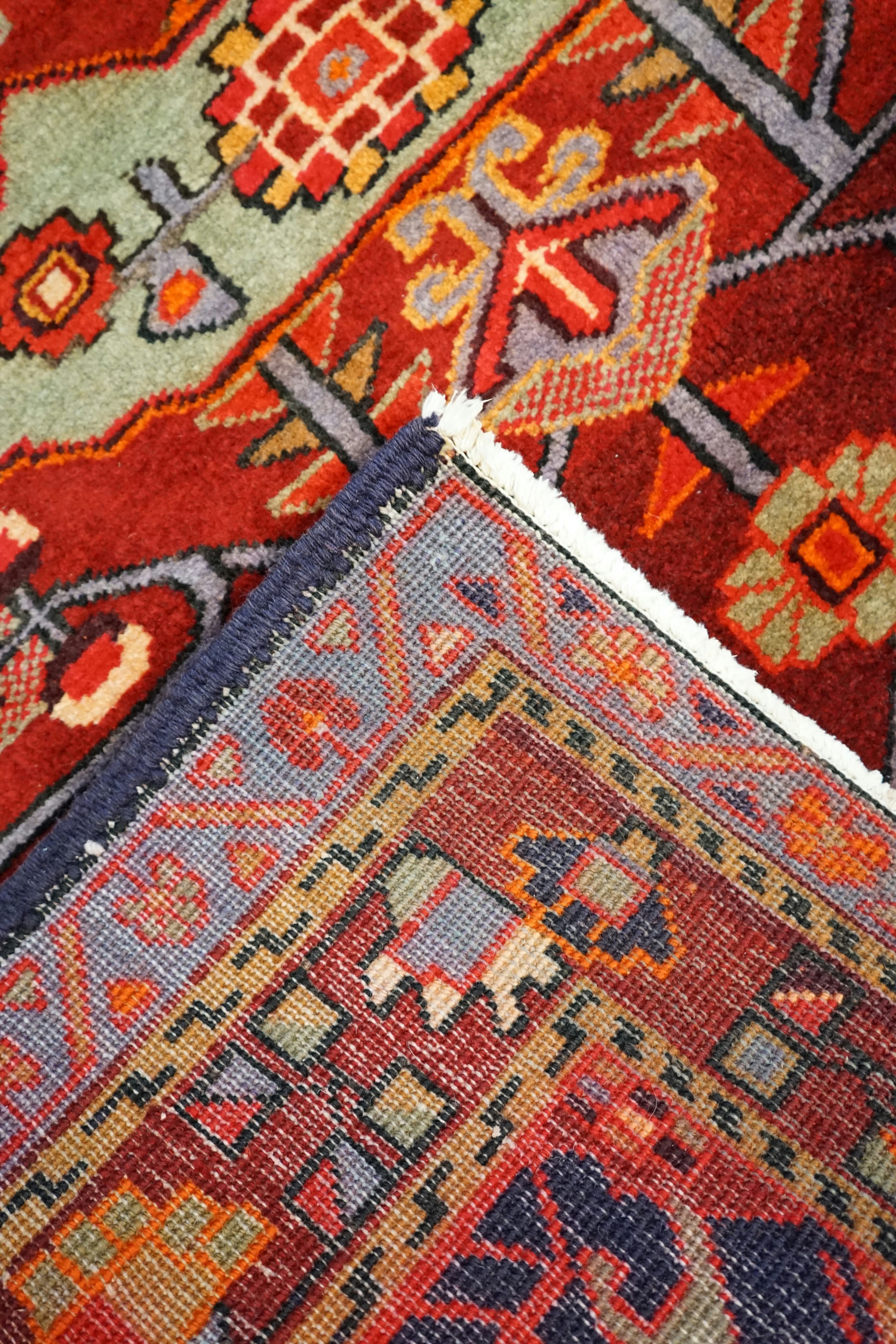
The most reliable test starts on the back of the rug. Turn it over and look at the pattern: on a genuine hand-knotted oriental rug, the pattern is almost as clearly visible on the back as on the front, and you can see each individual knot as a tiny colored dot. The back should be soft and textile — no coating, no rubber, no latex. If the back is rubberized, glued to a coarse backing, or shows the pattern only faintly, it is most likely a machine-tufted rug.
#Check the fringes — sewn on or integrated?
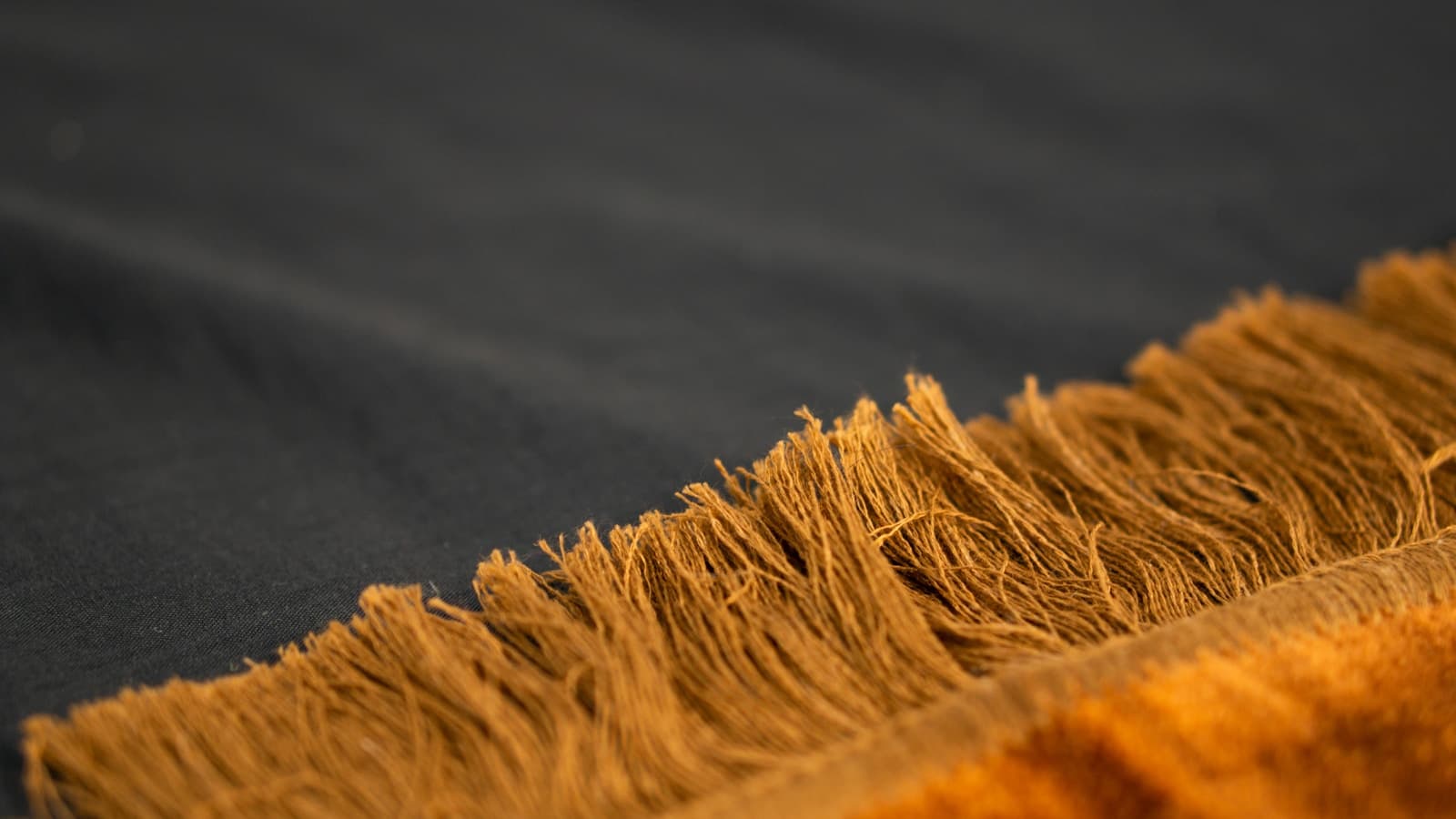
The fringes are a reliable authenticity marker. On a hand-knotted rug they are the extended warp threads of the base weave — an inseparable part of the rug itself. Tug gently on the fringes: they should move with the rug body. On machine-made or imitation rugs the fringes are often sewn or glued on. If you feel a seam or see a clear transition between rug and fringe trim, the rug is not hand-knotted.
#Count knots and assess knot density
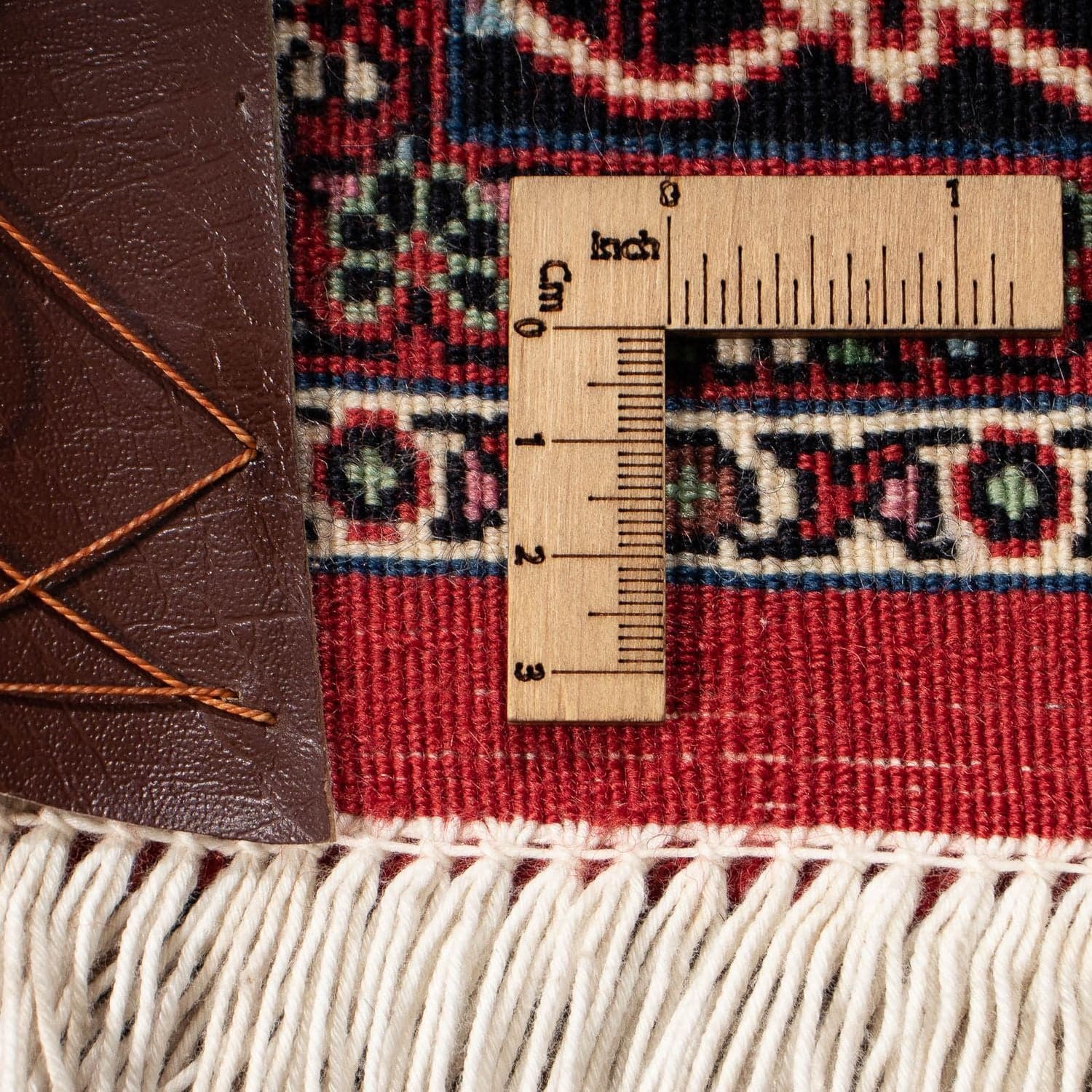
Photo: Morgenland Teppiche
Gently bend the rug back along a row of knots — the pile opens up and the individual knots become visible. The finer and denser the knots, the higher the quality and more detailed the pattern. Simple nomadic rugs have 80,000 to 150,000 knots per square meter, good Persian manufactories 300,000 to 500,000, and the finest Isfahan or Qom rugs over a million. Count roughly on a square centimeter and multiply by 10,000 — that gives the knot density per square meter. Also check whether the knots are all the same size: absolute uniformity suggests machine work, small irregularities indicate hand work.
#Feel, smell, and test the material
High-quality oriental rugs are made of natural fibers — mostly virgin wool, more rarely silk, sometimes camel hair. Natural wool feels supple and slightly oily (lanolin), is elastic, and springs back after pressure. Pure silk feels cool, shines vividly, and changes color with the light. Synthetic fibers such as polyester or viscose feel smoother and cooler, crackle when moved, and build up static. In case of doubt, the burn test at a hidden spot helps: wool smells of burnt hair and leaves crumbling black ash; plastic burns with black smoke and forms melted beads.
#Asymmetry as proof of authenticity
A hand-knotted rug is never perfectly symmetrical — and that is precisely its quality marker. Compare the four corners and the two halves of the pattern: hand-knotted rugs show slight deviations in size, color distribution, or pattern execution. Often a rug is one or two centimeters wider or longer on one side. Individual color areas can show lively shading (known as abrash) — a natural phenomenon that occurs when the weaver switches to a newly dyed batch of yarn during work. Absolute symmetry and uniform color indicate machine work.
#Colorfastness and light test
Genuine plant dyes and high-quality chrome dyes are lightfast and colorfast. A simple test: moisten a white cloth and rub gently over a strong color area. If color transfers, the rug was dyed with inferior dyes. Also look at the rug in different lighting — natural colors appear warm and lively and change subtly throughout the day. Cheap synthetic dyes remain flat and lifeless.
#Extra care with antiques
For older rugs (over 50 years, "semi-antique"; over 100 years, "antique") there are additional criteria. Look for even wear — one-sided wear can indicate a restoration case. The colors of antique rugs appear deeper and more saturated because plant dyes darken over the years. The back shows an even, natural patina. For valuable pieces it is worthwhile to get an appraisal from an independent expert who documents origin, age, and condition.
#Beware of common traps
Be suspicious of offers significantly below the market price — hand-knotted rugs are labor-intensive, and dumping prices are a warning sign. Common tricks include falsely declared countries of origin (Chinese or Indian imitations sold as "Persian"), artificially aged rugs, retroactively dyed pieces, or so-called Tabriz imitations from Pakistan without the real quality. Buy from reputable dealers who document origin, age, and material and can issue a certificate of authenticity on request.
Keep reading
Woven and machine-made rugs
Tufting, Wilton, Axminster: how machines make rugs — and how to tell them from hand-knotted originals.
ReadBuying guide
Quality, size, price: what to look for when buying an oriental rug.
ReadHow oriental rugs are made
How wool, silk, and natural dyes become a hand-knotted work of art — explained step by step.
Read